Public sector pay deal: What the 10.75% increase means for 420,000 workers
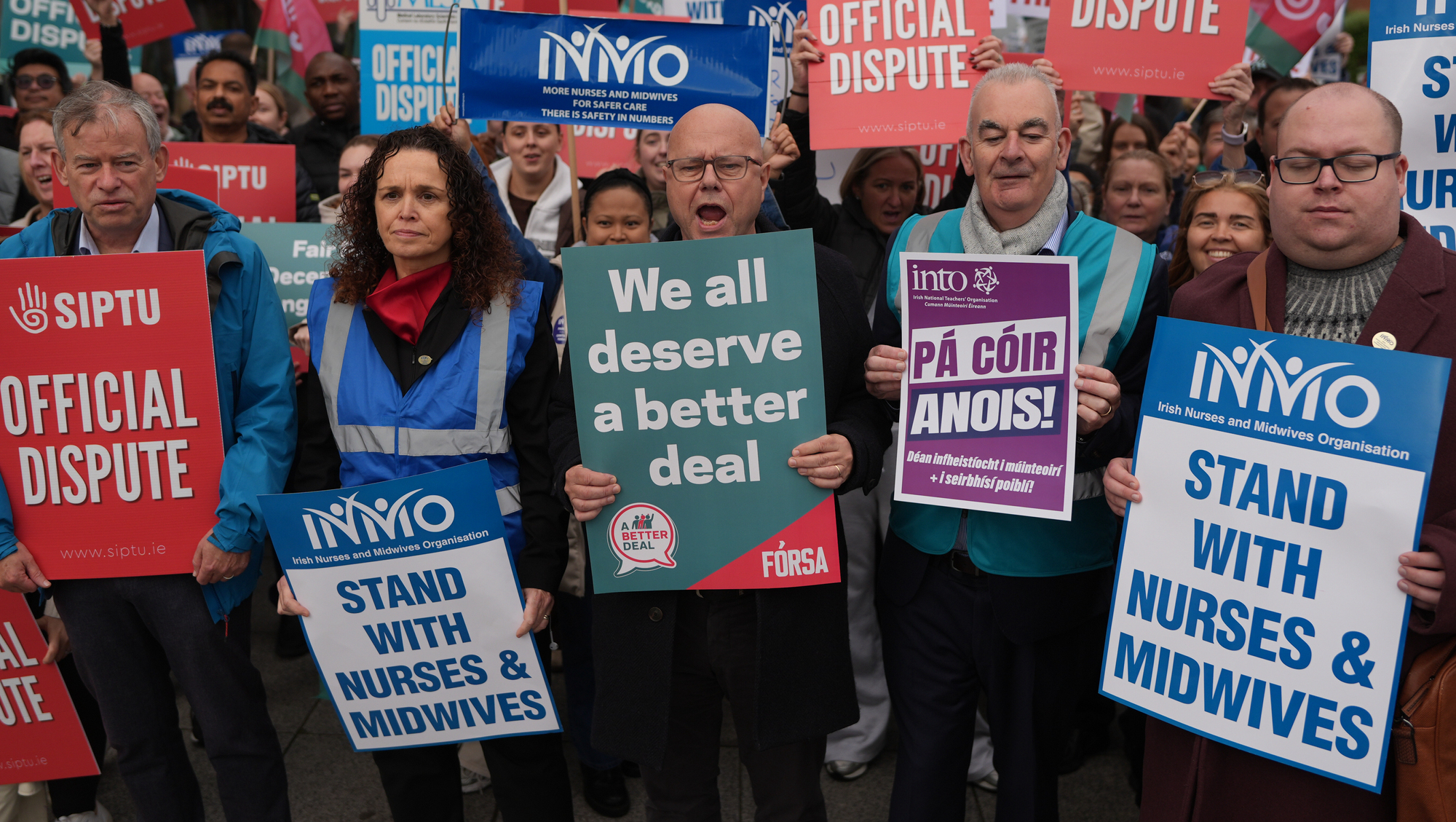
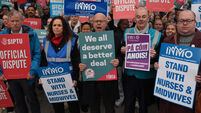
Deputy general secretary of SIPTU Adrian Kane, INMO general secretary Phil Ni Sheaghdha, Kevin Callinan Forsa's senior general secretary and Irish National Teachers' Organisation general secretary John Boyle join public sector workers, including nurses, doctors, teachers and civil servants, during a 24-hour strike over delays in agreeing a new public sector pay deal at Mater Hospital, Dublin. Picture: PA
With a draft public sector pay deal now agreed by the Government and senior union leaders, attention is shifting from the immediate threat of industrial action to what the agreement means for workers.
The overall package has been confirmed as a 10.75% pay increase over the full length of the deal, which will run for two years and nine months.
But what does the deal provide for the more than 420,000 public servants?
While the overall pay rise is set at 10.75%, it will be delivered in a number of phases over the 33-month duration of the deal.
There will be an initial 2% pay rise or a minimum payment of €1,200, whichever is greater. This will be paid and backdated to September 1, 2026.
Further pay increases will be introduced in 2027, 2028 and 2029.
- 1% pay rise on April 1, 2027.
- 1% pay rise or a minimum payment of €600 on August 1, 2027, whichever is greater.
- 1.5% pay rise or a minimum payment of €600 on November 1, 2027, whichever is greater.
- 1% pay rise on March 1, 2028.
- 1% pay rise or a minimum payment of €600 on June 1, 2028, whichever is greater.
- 1% pay rise on October 1, 2028.
- A local bargaining increase of 1% on March 1, 2029.
- A 1.25% pay rise or a minimum payment of €750 on March 2, 2029, whichever is greater.
However, provision for a further 1% local bargaining increase will be implemented through the next public pay deal.
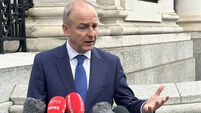
Public expenditure minister Jack Chambers has said the deal will deliver a minimum pay increase of 11.3% because of the compound effect of the increases.
The agreement also includes a clause allowing either the Government or unions to invoke a review if there is a significant change in inflation or other economic conditions.
Any review must be concluded within six weeks of being initiated.
Yes. The deal will increase the threshold for public service lower-pay provisions from €50,000 to €60,000.
This is expected to increase pay for those on the lowest salaries in the public service by as much as 18.3% over the duration of the deal.
Siptu deputy general secretary Adrian Kane told RTÉ's that this showed the deal was “unashamedly weighted towards the lower and the middle paid”.
Yes. New sectoral plans are to be drafted across the public service, including in areas such as education and health.
Mr Chambers told RTÉ Radio that, for teachers, this would include ongoing co-operation on areas such as curriculum reform, while in the health sector it would include the digitisation of HSE systems.
The deal states there is a “shared commitment” to ensure public servants have the necessary tools and resources to develop public services.
There has also been agreement on artificial intelligence, with unions and the Government committing to no compulsory redundancies as the use of AI expands.
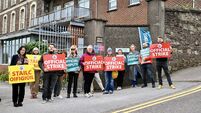
The planned public sector strike on Thursday has been called off, along with wider industrial action, including work-to-rule measures, while unions prepare to ballot their members on the deal.
The ballots are expected to be completed by early December.
Speaking on RTÉ Radio 1, Fórsa general secretary and chief union negotiator Kevin Callinan said he did not expect the deal to be accepted in a landslide, pointing to “a lot of issues” that remained.
“I think what we have done as a trade union movement is we have brought people together. I think they’ve seen their collective power,” Mr Callinan said.
“They can see that if you actually come together and do something about it through trade unions, you can make a difference. And that's a message not just for public service; that's a message for all workers.”
Asked whether workers might want more than was offered, Mr Callinan said: “Maybe they will, but I don’t think that’s a bad thing.”

CONNECT WITH US TODAY



Be the first to know the latest news and updates