Time will tell if Garda stones were turned over — and if any were thrown

You’d love to take Nóirín O’Sullivan at face value. You’d love to believe her when she talks about the guards moving from a blame to a learning culture. But fool me once, shame on me; fool me twice and I’ll see you at the Charleton Tribunal.
The Policing Authority heard from Ms O’Sullivan and her senior officers yesterday in Dublin Castle. She can expect to be making a few other appearances there. It will also host the Charleton Tribunal on whether gardaí attempted to blacken Sergeant Maurice McCabe in the old days when a blame culture prevailed within the force.
Today, it’s all about learning. Throughout yesterday’s hearing, there was constant talk of data and its power in policing, its “richness”. If policing was down to nothing but data, An Garda Síochána would be a beacon for 21st century policing.
Some data was not on hand though. On Wednesday evening, the members of the authority were in receipt of an interim report on the one million fake breath tests. The authority’s chair, Josephine Feehily, looked like somebody in need of a deep (real) breath to exercise some patience at the lateness of the delivery.
In any event, precious little of the great mystery was unveiled within the interim report. The authority was informed that the work of finding out who in the wide earthly world could have been responsible for such a thing goes on and on.
The fake breaths were mentioned only because the agenda for yesterday’s meeting was Roads Policing. The authority members asked a number of salient questions of garda management about supervision and policy in the area.
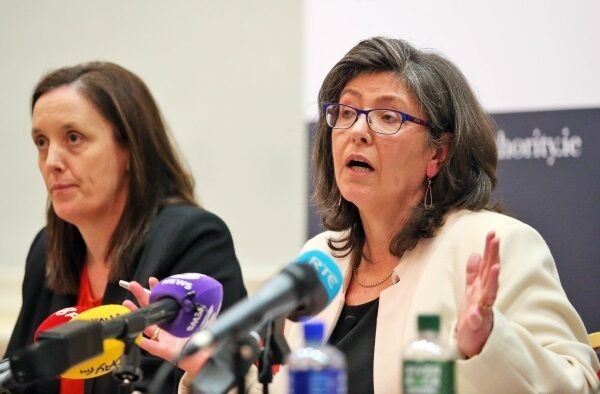
It was also revealed the gardaí are actively taking on board suggestions about roads policy — including notification for bereaved people — from road safety organisations like PARC and others. In this, and a few other areas, the authority appears to be bringing both transparency and fresh thinking to the force.
There were a few other noteworthy aspects to the meeting. At various junctures, Ms O’Sullivan and her team referred to straightened resources as restricting their capacity in areas of policing.
When the commissioner was directly answerable to the Minister for Justice, she stated that resources were not a problem. Now that the commissioner does not have to answer to politicians, maybe we’re getting a clearer picture.
The meeting was shot through with talk of data. Data on injuries, data on prosecutions data on breath tests, data on checkpoints.
(By the way, keep an eye out for possible revelations about fake checkpoint data. The figures at the moment suggest 400,000 checkpoints for one million real breath tests. The average number of tests per checkpoint is about five. The sums don’t add up).
There was discussion on homicide data. At one point Ms Feehily asked: “Do you have that thing called a report with a start and end?” No such luck.
That was one of the points at which a note of impatience could be detected creeping into Ms Feehily’s comments.
While her authority is only a year in the job, she has encountered a whole myriad of issues with the force, from treatment of whistleblowers to fake breath tests to redundant prosecutions to last minute reports.
After a gentle start to the authority’s regular meetings with garda management, perhaps she is signalling there will be no more Ms Nice Guy while direct questions regularly fail to elicit fulsome answers.
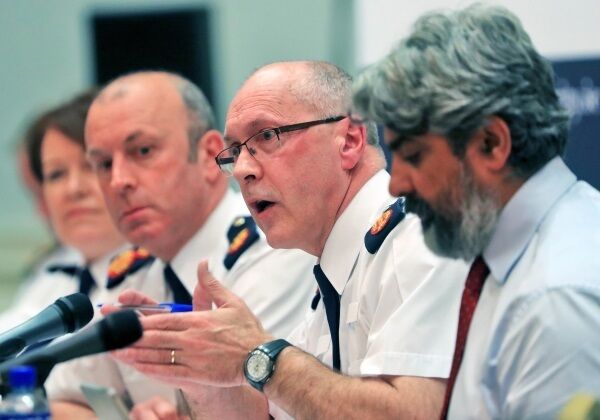
Towards the end of the meeting, Ms Feehily inquired as to a “fear” Ms O’Sullivan had expressed about falsification of data at a previous meeting. To what exactly was she referring.
The commissioner launched into a philosophical spiel about the travails of reforming a police force. “When we are going through radical reform we are turning over stones, stones that have not been turned over in decades,” she said. “When you turn over stones you find things and you bring them to the surface.”
How exactly senior gardaí brought Maurice McCabe’s upturned stones to the surface, and whether or not they pelted a few at his character, will be the subject of a different hearing at the Castle, in front of Judge Peter Charleton.
CONNECT WITH US TODAY



Be the first to know the latest news and updates











