Careers of Anglo bankers end in disgrace

Numbers man sold Anglo story to investors
Donegal native Willie McAteer graduated from UCD with a BA in Commerce and a Master of Business Studies degree. He went on to qualify as a chartered accountant and then as a member of the Irish Tax Institute.
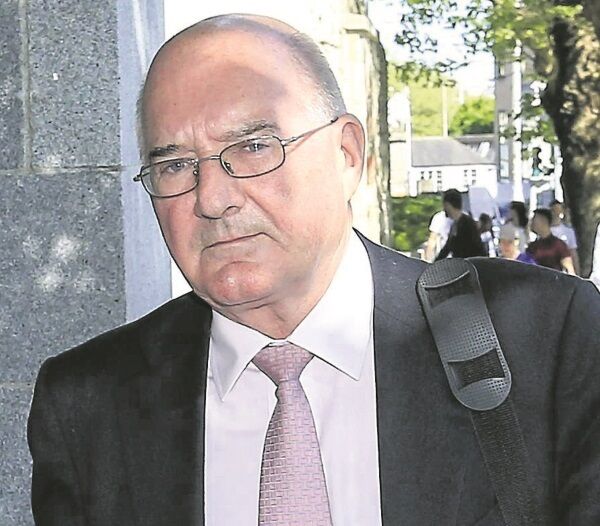
After becoming a partner in PricewaterhouseCoopers (PWC), McAteer went on to become managing director of Paul Coulson’s Yeoman International Leasing, a venture capital lending firm.
In March 1992, he was made redundant from Yeoman. He was offered a job by Seán FitzPatrick, then chief executive of up-and-coming Anglo Irish Bank and a man he knew from his tenure in PWC.
As finance director, McAteer was there for a 15-year stretch of continuous growth and expansion as Anglo became Ireland’s third-biggest bank, with interests in North America, the UK and eastern Europe. McAteer slotted into the role of an impressive numbers man who travelled frequently selling the Anglo story to international investors.
McAteer was appointed to the Board of Executive Directors and attended all meetings, although he was not at the meeting in December 2008 at which Mr FitzPatrick resigned.
When David Drumm was appointed as chief executive of Anglo in 2005, he relied on McAteer to introduce him to key investors. During the Drumm era, the bank doubled in size and McAteer was given responsibility for risk as well as finance. Matt Moran reported to him as his chief financial officer. Mr Moran, who was granted immunity by the State in the this trial, was seen as his heir apparent.
During the summer of 2008, McAteer attended some of the weekly “funding initiative” meetings held on Friday afternoon in Mr Drumm’s office. During these meetings, up to 30 different plans designed to increase deposits into the bank were discussed but by September, all but the ILP plan had fallen away. McAteer told gardaí he was aware of the ILP deal but not of the mechanics of it.
The trial heard that his main role in the transaction was, as chief risk officer, signing off on the credit excess required to allow the deals to go through the bank’s system. The €7.2bn deal was €6.7bn in excess of the normal credit limits. He would have also sat in on meetings of Anglo’s audit committee, which approved how the deal was presented in Anglo’s preliminary results.
On January 7, 2009, McAteer resigned from Anglo. Detective Sergeant Catharina Gunne told the trial on March 24, 2010, she went to McAteer’s then family home in Auburn Villas, Rathgar, and arrested the accused.
McAteer’s department, finance, was the department responsible for accounting the transactions in the bank’s balance sheet. He denied to gardaí the €7.2bn deposits were created for the purpose of creating a false impression as to the health of the bank and told investigators the accounts reflected the actual transaction.
Lawyers for McAteer told the jurors that if they accepted that McAteer believed that the deals were properly accounted for, this was not a view consistent with dishonesty or a conspiracy to defraud.
‘What happens is money goes round in a circle’
John Bowe studied accounting and finance in Dublin City University and left there in 1986. He then joined Standard Chartered Bank (Ireland) Ltd as a graduate trainee. In 1990, the business was acquired by West LB and around this time, he began working with corporate clients. In 1997, he left West LB and joined ABN Amro Bank.

In late April 2001, he joined Anglo Irish Bank as head of debt capital markets.
On arrival in that role, Mr Bowe was largely on his own and began recruiting staff internally and externally. He reported directly to Mr McAteer. In 2006, he was appointed to Anglo’s senior executive board, with Matt Moran and Peter Fitzgerald.
This board, chaired by David Drumm, operated at a level just below the bank’s main board and was tasked with issues around capital spend and day-to-day operations.
Judge Nolan said Mr Bowe was a lesser figure to the other accused in the management hierarchy. He was not a company director.
Judge Nolan told the jury that by 2008 treasury was run by Mr Cullen, Mr Fitzgerald and Mr Bowe but by September Mr Bowe had assumed “de facto leadership of treasury”.
In September 2008, Mr Bowe’s colleague Matt Cullen told Mr Bowe about a conversation he had with his counterpart in ILP, David Gantly, in which Mr Cullen told Mr Gantly they might be looking for more than €5bn in deposits.
He said Mr Gantly told him it wouldn’t be a problem because “you might be well be hung for a sheep as a lamb”.
The jury heard a number of phonecalls which involved Mr Bowe and his then chief executive David Drumm. During one call on September 19 Mr Drumm asked Mr Bowe about whether they had to “cash back” the “six billion from ILP” and Mr Bowe says yes.
Three days later Mr Drumm called Mr Bowe to tell him: “By the way, bigger picture. 30th September, even with the six billion fixes which Mr fucking Denis confirmed for me this morning ...we’re fucked”.
Mr Bowe agrees that “we’re still in a hole”. Mr Drumm then asks Mr Bowe “Are you going to be able to bloat the balance sheet ... over year end with short term interbank and all that sort of stuff and shove it into liquidity?”
In another call on September 29 Mr Bowe told Drumm and Mr McAteer about the “€6bn fix” with “permo” , explaining that “what happens is the money goes round in a circle”.
The following day, when the bank guarantee had came in overnight Mr Cullen and Mr McArdle were wondering if the ILP transactions would now cease.
Around €3bn had gone over and back at this stage. Mr Cullen approached Mr Bowe and asked him if they were still going ahead and Mr Bowe said they were, the trial heard.
CONNECT WITH US TODAY



Be the first to know the latest news and updates











