Brussels attacks: ‘I couldn’t believe it was him, but you can’t choose your family’
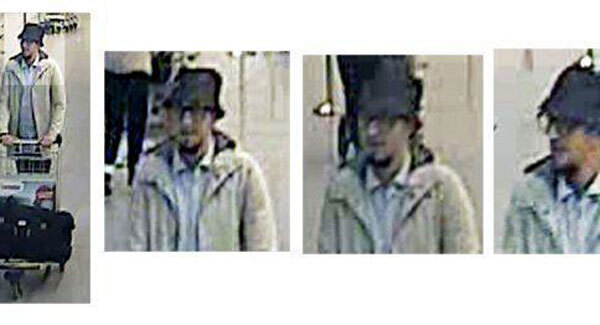
Mourad Laachraoui, the younger brother of one of the suspected Brussels airport attackers, told reporters this week he had “not noticed any changes” in his older sibling, Najim, and had “no idea” he was becoming radicalised.
Najim left for Syria in 2013.
Twenty-year-old Mourad, a martial arts champion who represents Belgium in international competitions, described his brother as “kind” and “intelligent”.
“I couldn’t believe that it was him, but you can’t choose your family,” he said.
His words echo those spoken last November by Mohammed Abdeslam, older brother of the accused Paris attackers Salah and Ibrahim, who described his siblings as “normal brothers” from an “honest family”.
Belgian authorities have been heavily criticised for failing to stop Tuesday’s triple attacks, which killed 31 people and injured at least 316.
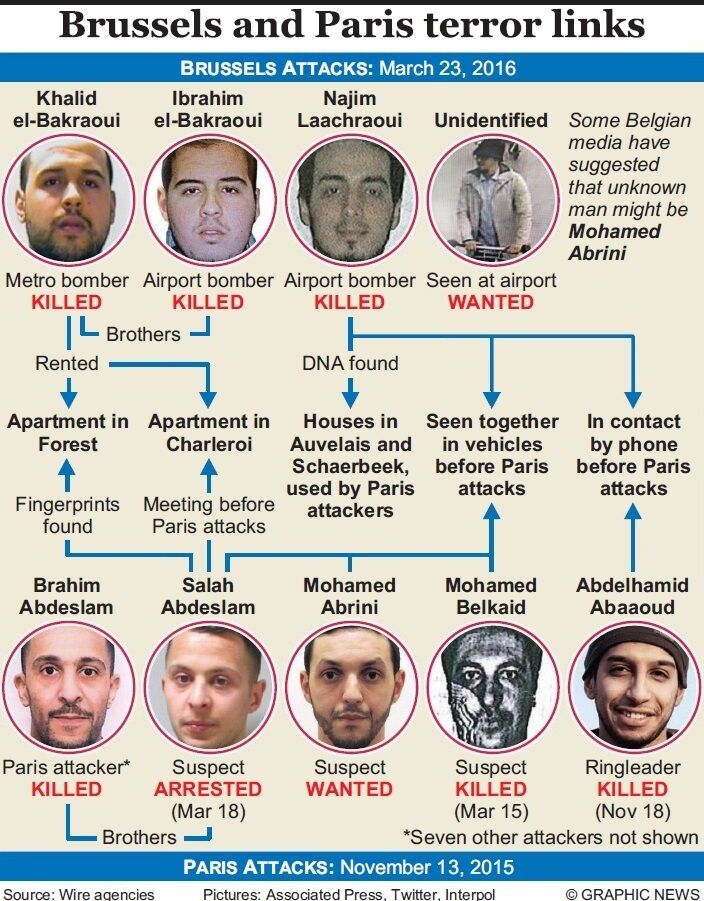
Brothers Khalid and Ibrahim El Bakraoui were both known to police before the bombings. An arrest warrant had been issued against Khalid last December on suspicion of using a false identity to rent hideouts for the Paris attackers; and Ibrahim was extradited from Turkey last summer, where he had been arrested on the Syrian border on suspicion of being a foreign fighter.
The Belgian federal prosecutor confirmed yesterday that Najim Laachraoui’s DNA had been found in two of the hideouts used by the Paris terrorists and on explosive material used in last November’s attacks on the Bataclan nightclub and the Stade de France. Laachraoui had also travelled to Hungary last September with Salah Abdeslam, the man charged in connection with the Paris attacks.
The developments indicate the existence of a home-grown and vast network of IS cells that Europol warned, in an eerily prescient January report, would strike other countries in Europe.
That report noted how the religious impetus for joining terrorist cells was being replaced by “more social elements such as peer pressure and role modelling”, and “the romantic prospect of being part of an important and exciting development”.
The UN’s special rapporteur on human rights and countering terrorism, in a February report, said governments needed to look at foreign policy when trying to root out radicalism. “A confluence of issues at local, national, and supranational level may all play a part… there can be too much focus on religious ideology as the driver of terrorism and extremism, while factors related to identity, or misguided altruism, are overlooked.”
And there are social and economic problems. Belgium sends the most jihadis in Europe per capita to Syria — more than 500 out of a total Belgian population of just over 11m.
Molenbeek, a neighbourhood in Brussels’ canal district, and Schaerbeek, an area in the north of the city on the way to the airport, keep cropping up in police raids. Both neighbourhoods post high levels of unemployment, at more than 30% in Molenbeek and over 25% in Schaerbeek.
Belgium’s federal prosecutor, Frederic Van Leeuw, said Paris attacker Salah Abdeslam had a “large network of friends and relatives that already existed for drug-dealing and petty crime” to help him hide out for four months.
The need to look at what drives people to commit terrorist acts has begun to preoccupy European governments — though it is far down their to-do list, behind ‘harder’ counter-terrorism measures such as surveillance, intelligence sharing, firearms control, and limiting terrorists’ financing.
EU justice ministers, meeting this week, agreed that deradicalisation was a priority, and are focusing on “countering the rhetoric of Daesh” online. Specifically, they want to use the recently established EU internet forum to get Google or Facebook to help remove terrorist content online and intercept terrorists’ who use encryption technologies.
The EU’s radicalisation awareness network, set up in 2011, has a €25m budget to support relatives of departed foreign fighters or fund programmes to help extricate unwilling extremists from radical groups.
The EU has a €3.8bn internal security fund to help fight terrorism, from which Belgian police received money in 2013 to train frontline staff to detect early signs of radicalisation.
Boots on the ground, information sharing, and border control are the measures on which EU countries are now concentrating.
The EU has also brought in additional checks at its external borders, with information gleaned from the checks — which have increased by 300% since 2013 — shared through the Schengen Information System, the migration database of which Ireland is now part. EU ministers also want the swift adoption of rules on exchanging air passenger data, but the European Parliament has blocked an agreement over privacy concerns.
Information is power, and it has been closely guarded by EU countries keen to protect their own interests. “You have a history where there wasn’t the kind of sharing that is now needed,” said Justice Minister Frances Fitzgerald.
“I wouldn’t assume that information is not being exchanged, but clearly there are gaps.
“Sometimes people are known to police agencies already and it shows the complexity of surveillance and exchange of information.”
The EU’s counter-terrorism co-ordinator, Gilles de Kerchove, struck a positive note, saying Europe had “strongly reduced our vulnerability” to terror. However, he said the perennial problem remains: “The more we put pressure on Daesh in Syria and Iraq, the more the organisation is tempted to commit atrocities.”
CONNECT WITH US TODAY



Be the first to know the latest news and updates