Portugal set to get €80bn bailout
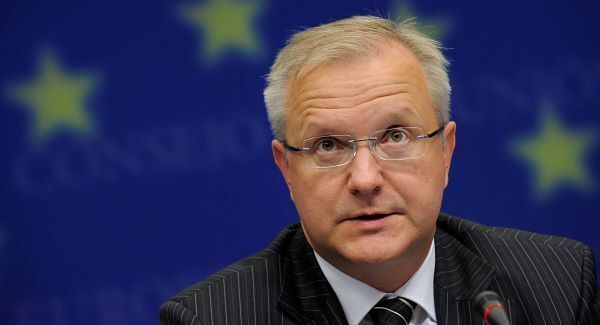
EU finance ministers agreed to the bailout at a meeting in Budapest yesterday, saying the full three-year programme should be agreed by mid May — before the elections take place.
The interest rate will be similar to that currently being paid by Ireland which is due to be reduced by 100 basis points at the end of June, but the exact rate for Portugal will depend on the length of the loan.
But to get the money, the outgoing Socialist government and the current centrist party opposition, who voted against the tough measures triggering the government collapse, will have to agree on the austerity programme.
Economics Commissioner Olli Rehn acknowledged the political difficulties but said that the caretaker government will have to come to an agreement with the main opposition parties on the programme.
“Some elements of the programme were not approved so it cannot be exactly the same, but it’s a point of reference and a starting point,” he said.
“We need cross party agreement and we may have to do some final adjustments immediately after 5 June, when the election is over.”
The fact that Portugal has sufficient resources for its bond repayments in April but will need EU funds for the €4.9 billion repayment due on June 15 no doubt will encourage agreement.
The main parties have already agreed that the budget deficits should decrease from the current 8.6% of GDP to 4.2% in 2012 and 2% in 2013, eurozone president and Luxembourg finance minister Jean Claude Juncker said.
The other changes, yet to be agreed, will be mainly structural, he said. Normally this means changes to the labour market laws making it easier to hire and fire people and reducing centralised wage setting.
Such “rigidities in the system” have been blamed for the fact that Portugal’s growth rate has been below 1% a year for the past decade, leaving the economy stagnating even as those of other EU countries powered ahead. They will also have to sell off state assets including a bank, and various utilities, Mr Rehn said.
The member states will have to approve any package — which should happen at their May 16 meeting — but some, such as Finland, warned that the conditions must be strict.
Finance Minister Jyrki Katainen — tipped to become Finland’s prime minister after next week’s elections, said: “The package must be really strict because otherwise it doesn’t make sense. It must be harder and more comprehensive than the one the parliament voted against.”
The Netherlands, was equally tough. Their Finance Minister Jan Kees de Jager said: “They have to make a complete U-turn in their economic policy.”


CONNECT WITH US TODAY



Be the first to know the latest news and updates