Ireland’s volatile GDP data masked solid domestic growth
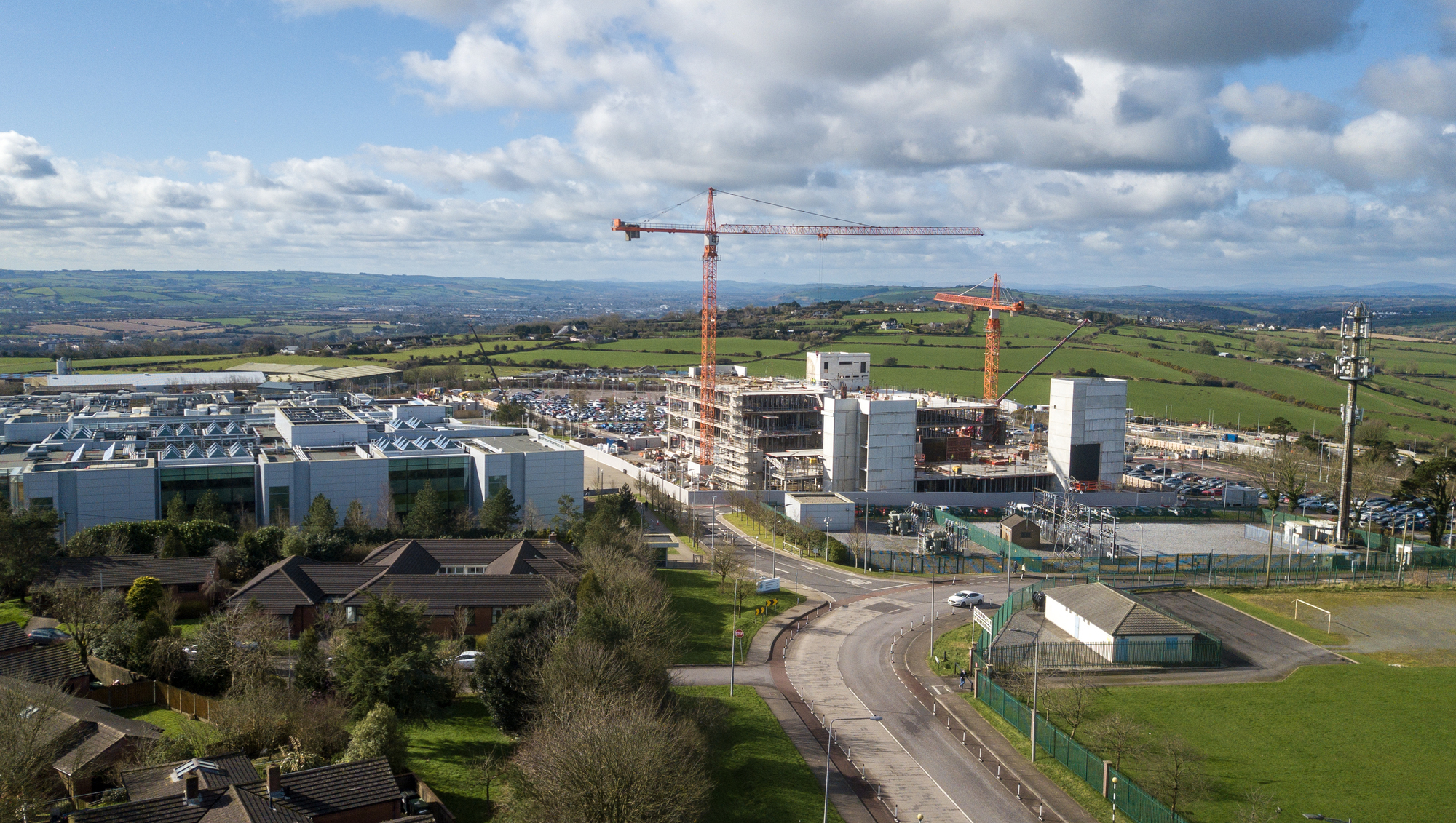
Development continues at the Apple Computer campus in Hollyhill, Cork; Ireland’s tech sector grew 8% last year. Picture Dan Linehan
Ireland’s latest national accounts data for Q4 2023 reveal a sharp fall in growth in 2023, with GDP declining by 3.2% in 2023, revised down from a provisional estimate of a 1.9% decline.
At face value, this out-turn is the sharpest decline in the Irish economy since the global financial crisis.
In reality, GDP is a wholly unreliable indicator of the Irish economy due to the presence of a small number of very large multinationals, whose activities generate volatility in the macroeconomic data.
Other indicators such as employment, consumer spending, and exchequer tax revenues provided a more reliable picture of the economy last year, with each pointing to moderating, yet robust growth in the Irish economy compared to 2022.
The key driver of the fall in GDP in 2023 was activity in the pharmaceuticals sector, which dominates Ireland’s industrial output and goods export.
The Central Statistics Office indicated that a very small number of companies’ activities in this sector drove the decline in GDP, likely linked to a normalisation of sales post-covid, as well as some corporate restructurings.
A broader decline in business investment last year following the surge in machinery and equipment investment post-covid in 2022 also weighed on GDP but was a much smaller contributor than the pharma sector decline.
The other key multinational sector, Information and Communication — which includes the tech sector — held up relatively well, rising 8%, despite reports of job losses across the sector.
This left overall multinational sector growth down 6.8% in 2023 compared to a 3.8% gain in domestic sector output.
On the expenditure side, consumer spending grew by 3.1% in 2023 and was up 1.5% year-on-year in Q4 2023.
While a solid out-turn, spending growth has trended weaker throughout 2023 as the impact of inflation blunted household’s purchasing power, alongside a general normalisation in spending patterns post-covid.
Modified investment, which excludes some volatile categories such as aircraft purchases, fell 7.1% in 2023 following a 16% rise in 2022, reflecting not only the aforementioned decline in machinery and equipment investment but weaker trends in the construction sector.
While residential activity continued to grow at an elevated pace (up 9.4% year-on-year), other Building and Construction investment fell 4%, owing to the slowdown in the commercial real estate sector.
Looking ahead to 2024, lead indicators suggest domestic growth has sustained a similar pace in early 2024.
Ireland’s manufacturing PMI moved back into expansionary territory in February, and confidence indicators have generally improved amid a more supportive economic backdrop of easing inflation and a strong labour market.
- David McNamara is chief economist with AIB