David McNamara: Markets at odds on outlook for Middle East conflict
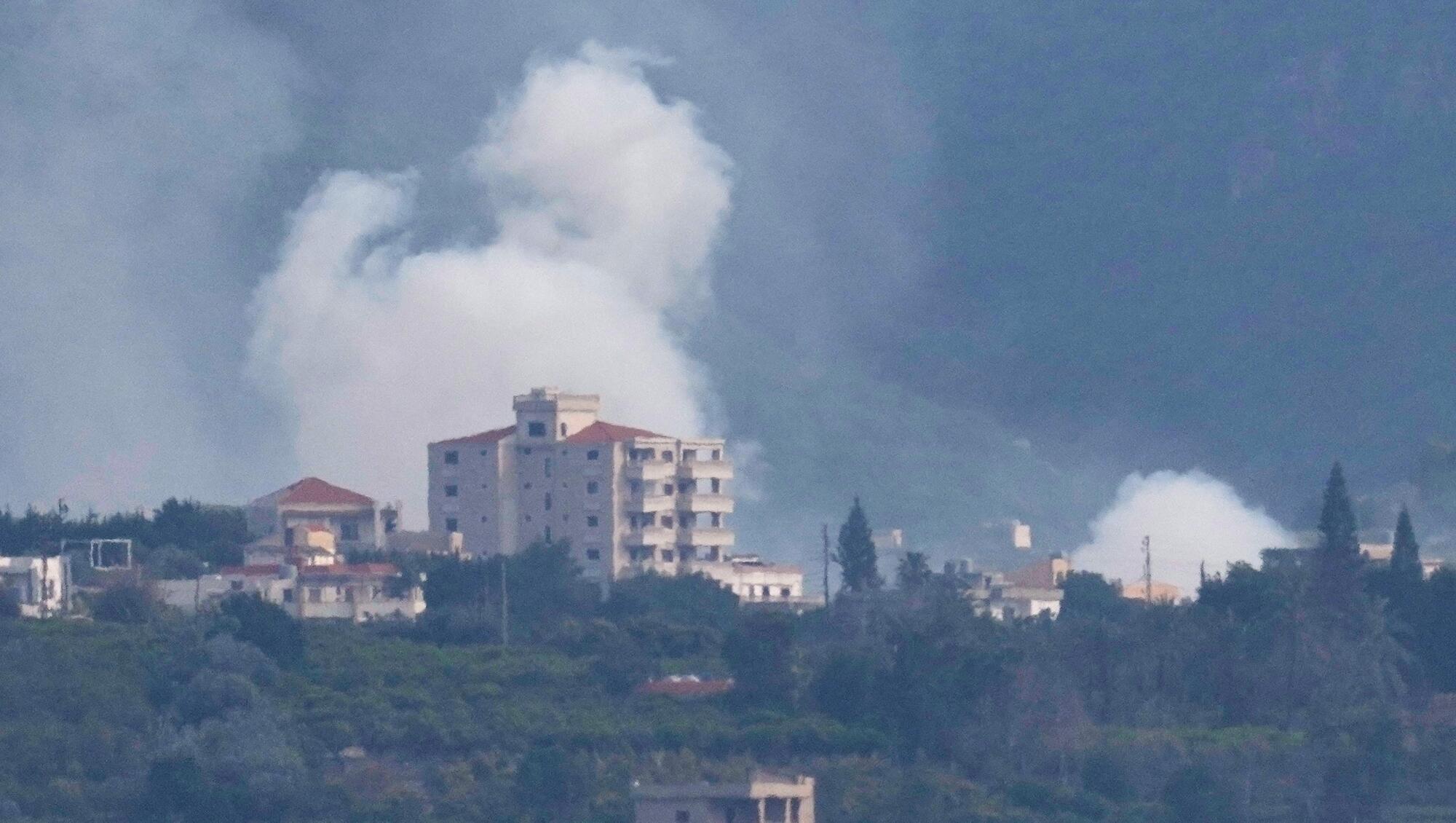
Smoke rises from Israeli shells attacking the village of Qlaile in south Lebanon at the weekend. Picture: AP Photo/Hussein Malla

Following a further week of uncertainty in relation to the Middle East conflict, including hints of a ceasefire deal, markets have continued to grind lower, and oil prices move higher. While energy futures markets continue to price in a quick fall in oil prices on the back of a cessation in hostilities, the reality of the infrastructure damage in the Middle East is beginning to emerge.
Last week, the French government indicated 30% to 40% of Gulf refining capacity has been damaged or destroyed by Iran's retaliatory strikes, leaving a shortage of 11m barrels a day on global oil markets that could take up to three years to restore, and several months to restart those that were shut down since the beginning of the war.
This loss is equivalent to around 10% of global oil demand, and does not include the oil and gas capacity, which is undamaged, but not operational due to the closure of the Strait of Hormuz at present. Other key exports markets are also severely disrupted, including fertiliser and natural gas derivatives which feed into production processes in diverse sectors such as agriculture, pharmaceuticals, and microchips.
The first signs of the shock in the survey data have also emerged, with the release of the flash PMIs and consumer sentiment surveys which showed a sharp downturn in economic confidence, alongside a surge in input price inflation for businesses in Europe to the highest rate since early 2023.
Nevertheless, futures market continues to price in oil falling to $84/barrel by the end of 2026 and $72 by the end of 2027. This terminal price level in 2027 is little changed from the beginning of March and suggests some market complacency regarding the potential economic impact from the current conflict.
However, interest rate markets tell a very different story, with two-year swaps sharply higher since the beginning of the month, by around 80bps in euro rates and 100bps in UK rates. This indicates that interest rate futures are pricing in a very different inflation and central bank rate scenario to the one embedded in the oil and gas curves.
The dichotomy between the two may reflect investors' views that central banks could take a heavy-handed approach to cut off second round inflation effects from emerging, following the experience in the aftermath of the Russia-Ukraine war. Only time will tell if this is correct.
Overall, the truth could lie somewhere in between the scenarios implied by markets, but it is worth noting that the economy is in a very different position compared to 2022. Today, inflation is close to the 2% target, base rates in the main advanced economies are largely restrictive or neutral, while medium-term inflation expectations are well anchored at the 2% level. In February 2022, inflation was already at 6%, base rates were zero, and expectations had become unanchored, as the global economy faced its first inflation shock since the 1980s. This time however, the global economy and central banks face the current crisis in a relatively robust starting position.