Rumours of Labour’s death are greatly exaggerated
The bleak picture of socialism proclaiming its imminent extinction does not do justice to a reality which is more mundane writes
The present crisis of the Labour Party is greatly misunderstood, its demise grossly exaggerated.
The premature obituaries of the Labour Party are misguided and misguiding. The time has come to put an end to these rumours, not for the sake of a party which has been a permanent force in Irish politics since 1912, but for the benefit of the whole country. Ireland needs the Labour Party, now more than ever.
In a recent opinion article in this newspaper “The big question for Labour won’t be answered by a change of leader”, Gerard Howlin invites us to compare the Catholic Church with the Labour Party. We are told that in comparison with Labour, Irish Catholicism is in rude good health, but Labour is now “on life support”, it has “no assurance of continuity”, facing “the threat of extinction”.
Basing his assessment in part on the decline in other socialist parties in Europe, but also on developments within Irish politics, which sees the Labour Party struggling in opinion polls, Mr Howlin draws a bleak picture of the Labour Party but it does not do justice to reality.
Like an impressionist painting, it pays no attention to details. The reality of the Labour Party today is different from this depiction: Much more mundane, much less dramatic.
The fortunes of political parties can best be described by a cyclical movement, a succession of crests and troughs. Yes, the Labour Party is doing less well than in the past, and yes, it has been healthier, but the patient is not in ER.
Let’s not forget that political commentators were getting ready to recite swan songs for Fianna Fáil after the general election of 2011, and yet they bounced back.
Labour can take heart from the fact that globally socialism is not in retreat, in fact in many ways it has never been healthier.
Donald Trump may be sitting in the White House, but for the first time in the history of the United States, thanks to the tireless work of Bernie Sanders and Alexandria Ocasio-Cortez, socialism is no longer a profanity or a term of abuse.
In the UK, the socialist rhetoric of Jeremy Corbyn has turned the fortunes of the Labour Party, now riding at 37% in the latest YouGov/Times opinion poll.

Perhaps more relevant to Ireland is the political landscape of another European country that, like us, has been through the highs of a financial bubble and the lows of austerity: Spain. The current Spanish prime minister, Pedro Sanchez, is a socialist, and Spanish politics includes another major socialist force in Podemos.
Of course, it is legitimate to speculate why, in Ireland, the Labour Party is currently trailing other political forces. One reason is that when it comes to social issues, the Labour Party has always been ahead of the curve, but is seldom rewarded for its impeccable foresight.
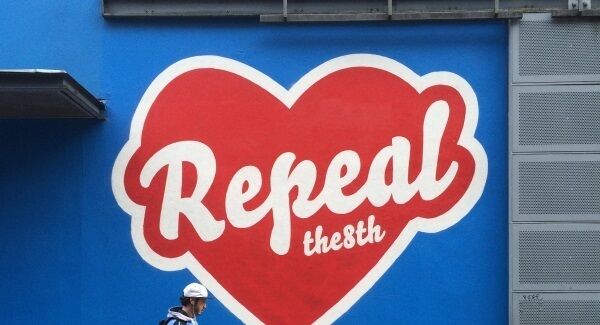
In the referendum on the Eighth Amendment last May all the political parties campaigned for Repeal. The mood was so positive it almost turned into a carnival.
Canvassing for Repeal became the norm. But that was not always the case. In 1983, only the Labour Party had the courage to campaign against the Eighth Amendment of the Constitution Act, which by inserting a subsection recognising the equal right to life of the pregnant woman and the unborn condemned thousands of women to physical and psychological abuse for decades to come.
Likewise the electorate chose not to reward the Labour Party for the many good things it helped to achieve over the last few years — two increases to the minimum wage; the first improvements to reading and maths scores in schools for a generation; the enactment of collective bargaining legislation; or even the rescuing of our economic sovereignty.
These are tangible successes that the Labour Party can be proud of.
The fact that in the last general election the Labour Party was not acknowledged for these achievements does not take away from their value. For those affected, they were worth fighting for, notwithstanding the subsequent electoral results.
And so, if we suffer policy reverses or electoral defeats, we roll up our sleeves, and we go again: proud of what we’ve achieved, determined to put right what we have not, and always ready to take on the responsibility of doing something for the least-advantaged members of our society.
Ireland needs the Labour Party because the Labour Party has the courage of its convictions.
The two main parties are perfect specimens of the modern “catch-all” party: a political party that is not defined by a distinctive philosophy or a clear set of principle, but merely wants to appeal to the largest amount of the electorate by attracting people with diverse political viewpoints.
People are getting tired of the politics we are witnessing. Parties on the one side who hold power but are not solving the problems and parties on the other side who fight for change but don’t want the power to deliver it. Labour is committed to change and is committed to doing the hard yards to deliver it. As a minority party in Government, ours has always been a harder road.
It is a road littered with many achievements and along the way we have made mistakes — many of them. But Labour, more than any other party, has helped to change Ireland in the last 50 years from a confessional state to a new republic.
In 2018, the economy is going strong again, growing at a fast rate, but economic prosperity is fertile ground for inequalities to proliferate. The current housing crisis is not only about homelessness, it is also about hard-working families who cannot afford to pay a mortgage or over-inflated rents.
And of course the housing crisis is only the tip of the iceberg of social injustice and where there is social injustice there is a need for Labour and right now Ireland needs the Labour Party.
Socialism is a positive, vibrant, strong ideology, and it is gaining momentum. The Labour Party is here to stay, and that is good news for everyone in Ireland.

CONNECT WITH US TODAY



Be the first to know the latest news and updates