Evacuees from occupied Oleshky arrive in Belarus en route to Ukraine
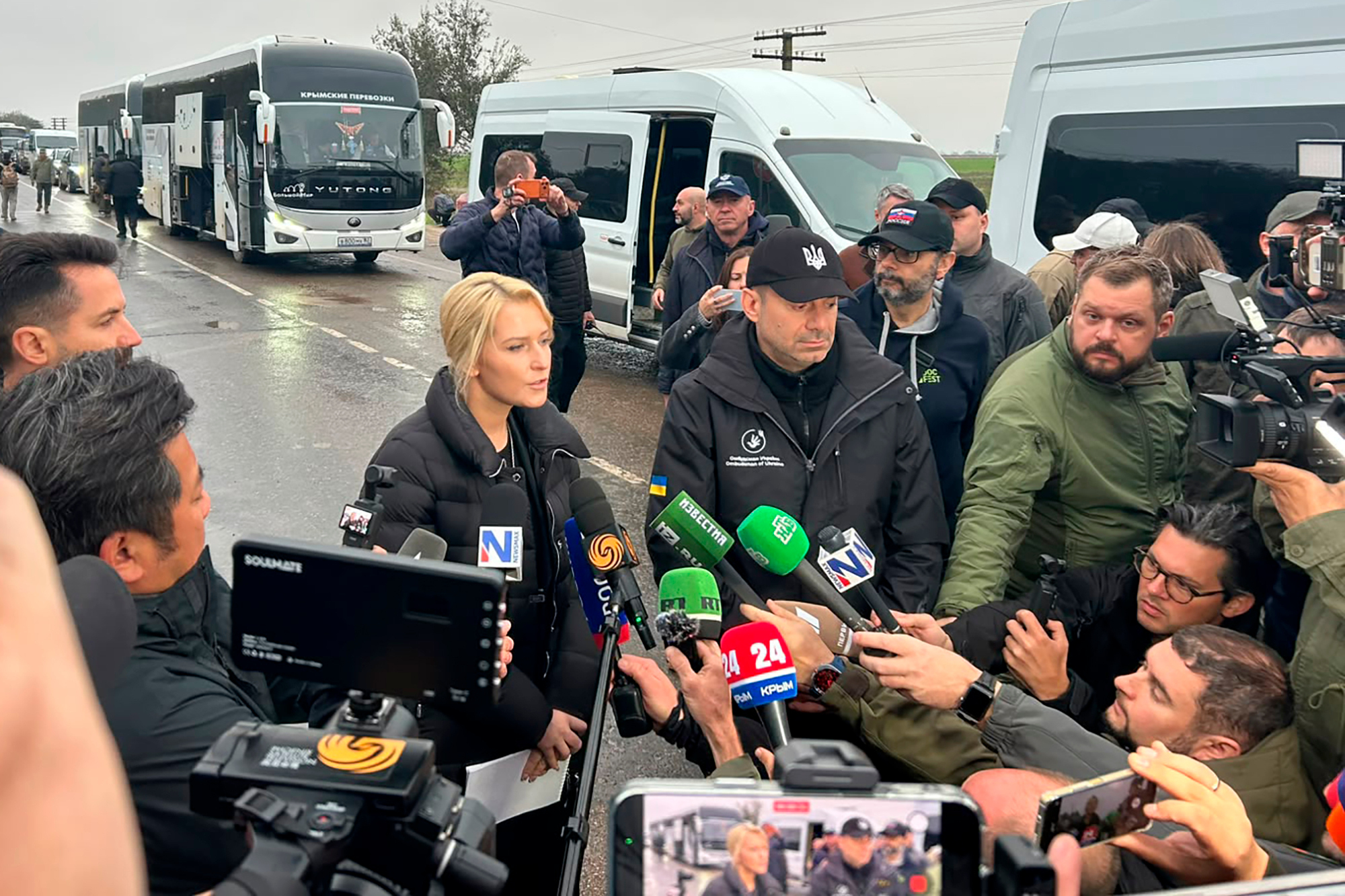
Evacuees from Russian-occupied Oleshky in Ukraine arrived in Belarus on Saturday on their way back to Ukraine, part of a major rescue operation carried out under the most significant truce since Russia’s full-scale invasion of Ukraine four-and-a-half years ago.
The ceasefire in Ukraine’s southern Kherson region, which the White House says was brokered with help from US first lady Melania Trump, began at 3am on Tuesday and is expected to continue through Sunday evening.
It was a rare joint Russia-Ukraine humanitarian effort, a brief respite in the grim war.
Civilians from Oleshky, on the Dnipro River, began the long journey out of the war-ravaged region in bus convoys on Friday.
The estimated 2,000 remaining residents were offered the choice of traveling to Ukrainian or Russian-held territory, or remaining in the city with replenished food and medical supplies.
Russia’s ministry of defence said those who chose to travel from Oleshky to Ukrainian-held territory were taken to the Russian city of Anapa and flown to the Belarusian city of Homel.
They were accompanied by Dmytro Lubinets, Ukraine’s commissioner for human rights, it said.
“We will be home soon,” said a video post from Lubinets at Homel airport.
Four planes with the evacuees landed in Belarus and the passengers would be on Ukrainian territory “within hours”, said Ukrainian lawmaker Davyd Arakhamia.
Relatives waited on Saturday at the Ukrainian-Belarusian border, along with aid tents, coffee stands and even provisions to feed the pets the evacuees were bringing with them.
Volunteers from organisations, including the Red Cross, Doctors without Borders and the World Central Kitchen, were also there.
Liza Paliy, 19, who last saw her father more than two years ago when she, her mother and sister fled from the occupied territory while he stayed behind, was among those waiting.
“We thought at that time that it would be a month, two maximum, and we would return, but unfortunately, two years have already passed,” she said.
Daria Pavlyn also waited at the border in hopes of reuniting with her father, Mykhailo, whom she had not heard from in about a month.
He had planned to flee the occupied territory with his family after a nearby strike killed two neighbours but stayed behind when arrangements to care for the family’s home and animals fell through.
“We realised that, well, there was no (other) way, and he walked us to the road and that was it — that was the last time” they saw him, Ms Pavlyn said.
Russian media outlets on Saturday showed civilians arriving at a temporary accommodation site in Simferopol on the Ukrainian peninsula of Crimea, which Moscow annexed in 2014.
Russia and Ukraine have not specified how many people chose to leave the city, but the US first lady posted on social media Friday that the humanitarian convoy could safely evacuate more than 750 people.
Apart from Melania Trump, Pope Leo XIV — the first American pontiff — also pressed Russian and Ukrainian leaders to allow aid deliveries and civilian evacuations.
Russia’s ministry of defence said on Saturday its forces had shot down 433 Ukrainian drones overnight.
Ukraine’s President Volodymyr Zelensky said Moscow launched drone attacks on energy and railway infrastructure across Ukraine overnight, leaving 280,000 households in Dnipro and Kyiv regions without power.

CONNECT WITH US TODAY



Be the first to know the latest news and updates