Thousands join Pride marches in Romania and Bulgaria in call for equality
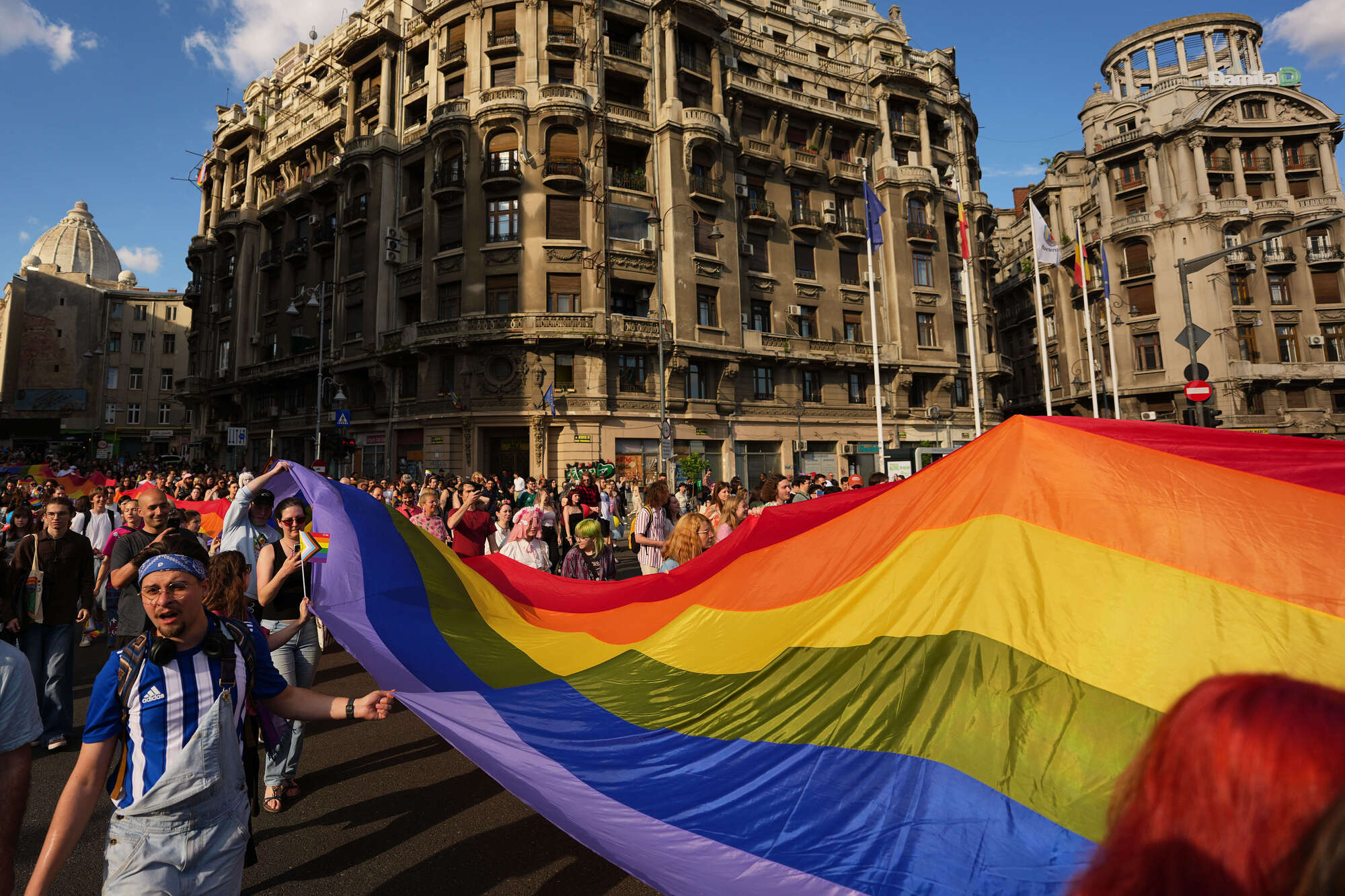
Tens of thousands of LGBT+ supporters took to the streets of Romania and Bulgaria’s capitals on Saturday for their annual Pride parades, against a backdrop of rising opposition from conservative groups in the Orthodox Christian countries.
Marchers walked through Bucharest in Romania and Sofia in Bulgaria, waving colourful flags and blowing whistles and calling for equality.

Both Romania and Bulgaria joined the European Union in 2007. Ahead of accession to the bloc, both countries adopted human rights legislation to meet EU standards, despite public opinion polls often indicating a lack of support for the community compared with other EU countries.
In ILGA-Europe’s 2025 Rainbow Map, which assesses the legal and policy landscape for LGBT+ people across Europe, Romania and Bulgaria ranked last among all 27 EU countries.
Alina Purcaru, a writer who attended the Bucharest march, said: “We still have a deeply conservative society, with very strong traditional values. We still live in a patriarchy, sometimes explicit … with a lot of prejudice and a lot of fear.”
Romania and Bulgaria do not recognise same-sex marriage or civil partnerships, despite the bloc prohibiting discrimination based on sexual orientation.
Vlad Viski, president of the non-governmental organisation MozaiQ, told The Associated Press: “That is why we are taking to the streets today … to demand the legalisation of civil partnerships.
“We are talking about essential rights, such as the right to inheritance, hospital visits, medical decisions, survivor’s pension,” he added.

Simeon Vassilev, one of the organisers of Sofia Pride, told journalists on Saturday that in Bulgaria, “thousands of same-sex couples live together, build homes, raise children, and care for one another … without the right to legal protection or recognition of their relationships”.
In recent years, hostility and hate speech against the LGBT+ communities in the two Eastern European countries have been on the rise, according to rights groups.
On Saturday, anti-LGBT+ rallies were held in both capitals.
In Sofia, a “March of the Family” rally — set up by right-wing and religious groups in 2021 — celebrated “Christian, patriotic and traditional values” in its Saturday event.
The conservative Orthodox Church, which unites some 80% of Bulgarians, expressed its “disagreement with the ideas and messages” and blessed the “traditional family”.

In Bucharest, a “March for Normality” was also held by a nationalist group.
This year’s Pride event in Sofia was billed under a “Different Together” banner, with the organisers hoping to counter widespread rhetoric against the community.
Additionally, the “Progressive Bulgaria” party of Prime Minister Rumen Radev, which won an April general election, voiced support for the “March of the Family” in Parliament, saying that it’s “a cornerstone of our national security, identity and future”.
The Bulgarian Helsinki Committee criticised the statement for “placing one type of citizens as more valuable than others”.


CONNECT WITH US TODAY



Be the first to know the latest news and updates