Israel and Lebanon agree to extend ceasefire by three weeks, says Trump
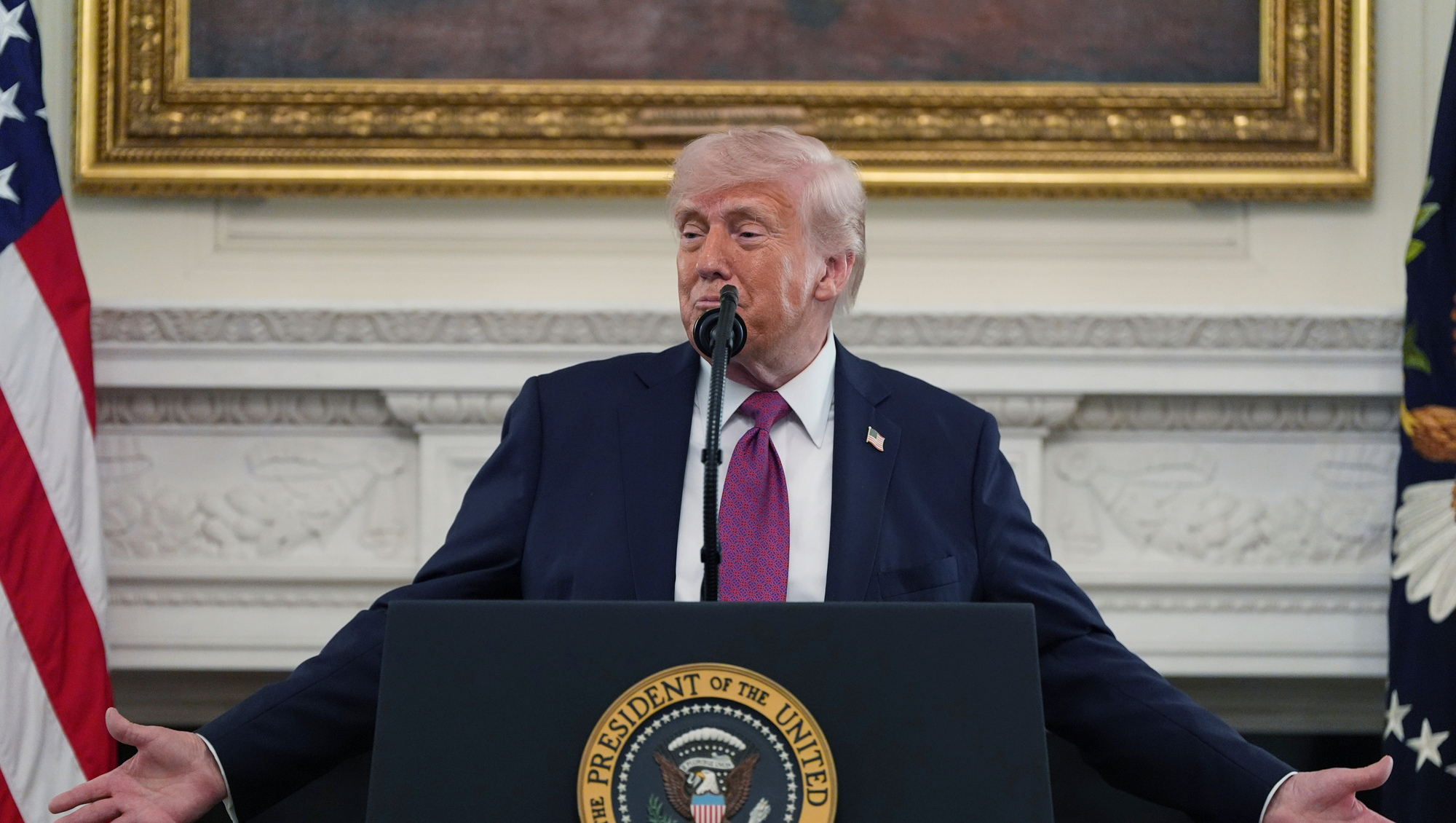
President Donald Trump speaks during an event for NCAA national champions in the State Dining Room of the White House, Tuesday, April 21, 2026, in Washington. Picture: AP Photo/Alex Brandon
US president Donald Trump has said Israel and Lebanon have agreed to extend a ceasefire between Israel and Hezbollah by three weeks after talks at the White House on Thursday.
Mr Trump said the meeting between Israel’s and Lebanon’s ambassadors to the United States went “very well”.
The meeting was the second high-level negotiation between the two countries since last week.
Read More
The initial 10-day ceasefire, which took effect last Friday, had been due to expire Monday.
Mr Trump greeted Lebanese ambassador to the US Nada Hamadeh Moawad and her Israeli counterpart Yechiel Leiter on their arrival. In addition to Mr Trump, the US was represented by Vice President JD Vance, Secretary of State Marco Rubio, State Department Counsellor Michael Needham, ambassador to Israel Mike Huckabee and ambassador to Lebanon Michel Issa.
Mr Trump said he will host Israeli Prime Minister Benjamin Netanyahu and Lebanese President Joseph Aoun at the White House in the “near future”.
The latest war started when Hezbollah fired rockets into northern Israel, two days after Israel and the US launched attacks on Iran.
Israel responded with widespread bombardment of Lebanon and a ground invasion in which it captured dozens of towns and villages along the border.
Israel’s military currently occupies a buffer zone stretching as much as 10km (six miles) into southern Lebanon. Israel says it aims to remove the threat of short-range rockets and anti-tank missiles being fired toward northern Israel.
Since the earlier ceasefire went into effect last week, there have been multiple violations by both side sides.
On Wednesday, Amal Khalil, a well-known Lebanese journalist covering southern Lebanon, was killed by an Israeli strike.
Lebanese health officials said the Israeli military opened fire on an ambulance that responded to the scene, preventing rescuers from reaching her. Her body was pulled from the rubble of a collapsed building several hours later.
The Israeli military denied that it had deliberately targeted journalists or fired on rescuers, but the case sparked widespread anger in Lebanon ahead of the Washington talks.
After a Cabinet meeting Thursday, Lebanon’s Deputy Prime Minister Tarek Mitri said the government is working on a report documenting alleged war crimes by Israel and that ministers had discussed joining the International Criminal Court.
The latest Israel-Hezbollah war has killed around 2,300 people in Lebanon, including hundreds of women and children, and displaced more than one million people.
Last week’s talks were the first between Israel and Lebanon since 1993. Both countries have relied on indirect communication, often brokered by the US or Unifil, the United Nations peacekeeping mission in southern Lebanon.
Lebanon’s top political authorities, critical of Hezbollah’s decision to fire rockets toward Israel on March 2 in solidarity with Iran, quickly proposed direct talks in a bid to stop the escalation, hoping Israel would not launch its ground invasion.


CONNECT WITH US TODAY



Be the first to know the latest news and updates