How the war in Iran is driving up the cost of building Irish homes
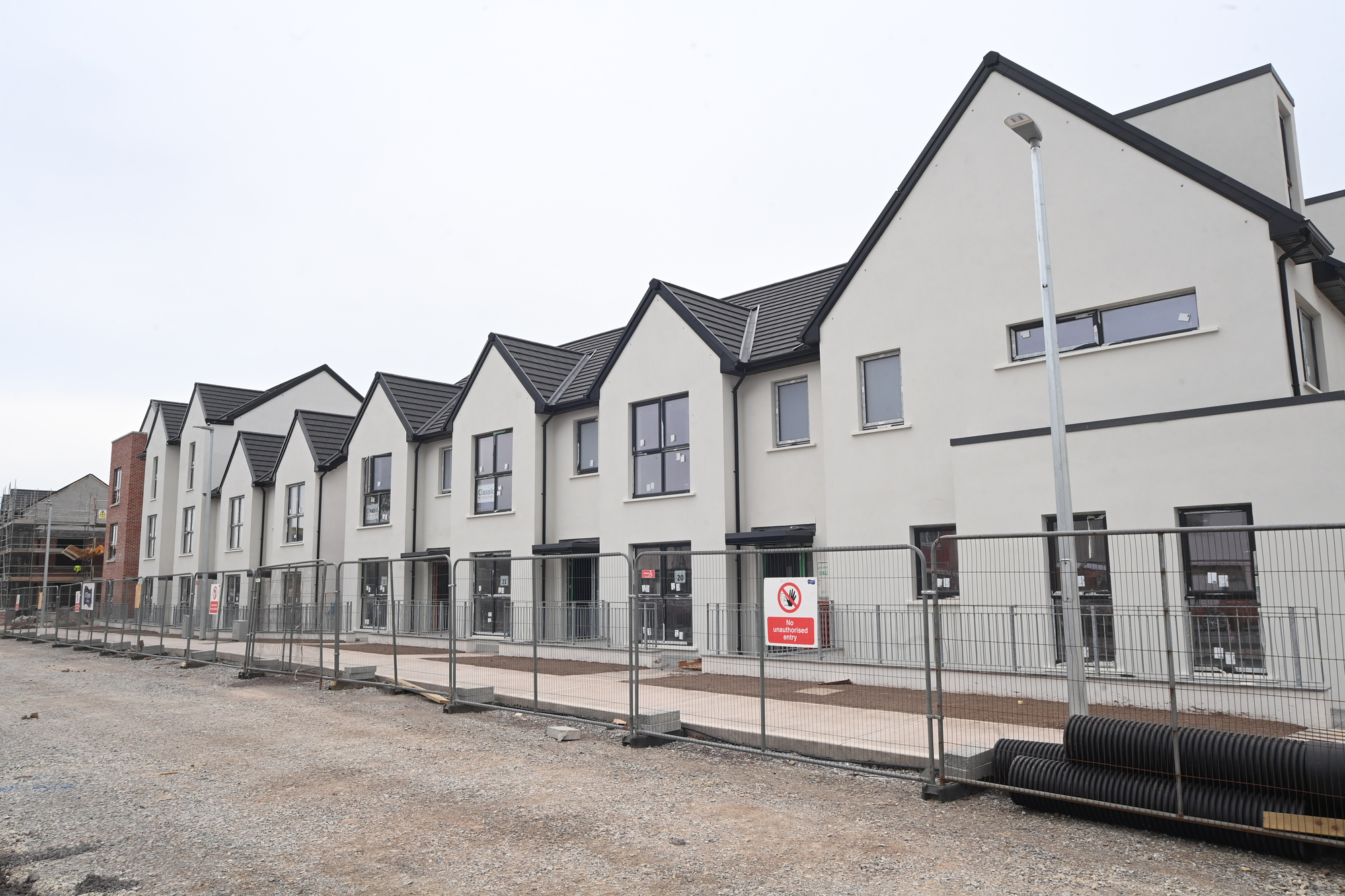
'Because of those little levels of commencements, we are really worried, particularly about 2028 and 2029.'
Due to lower levels of planning permissions being granted and fewer commencements, the construction sector is “really worried” about housing completions over the coming years, with the onus now on local authorities to zone more serviceable land, the chief executive of the Construction Industry Federation (CIF) has said.
Housing completions did increase year-on-year during 2025, up 20.4% to 36,284, and while the sector is expecting another small increase this year, there are concerns about the longer term, especially as housing targets get more and more ambitious.
Read More
In November 2024, the Government agreed a target of 41,000 homes for 2025, with the further target of completions increasing incrementally to 60,000.
The number of planning permissions granted in 2025 stood at just under 35,000, up 7.9% larger, driven by an increase in the latter half of the year.

Housing commencements across the country fell to just 16,412 last year, from the 70,000 recorded in 2024. However, 2024’s numbers are skewed by Government initiatives such as the development levy waiver and the Úisce Éireann rebate which led to construction firms fast-tracking projects towards commencement.
Andrew Brownlee, chief executive of the CIF, said the housing completion figures for last were “encouraging” and the “signs are that it could well be a small increase in 2026 as well”.
“The worry was always in terms of the planning permissions that were coming through, and those levels were really concerning. Although we have seen a bit of a bounce in the last quarter,” he said.
"If the quarterly picture was replicated throughout the year, then we would be approaching those levels of 50,000 a year, further along the track. So we want to see if those kinds of levels of commitment to planning permissions are going to be sustained by local authorities.” "Because of those level planning permissions up until last quarter and because of those little levels of commencements, we are really worried, particularly about 2028 and 2029,” Mr Brownlee said.
“That's why we need to see that kind of action by local authorities, the activation measures that can actually bring housing into play within a couple of years, and that they happen now in order to address that,” he said.
Mr Brownlee said there is a need for local authorities to zone more land for housing but “the commitment has been quite inconsistent across local government”.
“Some have certainly been very proactive in terms of identifying serviceable sites which can be turned into housing quite quickly but that's not the case across all local authorities and some of the most important local authorities,” he said, adding that the Government needs to look at making sure that those local authorities zone much more serviceable land.
"Making sure all local authorities are accountable for zoning sufficient serviceable land, if we get that, then we've got a good chance,” he said.
Read More
However, the construction sector is now facing additional hurdles that had not been expected even just a few months ago with the war in Iran expected to increase input costs for firms.
The CIF recently published its Construction Outlook Survey for the first quarter of this year and found that even before the war in Iran, 79% of construction firms were concerned about the rising cost of raw materials. The rising oil prices following the war in Iran is only expected to add further cost pressures to firms.
“It's fair to say, just the sheer scale and unexpectedness of the oil price shocks in recent weeks is causing major concern for the industry,” Mr Brownlee said.
“If you think about the nature of the industry itself, cement, concrete, steel, all the core raw materials, they are all generated from fuel intensive processes. Transport and logistics is a very significant kind of cost component of any product that's used on our sites.
“So it's all kind of exacerbating a situation where we were already worried about raw material costs. It is causing a lot of uncertainty and unpredictability across the industry.” When it comes to the labour and the sector’s ability to deliver housing as well as the Government’s various infrastructure goals, Mr Brownlee said there is ample capacity in the short-term and “we are actually exporting our workforce to work in the UK and continental Europe, to take on work on a kind of weekly basis”.
“We have export businesses growing at four times the size of domestic business. Our members are really clear. We have all the capacity to deliver in the short term, when the housing and infrastructure development really starts to ramp up,” he said.
However, over the medium term, he added that there might be a challenge in terms of “generating the skills and the talent pipeline” needed when all of the big infrastructure projects as well as the housing targets start coming together “We need to get more people into apprenticeships. We need to look at the labor that we need to import. I think we need to look at re-skilling and upskilling across the industry as well,” he said.
In December, the Commission for Regulation of Utilities (CRU) published its long-awaited policy on new electricity connection policy for data centres here which set a number of criteria for new projects including that they will need to meet at least 80% of their annual energy demand from new renewable electricity projects but will get a six-year lead time to develop them.
Read More
Furthermore, new data centres will have to provide generation or storage capacity to help supply electricity back to the wholesale market.
According to the CIF’s survey, international project demand is concentrated in a few areas, including pharmaceutical plants, roads and transport, and healthcare but also data centres which would be the most controversial due to their higher demands on the nation's electrical grid.
Mr Brownlee said that it is still early days, but they are very hopeful that data centre projects will resume after the impasse over the last couple of years.
“Data centre development is seen as a real area of expertise amongst some of our kind of key member companies,” he said, adding the lack of data centre development has led members in this area to increasingly seek work abroad.
"The recent decision by the CRU and the potential opening up of new data center development in Ireland will be a major positive for our industry, and we certainly have the capacity and we have the expertise to deliver on the projects we just need to see them start to come to fruition again,” he said.

CONNECT WITH US TODAY



Be the first to know the latest news and updates