Israel launches air strike in southern Gaza after attack by militants
Israel says it has launched an air strike on a Hamas militant in southern Gaza in retaliation for an attack earlier in the day that wounded five Israeli soldiers.
The strike late on Wednesday was the latest test for a fragile ceasefire that has mostly held since early October, despite claims of violations by Israel and Hamas.
Hamas put out a statement condemning the strike in Khan Younis.
Earlier on Wednesday, Israel received the remains of what could be one of the last hostages in Gaza and said it would begin allowing Palestinians to leave the war-torn territory through a border crossing with Egypt.
Prime Minister Benjamin Netanyahu said Hamas violated the ceasefire on Wednesday when, according to the army, militants emerged from an underground tunnel and attacked Israeli soldiers in an area under their control.
Israel has accused Hamas of ceasefire violations before launching previous waves of air strikes. Strikes killed 104 people in late October and 33 people in late November, according to local health officials.
The remains found by militants in northern Gaza were returned to Israel, where they will be examined by forensics experts. Remains militants handed over on Tuesday did not match either of the last two hostages in Gaza.
The return of all the hostages taken during the attack on October 7 2023 that started the war is a key element of the first phase of the ceasefire that began in October. In exchange, Israel has been releasing Palestinian prisoners.
Under the terms of the ceasefire, the long-closed Rafah crossing is to be opened for medical evacuations and travel to and from Gaza. The World Health Organisation says there are more than 16,500 sick and wounded people who need to leave Gaza for medical care.
It was not immediately clear when the border crossing would be opened.
Egypt wants Palestinians to be able to return to Gaza through the crossing and says it would only be opened if movement is allowed both ways. Israel says Palestinians will not be able to return to Gaza through the crossing until the last hostagesâ remains are returned from Gaza.
Once the last hostagesâ remains are returned and Israel releases more Palestinian prisoners, the US-backed ceasefire plan is supposed to advance to the next phases, which call for creating an international stabilisation force, forming a technocratic Palestinian government and disarming Hamas.
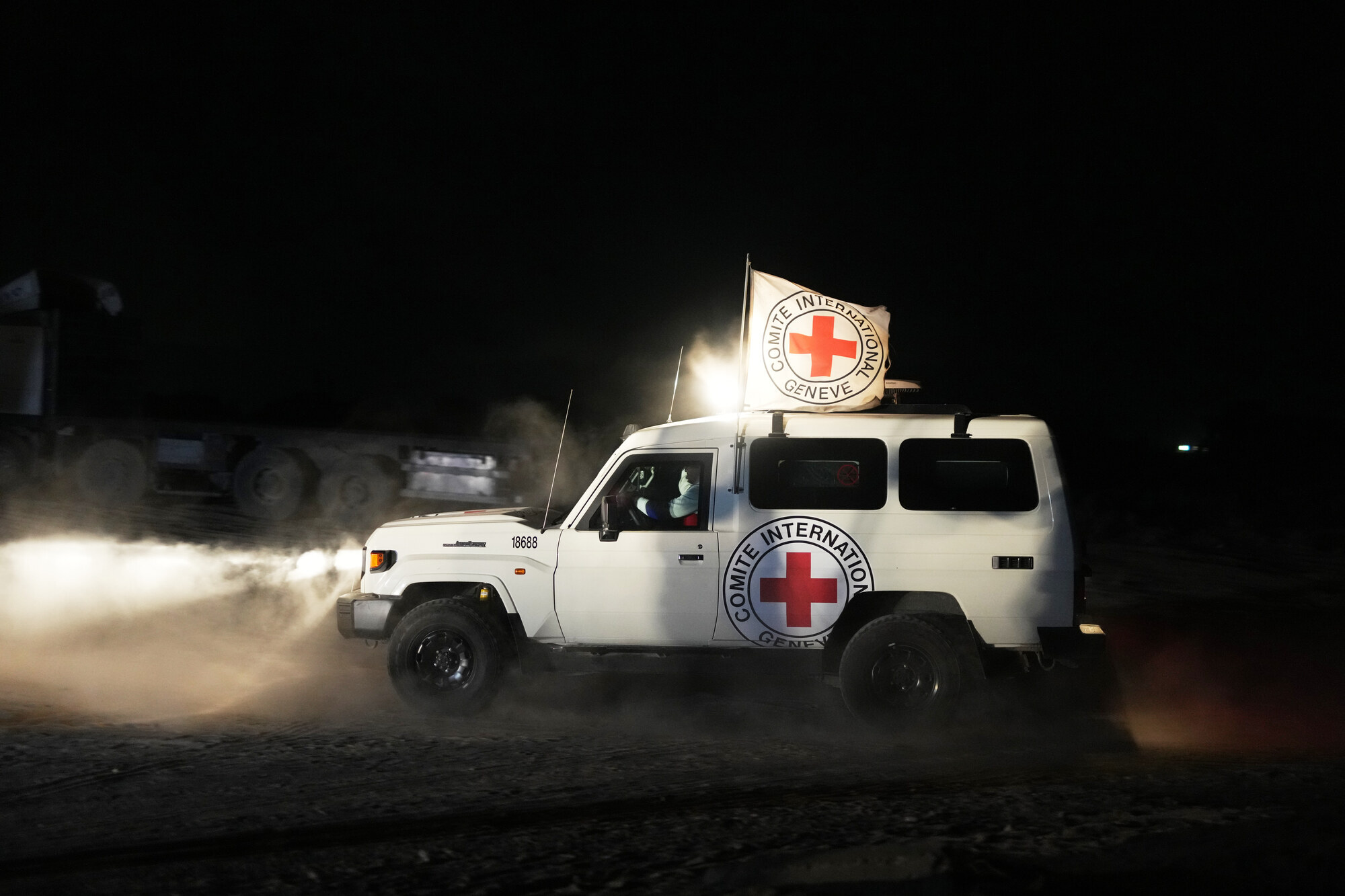
Earlier on Wednesday, Mr Netanyahu said forensic testing showed that partial remains returned by militants on Tuesday did not match either of the hostages still in Gaza. Palestinian militants later said they had found more remains in northern Gaza and turned them over to the Red Cross, which is acting as an intermediary.
The two hostage bodies still in Gaza are Ran Gvili, an Israeli police officer who helped people escape from the Nova music festival during the October 7 attack and was killed fighting at another location, and Sudthisak Rinthalak, an agricultural worker from Thailand who had been employed at Kibbutz Beâeri, one of the hardest-hit communities in the attack.
The Israeli military body charged with facilitating aid to Gaza, Cogat, said Israel would co-ordinate with Egypt on the exit of Palestinians, under the supervision of a mission from the European Union.
Those wishing to leave Gaza will require âIsraeli security approvalâ, Cogat said.
Palestinians who want to leave Gaza will be able to move through Rafah if Egypt agrees to receive them, Israeli government spokesperson Shosh Bedrosian said, but the crossing will not be open for Palestinians seeking to return to Gaza until all the hostages in the territory are returned to Israel.
Citing an unnamed official, Egyptâs State Information Service said, if an agreement is reached, the crossing will be opened for travel in both directions in accordance with the ceasefire plan advanced by US President Donald Trump.
Egypt fears that Palestinians allowed to leave Gaza might not be able to return.
President Abdel-Fattah el-Sissi has warned that Israel might prompt an exodus from Gaza as a way to permanently expel people and âeliminate the Palestinian causeâ for statehood. More than 100,000 Palestinians who left Gaza after the war started, including those wounded in the conflict, have been living in Egypt, according to Egyptian authorities.
The Rafah crossing was sealed off in May 2024 when Israelâs military invaded the area. It was briefly opened in February as part of a previous ceasefire for the evacuation of sick and wounded Palestinians.
In the southern city of Rafah, Israeli soldiers were injured, one seriously, after being attacked by militants who emerged from an underground tunnel, the Israeli military said. The military called the attack in an area under its control a violation of the ceasefire, and said it responded by returning fire.
In Gaza City, a Palestinian man was killed by Israeli fire, a hospital said, marking the latest reported Palestinian fatality in the territory.
Israeli forces shot the 46-year-old man in the Zeitoun neighbourhood, according to the Al-Ahli hospital, which received the body.