Hamas to hand over more remains as Israel allows re-opening of Rafah crossing
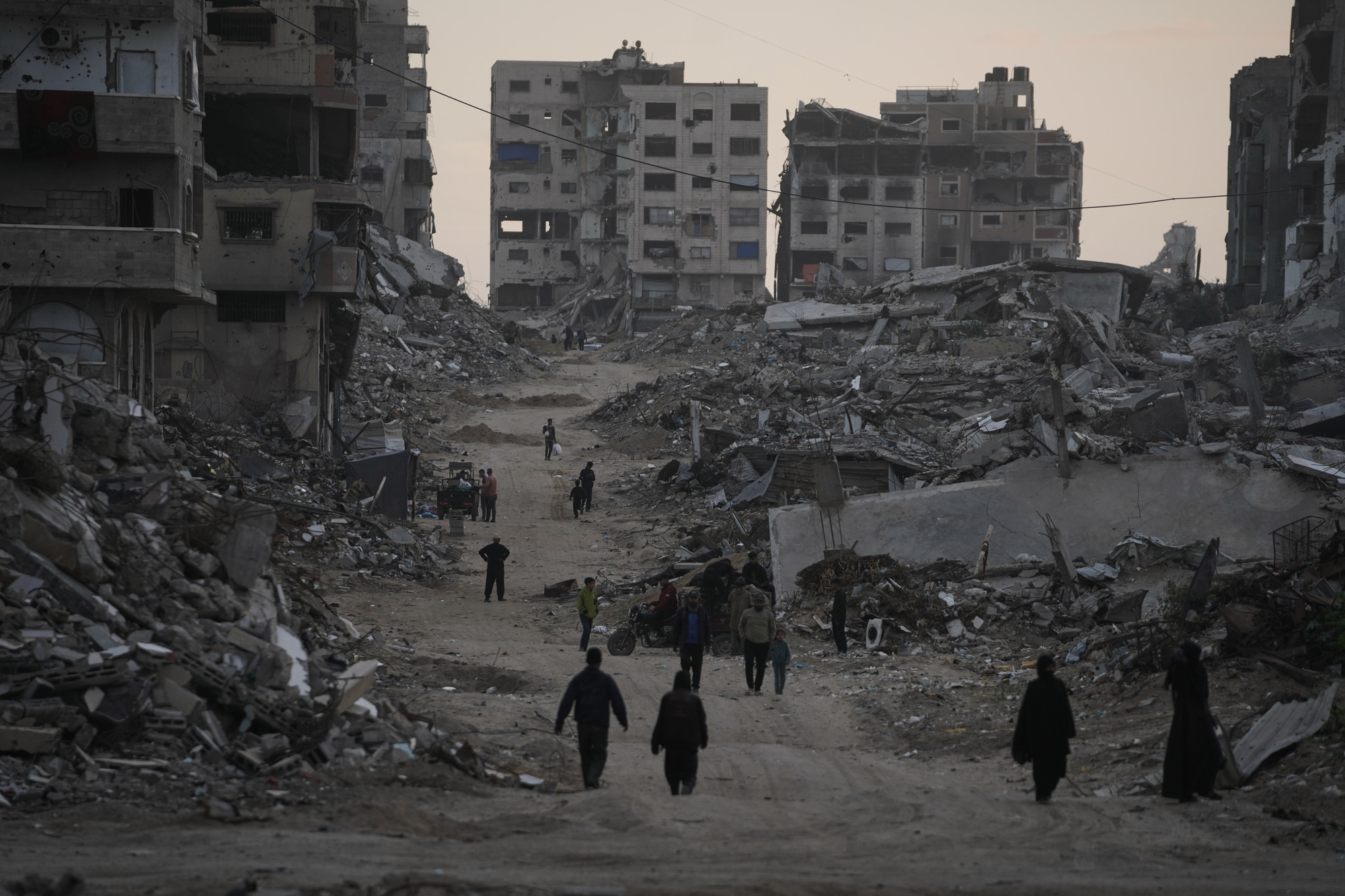
Hamas said it would hand over the remains of a hostage as Israel announced it will start letting Palestinians leave Gaza through the Rafah border crossing, signs the US-backed ceasefire was holding despite an earlier issue over returned remains.
Hamas said it would return the newly discovered remains on Wednesday, but it was not immediately clear to whom they belonged. Only two hostages are believed to remain in Gaza and the first phase of the deal is supposed to end when both are returned.
The deal calls for the long-closed Rafah crossing to be opened for medical evacuations and travel to and from the strip. The World Health Organisation says there are more than 16,500 sick and wounded people who need to leave Gaza for medical care.
An Israeli official told The Associated Press that Rafah would be open only for Palestinians to exit Gaza, not enter. Egypt, which controls the other side, said the crossing would open only if movement goes both ways.

Following the exchanges, the 20-point plan calls for creating an international stabilisation force, forming a technocratic Palestinian government and disarming Hamas.
Hamas said it would return another hostage at 5pm (3pm UK time). Once received by Israel, the remains will likely undergo testing to determine if they belong to either hostage still in Gaza.
Earlier, Israeli Prime Minister Benjamin Netanyahu said forensic testing had revealed the partial remains returned by militants on Tuesday did not match either of the hostages still in Gaza.
Palestinian militants began searching again and said later on Wednesday they had found a hostage body in northern Gaza.
With the remains of two hostages, one Israeli and one Thai national, remaining in Gaza, the sides are close to wrapping up the first phase of the ceasefire.
Twenty living hostages and the remains of 26 others have been returned to Israel since the ceasefire began in early October.

The returns are a key part of the terms of a shaky agreement, which both Hamas and Israel have accused the other of breaking.
The two hostages remaining in Gaza are Ran Gvili and Sudthisak Rinthalak.
Mr Gvili helped people escape from the Nova music festival on October 7 2023 and was killed fighting at another location. The military confirmed his death four months later. He is survived by his parents and a sister.
Sudthisak Rinthalak was an agricultural worker from Thailand who had been employed at Kibbutz Be’eri, one of the hardest-hit communities in the attack. According to media reports, Mr Sudthisak had been working in Israel since 2017.
A total of 31 workers from Thailand were abducted, the largest group of foreigners to be held in captivity. Most of them were released in the first and second ceasefires.
The Thai Foreign Ministry has said in addition to the hostages, 46 Thais have been killed during the war.
Israel has been releasing 15 Palestinian bodies for the remains of each hostage as part of the ceasefire agreement.
The Gaza Health Ministry said the total number of remains received so far is 330.

Hamas has said recovering bodies is complicated by the widespread devastation in Gaza. Israel has pushed to speed up the returns and in certain cases, has said the remains were not those of hostages.
Under the ceasefire deal, Hamas returned 20 living hostages to Israel on October 13.
The further exchanges of the dead have been the central component of the initial phase of the US-brokered agreement, which requires Hamas to return all hostage remains as quickly as possible.
The exchanges have gone ahead even as Israel and Hamas have accused each other of violating other terms of the deal.
Israeli officials have accused Hamas of handing over partial remains in some instances and staging the discovery of bodies in others.
Hamas has accused Israel of opening fire on civilians and restricting the flow of humanitarian aid into the territory.

The number of casualties has dropped since the ceasefire took effect, but officials in Gaza have continued to report deaths from strikes, while Israel has said that soldiers have also been killed in militant attacks.
Health officials in Gaza have said they have only been able to identify a fraction of the bodies handed over by Israel, and the process is complicated by a lack of DNA testing kits.
After the exchanges, the 20-point plan calls for creating an international stabilisation force, forming a technocratic Palestinian government and disarming Hamas.
The ceasefire aims to wind down the war that was triggered by the Hamas-led attack on southern Israel, which killed about 1,200 people and saw 251 taken hostage.
Gaza’s Hamas-run Health Ministry says the Palestinian toll has topped 70,100. The ministry does not distinguish between militants and civilians, though it says roughly half of those killed have been women and children.
The ministry is staffed by medical professionals and maintains detailed records viewed as generally reliable by the international community.
CONNECT WITH US TODAY



Be the first to know the latest news and updates