Leo XIV celebrates first Mass as Pope as details emerge from conclave
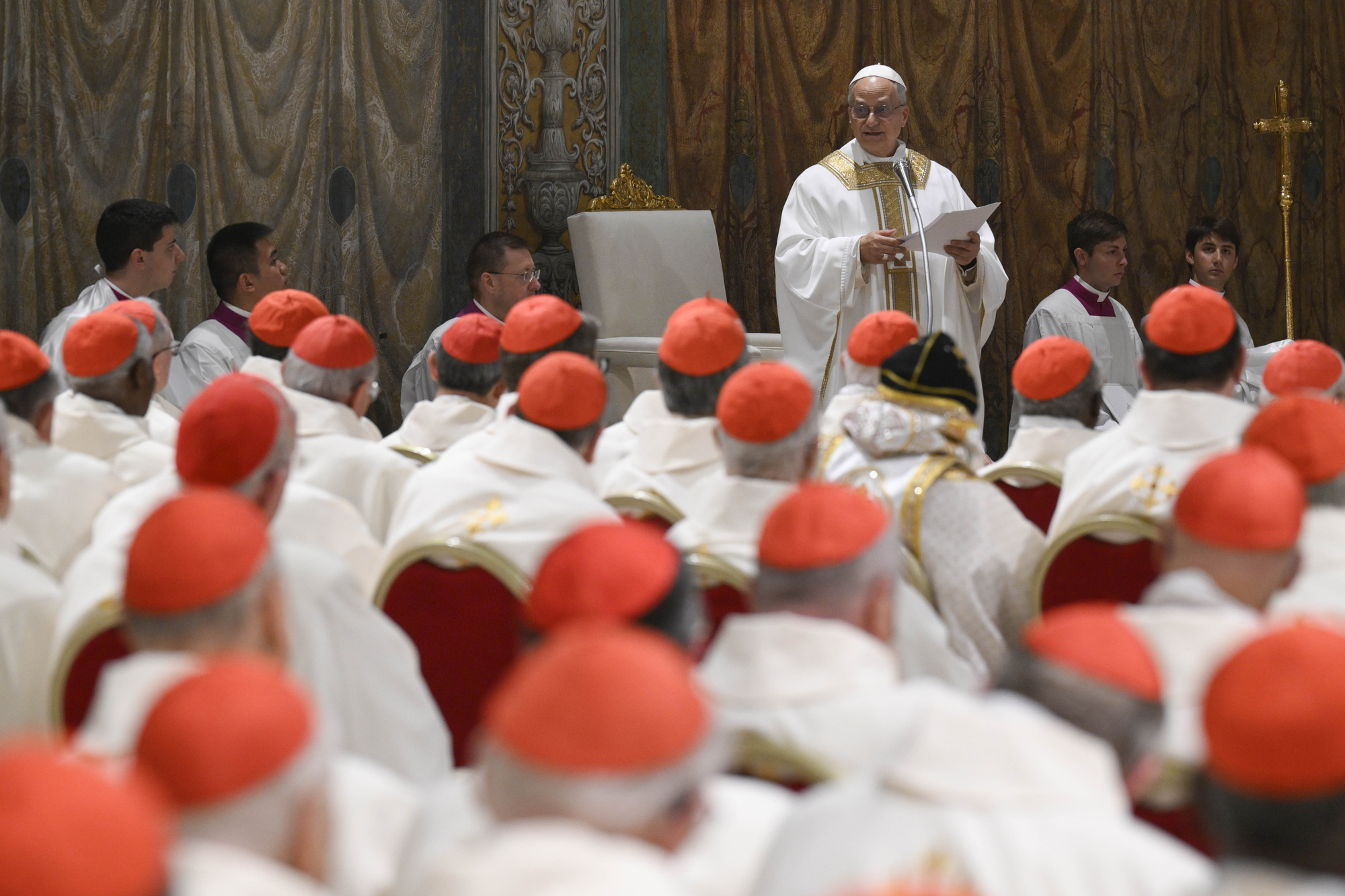
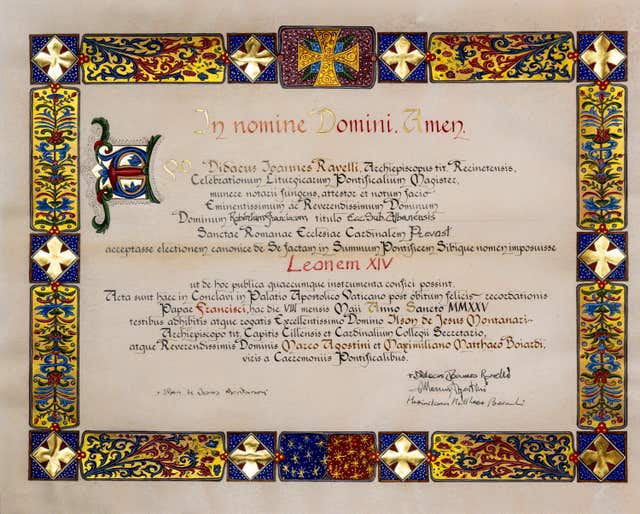
Pope Leo XIV said his election was both a cross to bear and a blessing as he celebrated his first Mass and details began to emerge of how votes quickly coalesced to make him history’s first American pope.
Freed from their conclave, Catholic cardinals began describing the days and hours leading up to the final ballot on Thursday afternoon that brought Leo past the two-thirds majority needed.
Many marvelled that the Chicago-born Augustinian missionary Robert Prevost reached the threshold so quickly, given the vast diversity of voters and the traditional taboo against a US pope because of the secular power the country wields.
“It is a miracle of the Holy Spirit,” said Cardinal Fernando Natalio Chomali Garib, archbishop of Santiago, Chile.
He noted that 133 men who barely knew one another from 70 countries came to an agreement in just over 24 hours.
A miracle, he said, “and also an example for all our countries where nobody comes to an agreement”.
Leo presided over his first Mass before those same cardinal electors on Friday morning, speaking off-the-cuff in English in the Sistine Chapel.
He acknowledged the great responsibility they had placed on him before delivering a brief but dense homily in Italian on the need to joyfully spread Christianity in a world that often mocks it.
“You have called me to carry that cross and to be blessed with that mission, and I know I can rely on each and every one of you to walk with me as we continue as a church, as a community, as friends of Jesus, as believers, to announce the good news, to announce the Gospel,” he said.
Leo on Saturday meets with cardinals formally.
On Sunday, he is set to deliver his first noon blessing from the loggia and attend an audience with the media on Monday in the Vatican auditorium.
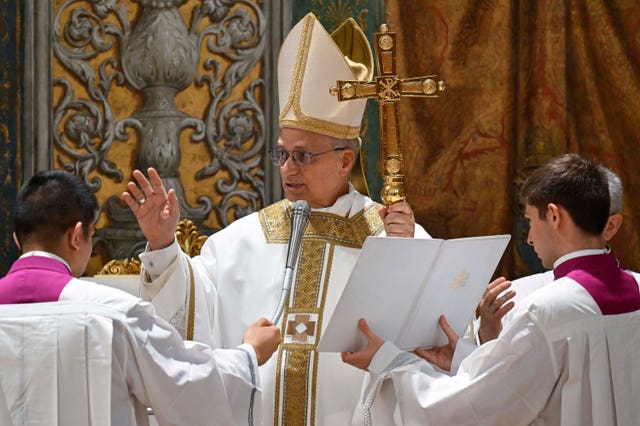
Leo will be formally installed as pope at a Mass on May 18 and will preside over his first general audience on May 21.
Meanwhile, he asked all Vatican leaders, who technically lost their jobs when Francis died on April 21, to remain in their posts until he decides definitively on whether to confirm them.
At a rollicking news conference at the US seminary up the hill from the Vatican, some of the American cardinals who saw one of their own become the 267th pope seemed to distance Leo from both his citizenship and the political polemics of the Trump administration back home.
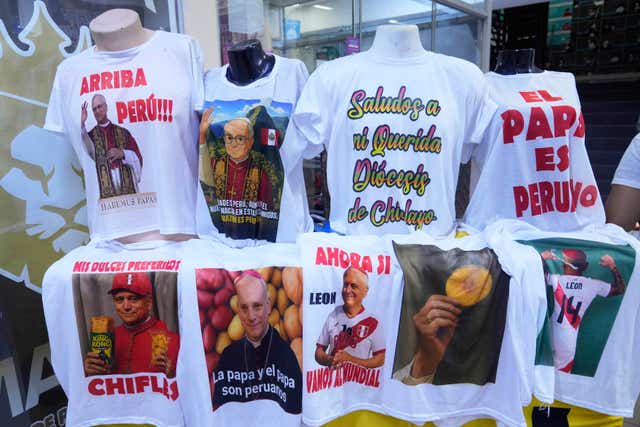
Some recalled the decades Cardinal Prevost spent as a missionary in Peru and his Peruvian citizenship and said, regardless, he has a new identity as pope.
“Where he comes from is sort of now a thing of the past,” said New York Cardinal Timothy Dolan, who had been President Donald Trump’s pick for pope.
“Robert Francis Prevost is no longer around. It’s now Pope Leo.”
But Cardinal Joseph Tobin, an old friend of Cardinal Prevost’s who slipped up, calling him “Bob … Pope Leo”, said he expected the pope would be true to himself.
He said that was the message conveyed to all the electors by the retired preacher of the papal household, Cardinal Raniero Cantalamessa, who delivered a meditation in the Sistine Chapel before they took their first vote.
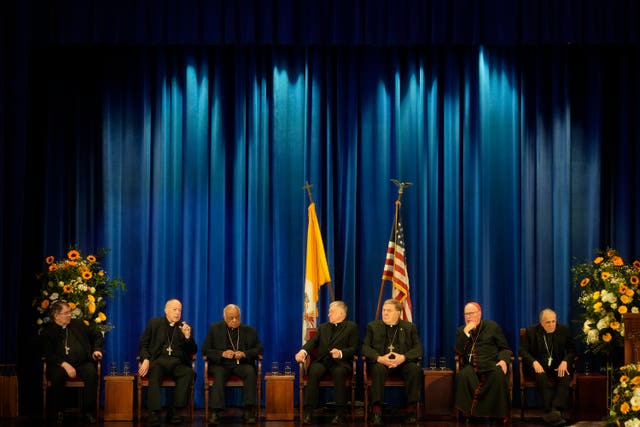
“He gave advice that we all heard, just in case, advice to the one who’s going to be elected: And he said, ‘Be yourself,’” Cardinal Tobin said.
Cardinal Tobin revealed that he had talked with his old friend about his real chances in the days before the voting began.
But Cardinal Tobin recounted the moment when he saw it had sunk in for Cardinal Prevost himself: Cardinal Tobin had just cast his ballot before Michelangelo’s The Last Judgment and returned to his seat.
“Then I went back and I took a look at Bob, because his name had been floating around. And he had his head in his hands,” Cardinal Tobin said.
“And I was praying for him because I couldn’t imagine what happens to a human being when you’re facing something like that.”
“And then when he accepted it, it was like he was made for it,” Cardinal Tobin said.
The cardinals urged the public and faithful to give Leo time to get used to his new role before trying to understand what kind of pope he will be.
But some clues were already apparent.
Two women delivered the readings of Scripture at the start of Leo’s Mass, perhaps an indication of an intention to continue Francis’s focus on expanding women’s role in the church.
As a cardinal, Leo put into practice one of Francis’s most revolutionary reforms by having three women serve on the Vatican board that vets bishop nominations.
Speaking in near-perfect Italian, Leo lamented that the Christian faith in many parts of the world is “considered absurd”, mocked or opposed in the face of temptations such as money, success and power.
He complained that in many places Jesus is misunderstood, “reduced to a kind of charismatic leader or superman”.
“This is true not only among non-believers but also among many baptised Christians, who thus end up living, at this level, in a state of practical atheism,” he said.
“A lack of faith is often tragically accompanied by the loss of meaning in life, the neglect of mercy, appalling violations of human dignity, the crisis of the family and so many other wounds that afflict our society.”
The cardinals applauded as the Mass concluded.
Leo was seen wearing simple black shoes – eschewing, as Francis did, the red loafers of the papacy preferred by some traditionalist popes.
In another signal he might break with tradition, Leo spent his first night as pontiff in his residence in the Sant’Uffizio Palace, and not the Apostolic Palace where popes traditionally reside, Vatican News reported.
Francis chose to live in an apartment in the Santa Maria guest house.
Cardinals revealed that they got to know Cardinal Prevost during the pre-conclave discussions, not because he made some showstopping speech like Pope Francis did in 2013.
Then, Cardinal Jorge Mario Bergoglio spoke about the need for the Church to go to the “existential peripheries” to find wounded souls and was elected a short time later.
This time, Cardinal Prevost made an impression with his manner, in small groups.
“It wasn’t that he got up and made some overwhelmingly convincing speech that just wowed the body,” said Cardinal Wilton Gregory, the retired archbishop of Washington, DC.
German Cardinal Reinhard Marx, a close adviser of Francis, said he took note of the man who would become pope – an American with deep experience in Latin America, strong linguistic and cultural fluency, and a history of leadership as superior of the Augustinians.
“That convinced me to say this could be a possibility,” Cardinal Marx told reporters on Friday.
“I can tell you, I’m very happy.”
Cardinal Marx also recalled meeting the future pope last year and being struck by his temperament.
“We had a very good conversation,” he said.
“I realised he’s a man who listens, takes arguments seriously, weighs them. You can’t just place him into one camp – he really tries to build bridges. I liked that very much.”
CONNECT WITH US TODAY



Be the first to know the latest news and updates