Obama defends foreign policy record
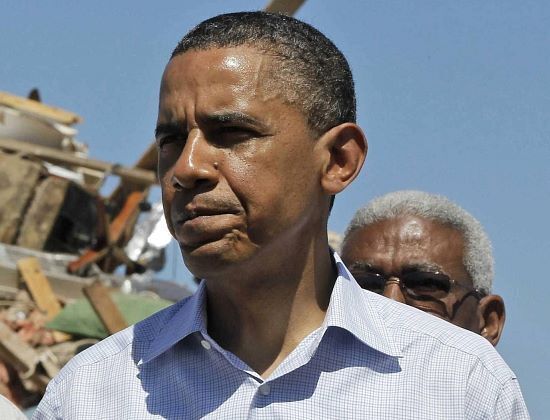
President Barack Obama, defending his foreign policy record at a time of anti-American rage in the Muslim world, fired back at suggestions from Republican nominee Mitt Romney that the president has been weak with allies and enemies alike.
In an interview airing the night before Mr Obama meets with other world leaders at the United Nations, the president said: “If Governor Romney is suggesting that we should start another war, he should say so.”
It was Mr Obama’s most direct rebuttal yet to persistent scepticism by his White House rival on his handling of an unravelling situation in the Middle East.
Mr Romney has charged the US stance has been marred by miscalculations, mixed messages and appeasement.
As far back as May, Mr Romney was condemning Mr Obama’s response to unrest in Syria, dubbing it a “policy of paralysis” and calling for more assertive measures, such as arming the opposition to Syrian president Bashar Assad.
As deadly anti-American protests erupted earlier this month in Libya and elsewhere, Mr Romney sought to undercut what polling shows is a significant foreign policy edge for Mr Obama by calling the president’s handling of the situation “disgraceful” and decrying a lack of US leadership in the region.
In a companion interview to Mr Obama’s appearance on CBS’ 60 Minutes, Mr Romney broadened his reproach to include Israel, criticising Mr Obama’s failure to meet with the US ally’s head of government, Benjamin Netanyahu, during the annual UN gathering.
Mr Romney called it a mistake that “sends a message throughout the Middle East that somehow we distance ourselves from our friends”.
The White House has said scheduling precluded a meeting between the two leaders, who will not be in New York at the same time.
With the final six weeks of a hard-fought election hanging over the UN summit, Mr Obama has opted out of face-to-face meetings with any of his counterparts - not just Mr Netanyahu – during his compressed UN visit.
But Mr Obama pushed back on the notion that he feels pressure from Mr Netanyahu, dismissing as noise the Israeli leader’s calls for the US to lay out a “red line” that Iran’s nuclear programme must not cross to avoid American military intervention.
“When it comes to our national security decisions, any pressure that I feel is simply to do what’s right for the American people,” Mr Obama said. “And I am going to block out any noise that’s out there.”
In a wide-ranging interview conducted the day after US Ambassador to Libya Chris Stevens was killed in an attack on Benghazi, Mr Obama defended his foreign policy successes, noting he had followed through on a commitment to end the war in Iraq and had nabbed al Qaida leader Osama bin Laden.
He also waxed optimistic that winning a second term would give him a mandate to overcome obstructionism from congressional Republicans whose number one goal, he said, has been to prevent his re-election.
“My expectation is, my hope is that that’s no longer their number one priority,” Mr Obama said.
“I’m hoping that after the smoke clears and the election season’s over that that spirit of cooperation comes more to the fore.”
Mr Romney, in an interview conducted last week, sought to deflect attention from his running mate, Wisconsin Representative Paul Ryan, over their differences in Medicare policy: “I’m the guy running for president, not him.”
While reaffirming his commitment to lowering all income tax rates by 20%, Mr Romney expressed no unease about his refusal to offer specifics, such as which loopholes and deductions he would eliminate to pay for the cuts.
“The devil’s in the details. The angel is in the policy, which is creating more jobs,” Mr Romney said, adding that he does not want to see overall government revenue reduced.
Addressing the seemingly unshakeable charge of flip-flopping on policy issues, Mr Romney pointed the finger at Mr Obama, noting his changes of heart on gay marriage and military tribunals for terrorism suspects.
“Have I found some things I thought would be effective turned out not to be effective? Absolutely,” Mr Romney said. “You don’t learn from experience, you don’t learn from your mistakes – why, you know, you ought to be fired.”
The 60 Minutes interviews came as Mr Romney’s campaign strove to turn the page on a week of public stumbles and Republican hand-wringing, promising a redoubled effort in the most competitive states to undercut Mr Obama’s economic record as voters tune in for the final six weeks of a deadlocked race.

CONNECT WITH US TODAY



Be the first to know the latest news and updates