World leaders see hope of new start for North Korea
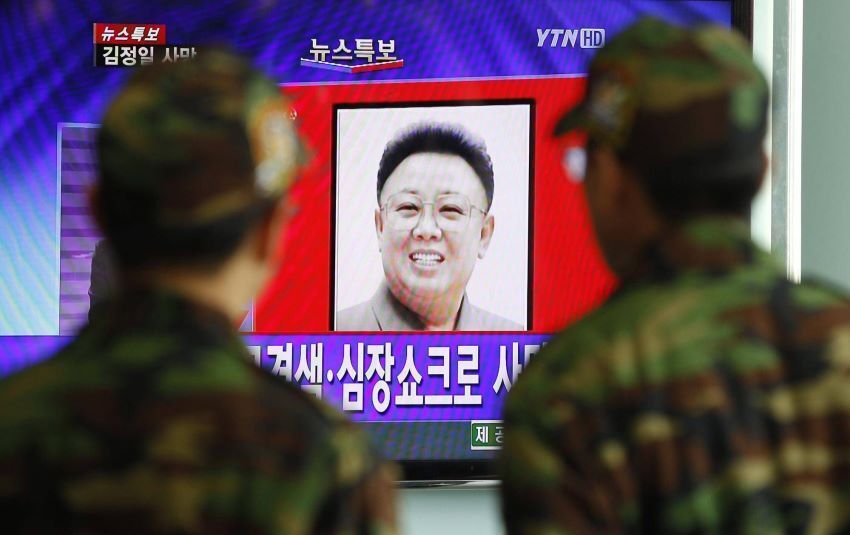
World governments are viewing the death of North Korean leader Kim Jong Il with wary optimism.
It is seen as a possibly destabilising moment for the region as power passes to his son but also an opportunity for a new diplomatic start.
British Foreign Secretary William Hague said: “This could be a turning point for North Korea” as Kim Jong Un takes over as supreme leader.
“We hope that their new leadership will recognise that engagement with the international community offers the best prospect of improving the lives of ordinary North Korean people.
“We encourage North Korea to work for peace and security in the region and take the steps necessary to allow the resumption of the six-party talks on denuclearisation of the Korean peninsula”.
During his 17 years in power, Kim’s pursuit of nuclear weapons and his military’s repeated threats to South Korea and the US have stoked fears that war might again break out or that North Korea might provide weapons of mass destruction to terrorist movements.
South Korea put its military on “high alert” and President Lee Myung-bak convened a national security council meeting.
The Korean peninsula remains technically in a state of war more than 50 years after the Cold War-era armed conflict ended in a cease-fire.
Japanese Prime Minister Yoshihiko Noda held an emergency national security council with top Cabinet members soon after hearing the news.
The news jolted financial markets, raising the spectre of more instability on the divided Korean peninsula as the reclusive regime undergoes a leadership succession.
European stock markets fell slightly in early trading. Wall Street was set to open lower.
South Korea’s Kospi index dived nearly 5% but later recouped some losses to close 3.4% lower. Other Asian stock markets also fell.
Australia’s Foreign Minister Kevin Rudd said Kim’s death brings the situation to “one of those critical junctures” and “an exceptionally difficult period of transition.”
“It is critical that everybody exercises appropriate calm and restraint in what is a important development in terms of the overall stability of the region and the security of us all,” he said.
“This presents an opportunity for the North Korean regime, the new leadership of the new regime, to engage fully with the international community on the critical questions of how to feed their people, how to open their economy and, more broadly, how to deal with the long-standing problem of North Korea’s nuclear weapons.”
In China, a key North Korean ally, the Foreign Ministry called Kim a “great leader” and said China believes the North Korean people will “turn their grief into strength, unite as one, and continue to advance the cause of North Korean socialism.”
But it also added that Beijing would continue to offer its support and make “active contributions to peace and stability on the Korean peninsula and in this region.”
China has long sought to convince North Korea of the need for economic reform, and Kim’s death raises hopes that Pyongyang might now take heed of such advice, said Korea expert Lu Chao at China’s Academy of Social Sciences in Liaoning province, which borders North Korea.
“There will definitely be change, good and positive change,” Lu said. “North Korea will work more closely with the global community toward the peace and stability of the Korean Peninsula.”
China is also expected to take a strong behind-the-scenes role to help retain its influence, which is seen as important no matter which direction North Korea takes, said US Naval Academy China scholar Yu Maochun.
“If North Korea continues to be an international pariah, China will continue to benefit from its current leverage,” Yu said. “If North Korea becomes less intransigent and slightly more open, then China will be greatly worried about the possible warming-up, or even reunification, between North and South Koreas.”
With so many questions in the air at the moment, however, most countries are waiting to see what comes next.
CONNECT WITH US TODAY



Be the first to know the latest news and updates