Pakistani president returns home
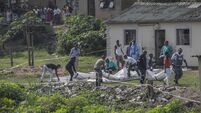
Pakistan’s president Asif Ali Zardari returned to his flood-ravaged country and a storm of criticism today for visiting Europe amid the nation’s worst natural disaster.
His arrival came as thousands fled a major city threatened by swollen rivers, and as the United Nations said the nationwide aid response needed to be scaled up “massively.” It is working on a plan that will need hundreds of millions of pounds in initial international assistance.
The Pakistani Taliban, allied to al Qaida and fighting for the overthrow of the Pakistani state, urged the government not to accept any Western aid for flood relief.
The Taliban have attacked Western aid groups in Pakistan and warned them to leave the country, saying they were trying to implement a Western agenda.
The UN said the numbers affected by flooding over the past two weeks is 13.8 million – more than the combined total of the 2004 Indian Ocean tsunami, the 2005 Kashmir earthquake and the 2010 Haiti earthquake, although the death toll in each of those disasters was much higher than the 1,500 people killed in the floods.
The widespread crisis has overwhelmed the government and frustrated citizens who have complained about slow or non-existent aid efforts. A person is considered “affected” by the floods if he or she will need some form of assistance to recover, either short-term humanitarian aid or longer-term reconstruction help, the UN said.
Amid the relentless rains, Mr Zardari – an unpopular figure to begin with - took off for a visit to France and Britain.
But the timing struck a nerve among many who said he should have stayed with his suffering people – even though the president, fearful of assassination, rarely makes public appearances in Pakistan.
The criticism was particularly harsh after reports that he had visited his family’s chateau in France.
Mr Zardari returned first to the southern city of Karachi and was expected back in the capital, Islamabad, tomorrow. He is to meet with the chief ministers of the provinces to map out a rebuilding programme, said Fauzia Wahab, spokeswoman for the ruling Pakistan People’s Party.
In Punjab province, the normally bustling city of Muzaffargarh looked largely deserted today after crowds left following flood warnings the previous evening. Many men, however, stayed behind to guard homes and businesses.
Pakistani Prime Minister Yousuf Raza Gilani has called the crisis the worst natural disaster in Pakistan’s history.
The UN estimates that immediate relief will require hundreds of millions of pounds, while longer-term reconstruction and rehabilitation will cost billions.
The hardest hit region has been the north-west, which also is the centre of Pakistan’s fight against al Qaida and the Taliban. But as swollen rivers have flown south and east, Sindh and Punjab provinces have also been affected.
Rescue work has been hampered by ongoing monsoon rains, which have washed away roads and bridges. Six US helicopters sent from Afghanistan to assist in aid delivery and evacuations lost at least three days of flights because of the weather.
The floods hit the country when the government is already struggling with a faltering economy and a war against Taliban militants that has killed thousands. The patchy government response has allowed Islamist groups, some allegedly linked to militant outfits, to step in and offer their own aid to displaced and hungry flood victims.