India links violence to Pakistan
The Mumbai massacre sparked fears today of a surge in violence between Pakistan and India, after India said the sole surviving gunman, now in custody, was from its nuclear-armed neighbour.
It took just 10 young men armed with rifles and grenades to terrorise the city of 18 million and turn its postcard-perfect icons into battlefields until security forces ended one of the deadliest attacks in India’s history.
It was the country’s deadliest terrorist act since 1993 serial bombings in Mumbai killed 257 people.
A previously unknown Muslim group called Deccan Mujahideen – a name suggesting origins inside India – has claimed responsibility for the attacks that killed more than 170 people.
Pakistan denied it was involved and demanded evidence.
The nuclear rivals have fought three wars against each other, two over the disputed region of Kashmir.
India’s prime minister Manmohan Singh called a rare meeting of leaders from the country’s main political parties today to discuss the situation.
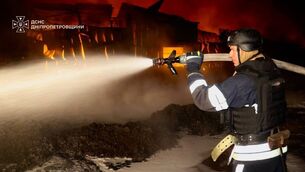
Orange flames and dark smoke engulfed the luxury Taj Mahal hotel after dawn yesterday as Indian forces killed the last three militants in a blaze of grenades and gunfire. Hours after the firefight, parts of the landmark hotel were in shambles, its corner facade charred black and a red carpet leading to double doors littered with broken glass.
After the final siege, crowds surrounded six buses carrying weary, unshaven commandos dressed in black fatigues, shaking their hands and giving them flowers.
One of the commandos said he had been awake for nearly 60 hours since the assault began on Wednesday. Another sat sipping a bottle of water and holding a pink rose.
“What happened is disgusting,” said Suresh Thakkar, 59, who reopened his clothing store behind the hotel for the first time since the attacks. “It will be harder to recover, but we will recover. Bombay people have a lot of spirit and courage.”
The bloody rampage carried out by suspected Muslim militants at 10 sites across Mumbai, the nation’s financial capital formerly known as Bombay, killed at least 174 people and wounded 239.
The death toll was revised down today from 195 after authorities said some bodies were counted twice, but they warned it could rise again as areas of the Taj Mahal were still being searched. Among the dead were 18 foreigners, including six Americans and a Briton. Nine attackers were killed.
“Suddenly no one feels safe or secure,” said Joe Sequeira, the manager of a popular restaurant near the Oberoi hotel, another site targeted in the attacks.
While authorities scoured the massive 565-room Taj Mahal for any remaining captives and defused booby traps, Indians began mourning and cremating their dead. At least 20 killed in the fighting were members of security forces.
Each new detail about the attackers raised more questions. Who trained the militants, who were so well prepared they carried bags of almonds to keep their energy up? What role, if any, did arch-rival Pakistan play in the attack? And how did so few assailants, who looked like college students, wreak so much damage?
As officials pointed the finger at neighbouring Pakistan, some Indians looked inward and expressed anger at their own government.
“People are worried, but the key difference is anger,” said Rajesh Jain, chief executive officer at brokerage firm Pranav Securities. “People are worked up about the ineffectiveness of the administration. Does the government have the will, the ability to tackle the dangers we face?”
The gunmen were as brazen as they were well trained, using sophisticated weapons as well as GPS technology and mobile and satellite phones to communicate. The group made repeated contact with an unidentified foreign country.
The investigation suggested the attackers planned to massacre 5,000 people, said RR Patil, deputy to the chief of Maharashtra state, without giving further details.
“Whenever they were under a little bit of pressure they would hurl a grenade. They freely used grenades,” said JK Dutt, director general of India’s elite commando unit.
Suspicions in Indian media quickly settled on the militant group Lashkar-e-Taiba, long seen as a creation of the Pakistani intelligence service to help wage its clandestine war against India in disputed Kashmir.
A US counter-terrorism official said some “signatures of the attack” were consistent with Lashkar and Jaish-e-Mohammed, another group that has operated in Kashmir. Both are reported to be linked to al-Qaida.
US President George Bush pledged full US support for the investigation, saying the killers “will not have the final word”. FBI agents were sent to India to help with the probe.
Meanwhile the Indian navy was investigating whether a trawler found drifting off the coast of Mumbai, with a bound corpse on board, was used in the attack.