Hurricane Henriette threatens Mexican mainland
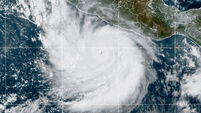
Hurricane Henriette today threatened Mexico’s mainland on a track for the south-western US, while the weakening remains of mighty Hurricane Felix, far to the south, caused flooding, landslides and at least 9 deaths in Central America.
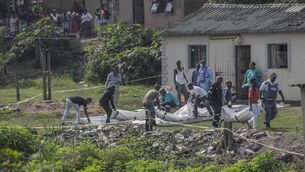
Henriette killed at least seven people along the Pacific Coast but caused no deaths at it struck the Los Cabos resorts at the tip of the Baja California peninsula.
It remained dangerous as it moved over open water on a track to hit the Mexican mainland this afternoon with sustained winds of 75mph, some 300 miles south of the Arizona border.
At 11am EDT (4pm Irish time), Henriette was centred about 70 miles west-north-west of Los Mochis on the Mexican mainland and it was moving north at 12mph, hurling rain and high seas at a swampy coastal zone of farming and fishing towns.
The US National Hurricane Centre said it could bring as much as 12 inches of rain in isolated areas and cause flash flooding.
From there, it was expected to weaken over Mexico’s deserts and dump an inch or two of rain on south-west New Mexico tomorrow or Friday.
At least nine people were killed, 11 were missing and some 5,000 homes were damaged or destroyed after Felix slammed into Nicaragua’s remote Miskito coast as a powerful Category 5 hurricane. The deaths included a man who drowned when his boat capsized, a woman killed when a tree fell on her house and a girl who died shortly after birth because the storm made it impossible for her to receive medical attention.
Nearly every building in the region was damaged or destroyed, including public buildings.
In Puerto Cabezas, the region’s main town, the hospital was flooded, forcing officials to set up a makeshift medical centre in a university building, where doctors were trying to save a 12-year-old boy who was gravely injured by a falling tree.
Other patients included a 17-year-old girl who was trapped when part of her home’s roof collapsed as she tried to get her 14-month-old daughter out of the house. The baby was unharmed.
While Felix dissipated over western Honduras, at least five nations in Central America were on alert for floods. As much as 25 inches of rain was predicted in some remote areas.
Streets were deserted and a steady rain fell as dawn broke today in Honduras, where 27,000 people have been evacuated.
A pounding, overnight rain caused flooding and landslides, blocking highways and destroying humble dwellings.
But no deaths were reported inland communities.
“Thank God we are OK and nothing major has happened yet,” said Tegucigalpa taxi driver Jose Adolfo Mairena, 49. “But we are still keeping an eye on things.”
Honduran emergency official Marcos Burgos said Wednesday that the worst apparently had passed.
“We may still have flooding, but we don’t think it will be severe,” he said.
Nicaragua’s government declared its northern Caribbean region a disaster area and was airlifting sheets, mattresses, food, first aid and other help to Puerto Cabezas, a fishing town near where Felix made landfall yesterday with top winds of 160mph.
Some 15,800 of the area’s 60,000 residents remained in 76 makeshift shelters.
Skies were sunny today but thousands of people were cut off in the surrounding Gracias a Dios province, where even in the best of circumstances, transportation depends more on canoes and small motorboats than roads.
“The main problem we face is a shortage of fuel, which makes it difficult for boats to return people who were evacuated,” said Gracias a Dios Gov. Delton Allen.
In San Pedro Sula, in northern Honduras, Margoth Reyes, 41, ventured out at daylight to check damage to her one-story home.
“The important thing is that the family is OK,” she said.
Nervous residents still remember Hurricane Mitch in 1998, which parked over Central America for days, causing flooding and mudslides that killed nearly 11,000 people and left more than 8,000 missing.
Eight hours after Felix hit land in Central America on Tuesday, the eye of Hurricane Henriette struck Baja California – the first time two Atlantic and Pacific hurricanes made landfall the same day, according to records dating back to 1949.
Some blame global warming for another record – Felix, following Dean, made it the first season when two Category 5 Atlantic hurricanes made landfall.
“Today hurricanes are becoming increasingly violent. For example, water from the Caribbean, the ocean, is two degrees hotter than before,” Mexican President Felipe Calderon said Tuesday, siding with those who blame climate-change. “This makes steam rise off the ocean more quickly: Hurricanes form faster and are more violent.”
Dr Chris Landsea, science operations officer at the US National Hurricane Centre, agreed that global warming is a factor – but a very small one.
“All of the studies suggest that by the end of this century, hurricanes may become stronger by 5% because of global warming. So a 100-miles-per-hour hurricane would be 105mph,” he said. “Most of what we’re seeing is natural fluctuations.”
And other natural phenomena – a moderate, magnitude-5 earthquake struck the Gulf of California before dawn today near where Henriette was passing, but no damage or injuries were reported.

CONNECT WITH US TODAY



Be the first to know the latest news and updates