Peace hopes thwarted as Hamas refuses to recognise Israel
President Mahmoud Abbas’ bumpy efforts to set up a Palestinian government acceptable to the West suffered a new setback today, after the prime minister from the Islamic militant group Hamas said he would not lead a coalition that recognises Israel.
Hamas has ruled alone since March, but earlier this month agreed to share power with Abbas’ moderate Fatah Party, in hopes of ending a crippling international aid boycott of the Palestinian Authority.
The Hamas-Fatah coalition deal side-stepped recognition of Israel. Instead, it said the government would seek to establish a Palestinian state alongside Israel, which implies recognition. However, the US and Israel demanded a clear commitment from Hamas on the subject, and Abbas was forced to revisit the issue.
At the United Nations on Thursday, Abbas indicated that a national unity government would recognise the Jewish state. It wasn’t clear whether Abbas promised more than he can deliver, in hopes of soliciting international support for the new government, or whether he was trying to pressure Hamas.
Abbas and his aides were en route from New York to Cairo on Friday and could not be reached for comment.
Hamas leaders reacted swiftly.
Prime Minister Ismail Haniyeh of Hamas told Muslim worshippers in Gaza on that recognition of Israel is out of the question. “I personally will not head any government that recognises Israel,” said Haniyeh, considered a leader of Hamas’ more pragmatic wing.
Haniyeh reiterated that Hamas is ready to establish a Palestinian state in the West Bank, Gaza and east Jerusalem, areas Israel captured in the 1967 Mideast War, and to honour a long-term truce with Israel.
“We support establishing a Palestinian state in the land of 1967 at this stage, but in return for a cease-fire, not recognition,” Haniyeh said.
Hamas officials left open the possibility of more negotiations, saying they want to hear from Abbas once he returns to the region. “We don’t want to build on statements or positions we heard in the media,” said Hamas spokesman Sami Abu Zuhri. “When Abu Mazen (Abbas) comes back, we will listen to him and evaluate.”
Palestinians appear to be conflicted over what they want their leaders to do.
Recent opinion polls suggest an overwhelming majority wants Hamas to stick to its refusal to recognise Israel, apparently as an expression of Palestinian pride, even if it comes at a price of growing economic hardship caused by the foreign aid boycott. Hamas would lose much of its popularity if it were to issue a statement of recognition, the polls indicate.
However, two-thirds of Palestinians also want Abbas to negotiate a peace deal with Israel.
Caught between contradictory expectations, Abbas has been banking on a vague agreement.
An Abbas aide, Nabil Amr, said that Hamas would not be expected to issue a statement of recognition, but would be asked to recognise agreements signed by the Palestine Liberation Organisation, including the PLO’s mutual recognition agreement with Israel, reached in 1993. Abbas heads the PLO, in addition to Fatah.
However, the US and Israel might not settle for such fuzzy language.
Israeli government spokeswoman Miri Eisin reiterated that any Palestinian government must yield to the demands of the international community - recognition of Israel, renunciation of violence, acceptance of previous peace agreements.
On the other hand, a collapse of the coalition deal could push the Palestinians deeper into crisis. Hamas-Fatah tensions in Gaza, already high after months of skirmishes between rival gunmen and the assassination of a top Fatah-allied security chief last week, could boil over.
On Friday, thousands of Fatah supporters staged an anti-Hamas rally in the Jebaliya refugee camp near Gaza City. Hundreds of gunmen firing in the air led the marchers who chanted slogans against Haniyeh and Foreign Minister Mahmoud Zahar of Hamas.
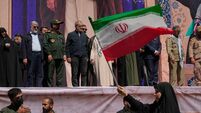
Also Friday, thousands of Muslim worshippers in the West Bank, Gaza and east Jerusalem staged anti-pope rallies, raising green Hamas banners and denouncing the pontiff as a coward.
Pope Benedict XVI had touched off a furore in the Muslim world last week by quoting a medieval text that characterised some of the teachings of Islam’s founder, the Prophet Muhammad, as “evil and inhuman.” The pope later said he didn’t mean to malign Islam, but has not issued a direct apology, as demanded by Muslim leaders.

CONNECT WITH US TODAY



Be the first to know the latest news and updates