Rice takes hard line on Darfur

US Secretary of State Condoleezza Rice says there has been progress in Darfur but the world will not accept mere promises from Sudan’s new government to halt the violence.

Rice takes hard line on Darfur

US Secretary of State Condoleezza Rice says there has been progress in Darfur but the world will not accept mere promises from Sudan’s new government to halt the violence.

The US is making a difference to help refugees and stop atrocities, Rice said before arriving in the Sudanese capital. She said a new unified government in Khartoum has a chance to help the country recover from what she reaffirmed was genocide in ravaged Darfur.

“The US believes that by our accounts it was and is genocide,” Rice said yesterday after attending a trade conference in Dakar, Senegal. “That has not changed,” she said, since her predecessor, Colin Powell, used the same term a year ago.

Rice is travelling to Darfur, a vast province in western Sudan, today after meetings that will include Sudanese President Omar el-Bashir.

The US has blamed his government for recruiting and equipping Arab militiamen to massacre black African villagers, destroy homes and cause tens of thousands of deaths from hunger and disease in the region.

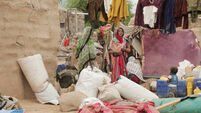
Rice planned to visit a Darfur refugee camp that houses more than 70,000 people. She was to meet privately today with female refugees to discuss their claims that they face violence and rape inside and outside the camp.

The nature of the Darfur crisis has changed from what US Agency for International Development administrator Andrew Natsios called the “ethnic cleansing” of 2003 and 2004.

Now, the daily violence has largely stopped and the main problems involve the fate of refugees and how to safely return them to their villages.

“The level of attacks has clearly diminished,” Natsios told reporters yesterday. “The major reason for that, frankly, is there are not many villages left to burn down and destroy.” The United Nations has estimated that 2,000 Sudanese villages have been completely or partially destroyed.

Rice and Natsios said a growing peacekeeping force from several African nations is helping establish stability in the camps and elsewhere.

“When there is monitoring, there is less violene,” Rice said. She helped persuade NATO and the European Union to back the planned peacekeeping force of 7,700 troops to be in place by fall.

In Dakar earlier, Rice said Africans must solve the Darfur crisis themselves, albeit with significant international help. But Senegal Foreign Minister Cheikh Tidiane Gadio harshly criticised the efforts of the African Union.

“We don’t like the fact that the African Union has asked the international community to allow us to bring an African solution to an African problem and unfortunately logistics from our own governments don’t follow,” he said.

Rice said the unified government in Sudan offers new hope to end the death and violence in Darfur.

“We don’t rely on words, we rely on action,” Rice said. Still, she said the end of a separate civil war between Sudan’s north and south and the formation of a reconciliation government including former rebels offered a ”new day” for Darfur.

War-induced hunger and disease have killed more than 180,000 people and driven more than two million from their homes since rebels from black African tribes took up arms in Darfur in February 2003, complaining of discrimination and oppression by Sudan’s Arab-dominated government.

The Sudanese government was accused of responding by backing a counterinsurgency by Arab militia known as the Janjaweed. Sudan’s leaders denied involvement in the violence.

Sudan formed a new reconciliation government this month, following a peace agreement to end a 21-year-year civil war between the Muslim north and the mainly Christian and animist south that killed an estimated two million people.

The unity government is on uncertain ground, however, and a referendum is planned in six years to determine if the south will secede.

For now, el-Bashir remains in charge of the new government with former black African rebel leader John Garang installed as a new vice president. On Tuesday, Garang dissolved his guerrilla movement and dismissed all government officials in 10 former rebel-controlled southern states.

The US has held the Arab-dominated former government at arm’s length, operating an embassy without a full ambassador and listing Sudan, Africa’s largest country, among the nations sponsoring terrorism.

More in this section

Cookie Policy Privacy Policy Brand Safety FAQ Help Contact Us Terms and Conditions

© Examiner Echo Group Limited