UN battling to keep track of ebola
āThe challenge is good information, because information helps tell us where the disease is, how itās spreading and where we need to target our resources,ā Anthony Banbury said by phone from the Ghanaian capital of Accra, where the UN Mission for Ebola Emergency Response, or Unmeer, is based.
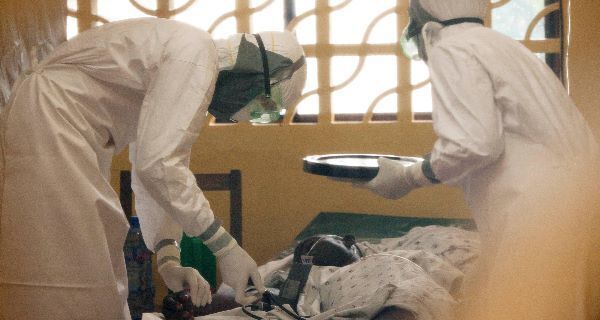
Health experts say the key to stopping ebola is breaking the chain of transmission by tracing and isolating those who have had contact with ebola patients or victims. Healthcare workers can not do that if they donāt know where new cases are emerging.
āAnd unfortunately, we donāt have good data from a lot of areas. We donāt know exactly what is happening,ā said Banbury, the chief of Unmeer.
Banbury, who visited the three most affected countries last week, said it was āheartbreakingā to see families torn apart by ebola as they struggle to care for sick loved ones while also hoping to avoid infection.
He said he is hoping for a new approach in Liberia as the UN and its partners work to improve the capacity of communities to safely bury victims.
Over the past week, Banbury met the presidents of Guinea, Sierra Leone, and Liberia, where ebola has infected at least 10,000 people and killed roughly half of them, as he focuses on adapting an operational framework for international anti-ebola efforts, the UN said.
The president of the World Bank, Jim Yong Kim, meanwhile, said the three countries need at least 5,000 more healthworkers to effectively fight the epidemic.
Kim said yesterday he is worried about where those healthworkers can be found given the wide- spread fear of ebola. Quarantining healthworkers returning to their home countries could also hurt recruitment efforts.
The World Bank president spoke alongside UN secretary- general Ban Ki-moon and African Union chairwoman Nkosazana Dlamini-Zuma in Addis Ababa, Ethiopia, where the AU is headquartered.
Although Western governments and aid groups have stepped up ebola aid in recent months, the UN says more support is needed. The UNās target is to have 70% of ebola cases getting access to a treatment centre and to achieve a similar percentage for safe ebola burials.
āThey are extremely ambitious [goals], given the geographical spread of the disease, the numbers of people infected, the very poor information on exactly where those infected are and what the transmission patterns are,ā said Banbury. āThe three things we need the most are people, supplies, and money.ā