Salmond steps down as dream of independence dies
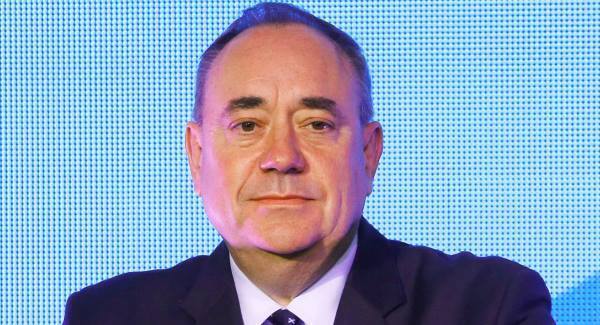
As David Cameron held out the promise of a “new and fair” constitutional settlement for the entire UK, Mr Salmond said he would be standing down as First Minister and leader of the SNP.
A tired sounding Mr Salmond said it was time for new leadership to hold politicians at Westminster to account for promises they made to Scotland during the course of the campaign.
“My time as leader is nearly over, but for Scotland the campaign continues and the dream shall never die,” he said.
Earlier the prime minister hailed the referendum vote — 55.3% for yes to 44.7% against breaking away from the UK — saying it represented the “settled will” of the Scottish people which should put an end to the independence debate “for a generation”.
Following a campaign which galvanised all of Scotland, Mr Cameron vowed that promises made by the three main Westminster parties to devolve more powers to Holyrood would be “honoured in full”, with draft legislation in January.
But speaking on the steps of Downing Street, he made clear they would go hand in hand with a “balanced” new constitutional settlement covering England, Wales and Northern Ireland.
In particular, he said there would have to be reform at Westminster to address the thorny issue of “English votes for English laws”, suggesting Scottish MPs would no longer be able to vote on exclusively English issues.
Labour — whose chances of obtaining a Commons majority are likely to depend on Scottish votes— reacted warily to the plan.
Ed Miliband warned he would resist any attempt by the Tories to exploit the situation for “narrow political advantage” and called for the creation of a constitutional convention.
However, Conservative MPs made clear change was essential, warning they would not tolerate a situation where Scottish MPs at Westminster would be able to vote on the level of income tax for England while income tax in Scotland was decided in Holyrood.
At the end of a dramatic night, Mr Salmond finally conceded shortly after 6am that his long-cherished dream of leading his country to independence was over.
“Scotland has by a majority decided not at this stage to become an independent country,” he said in a speech to supporters in Edinburgh.
“I accept that verdict of the people and I call on all of Scotland to follow suit in accepting the democratic verdict of the people of Scotland.”
A jubilant Alistair Darling, who led the Better Together campaign, said it was a “momentous result” for Scotland and for the United Kingdom as a whole. “The people of Scotland have spoken. We have chosen unity over division and positive change rather than needless separation,” he said.
With the votes from all 32 council areas in, the result was a victory for the No camp by 2,001,926 votes to 1,617,989, on a record 84.5% turnout.
The result — which was more comfortable for the Better Together campaign than opinion polls had suggested — was greeted with relief in No 10, where there were fears a Yes vote could have triggered a major political and constitutional crisis.
“The people of Scotland have spoken and it is a clear result. They have kept our country of four nations together and like millions of other people I am delighted,” Mr Cameron said.
“Now the debate has been settled for a generation, or as Alex Salmond has said: ‘Perhaps for a lifetime’. So there can be no disputes, no re-runs, we have heard the will of the Scottish people.”
The prime minister underlined his commitment to greater devolution of power to Scotland with an announcement that Glasgow’s Commonwealth Games supremo, Lord Smith of Kelvin, would oversee the process.
However his promise of reform at Westminster to ensure that “the millions of voices of England” were also heard, opened up the prospect of a protracted new political struggle leading all the way to the next general election and beyond.
“The question of English votes for English laws, requires a decisive answer, so just as Scotland will vote separately in the Scottish Parliament on tax, spending and welfare, so too England as well as Wales and Northern Ireland should be able to vote on these issues,” he said.
For Labour, shadow foreign secretary Douglas Alexander accused the Prime Minister of a “knee-jerk reaction” driven “more by politics than by a considered judgment of the needs of the constitution”.
At the same time, Mr Cameron is under pressure from Conservative MPs. Many of them are angry at the way he rushed to sign up for a plan by former prime minister Gordon Brown for wider devolution to Scotland.
Spanish Prime Minister Mariano Rajoy congratulated Scotland’s citizens for “clearly and unequivocally” choosing to remain part of the UK and EU.
In a video lasting almost two minutes, Rajoy said Scots had voted “en masse, peacefully, and with scrupulous respect to the laws of their country”.
The Spanish government had insinuated that it would have vetoed entry to the EU for an independent Scotland as it deals with a growing separatist movement of its own in the north eastern region of Catalonia.
The ruling coalition in Catalonia’s regional government hopes to hold a referendum on independence on November 9 which has been declared unconstitutional and therefore illegal by the central government in Madrid.