US and Iran welcome new Iraq leader
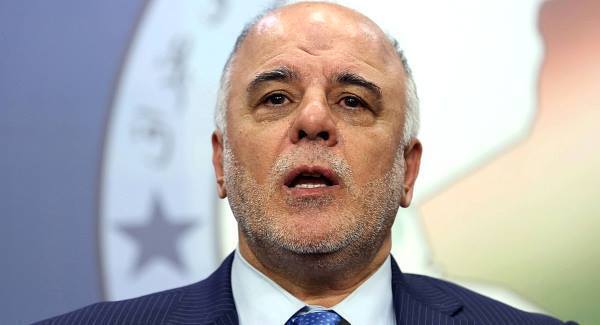
Haider al-Abadi still faces opposition closer to home, where his Shi’ite party colleague Nuri al-Maliki has refused to step aside after eight years as prime minister that have alienated Iraq’s once dominant Sunni minority and frustrated Washington and Tehran.
Shi’ite militia and army commanders long loyal to Maliki signalled their backing for the change, as did many people on the streets of Baghdad, eager for an end to fears of a further descent into sectarian and ethnic bloodletting.
Sunni neighbours Turkey and Saudi Arabia also welcomed Abadi’s appointment.
A statement from Maliki’s office said he met senior security officials and army and police commanders to urge them “not to interfere in the political crisis”.
Meanwhile, at least 17 people were killed in two car bombings in Shi’ite areas of Baghdad — a kind of attack that has become increasingly routine in recent months.
As Western powers and international aid agencies considered further help for tens of thousands of people driven from their homes and under threat from the Sunni militants of the Islamic State near the Syrian border, secretary of state John Kerry said the US would consider requests for military and other assistance once Abadi forms a government to unite the country.
US officials said the Obama administration was already considering sending more military advisers to Iraq.
Underscoring the convergence of interest in Iraq that marks the normally hostile relationship between Washington and Iran, senior Iranian officials congratulated Abadi on his nomination, three months after a parliamentary election left Maliki’s bloc as the biggest in the legislature. Like Western powers, Shi’ite Iran is alarmed by Sunni militants’ hold in Syria and Iraq.
“Iran supports the legal process that has taken its course with respect to choosing Iraq’s new prime minister,” said the representative of Supreme Leader Ayatollah Ali Khamenei.
“Iran favours a cohesive, integrated, and secure Iraq,” he said, adding an apparent appeal to Maliki to concede.
Abadi himself, long exiled in Britain, is seen as a far less polarising and sectarian figure than Maliki, who is also from the Shi’ite Islamic Dawa party. Abadi appears to have the blessing of Iraq’s powerful Shi’ite clergy, a major force since US troops toppled Sunni dictator Saddam Hussein in 2003.
Iraqi state television said Abadi “called on all political powers who believe in the constitution and democracy to unite efforts and close ranks to respond to Iraq’s great challenges”.
One politician close to Abadi told Reuters that the prime minister-designate had begun contacting leaders of major groups to sound them out on forming a new cabinet.
It remains unclear how much support Maliki, who remains acting prime minister, has to obstruct the formation of a new administration.
The Vatican is urging Muslim leaders to denounce the “barbarity” of the Islamic State’s attacks against Christians and other minorities in Iraq, saying their credibility is on the line.
The Vatican’s Pontifical Council for Interreligious Dialogue, the Vatican office that deals with the Muslim world, said that the forced expulsions and massacres of Christians and minority Yazidis shamed humanity and couldn’t be justified by any religion.
The office said the “unspeakable criminal acts” — the beheading, crucifying and hanging of bodies in public places, the “barbaric practice of infibulation”, and the abduction of women and girls as spoils of war — required a “clear and courageous stance on the part of religious leaders, especially Muslims”.
“If not, what credibility will religions, their followers and their leaders have?” the Vatican said.
Pope Francis has stepped up his denunciation of attacks against Christians and has sent an envoy to the region.
CONNECT WITH US TODAY



Be the first to know the latest news and updates