Nigerian hospital quarantined after man dies of Ebola
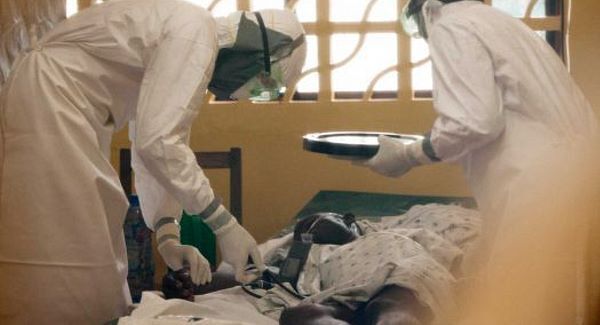
Patrick Sawyer, a consultant for the Liberian finance ministry in his 40s, collapsed on arrival at Lagos airport on July 20 and was put in isolation at the First Consultants Hospital in Obalende, one of the most crowded parts of a city that is home to 21m people.
He died on Friday.
The fact that Mr Sawyer was able to board an international flight despite being ill raised fears that the disease could spread beyond the three countries already affected — Liberia, Guinea and Sierra Leone.
There is no known cure for Ebola.
“We have shut the hospital to enable us to properly quarantine the environment,” Lagos state health commissioner Jide Idris told Nigerian TV. “Some of the hospital staff who were in close contact with the victim have been isolated.”
The hospital will be shut for a week and all staff monitored to ensure the virus has not spread, he added.
Ebola has killed 672 people across Guinea, Liberia and Sierra Leone since it was first diagnosed in February.
It can kill up to 90% of those who catch it, although the fatality rate of the current outbreak is around 60%.
Highly contagious, especially in the late stages, symptoms include vomiting, diarrhoea and internal and external bleeding.
Adding to the risks, Nigerian doctors are on strike over conditions and pay. Chairman of the Nigerian Medical Association Tope Ojo was quoted in local media as saying the strike would not be called off despite the Ebola threat.
Nigeria’s airports, seaports and land borders have been on “red alert” since Friday.
Liberia closed most of its border crossings on Sunday and introduced stringent health measures.
The World Health Organisation said in a statement that Sawyer’s flight stopped in Lome in Togo on its way to Lagos.
“WHO is sending teams to both Nigeria and Togo to do follow-up work in relation to contact tracing, in particular to contacts he may have had on board the flight,” WHO spokesman Paul Garwood said.
The WHO said that, in the past week, its regional director for Africa, Luis Sambo, had been on a fact finding mission to Guinea, Liberia and Sierra Leone, which have 1,201 confirmed, suspected and probable cases between them.
“He observed that the outbreak is beyond each national health sector alone and urged the governments of the affected countries to mobilise and involve all sectors, including civil society and communities, in the response,” the WHO statement said.
A relative surge in cases in Guinea after weeks of low viral activity showed that “undetected chains of transmission existed in the community“, the WHO said, calling for containment measures and contact tracing to be stepped up in Guinea.
Liberia’s president has closed all but three land border crossings, restricted public gatherings and quarantined communities heavily affected by the Ebola outbreak.
Ellen Johnson Sirleaf described the measures after the first meeting of a new task force she created and is chairing to contain the disease, which has killed 129 people in the country and more than 670 across the region.
“No doubt, the Ebola virus is a national health problem,” Sirleaf said. “And as we have also begun to see, it attacks our way of life, with serious economic and social consequences.”
Sirleaf said all borders would be closed except for three — one of which crosses into Sierra Leone, one that crosses into Guinea and another that crosses into both.

CONNECT WITH US TODAY



Be the first to know the latest news and updates