Putin stands by $15bn Ukraine bailout
However, he warned that Russia would want its money back and while it was prepared to reduce the price of gas and defer payments, the Russian economy could only afford so much.
While the demonstrations spread to the more Russian-leaning east of Ukraine, the EU’s foreign affairs head, Catherine Ashton brought forward her trip to Kiev to last night where she joined Enlargement Commissioner Stefan Fuele, who is there for the second time.
But while Mr Putin appeared to be conciliatory on trade issues, he was critical of the EU sending senior officials to Kiev telling them that Russia was not going to interfere. “If in the midst of a crisis in Greece or any other country our foreign minister would come to an anti-EU rally and urge people to do something — this would not be very good. The more intermediaries there are, the more problems there are”, he said.
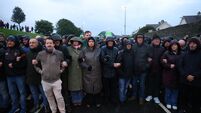
The repeal of the anti- demonstration law and the resignation of the prime minister and his cabinet were among the demands of the protestors. Buoyed by their success, they made it clear that they would remain on the streets until President Viktor Yanukovych resigned also.
There was a sense in Brussels, where the summit with President Putin took place, that the situation was now extremely delicate with nationalists and right-wing extremists taking advantage of the situation to push for the country to close the borders and shut down contacts with the outside world.
The EU scrapped the usual bi-annual day long summit for a three-hour long discussion between Mr Putin and EU Council president Herman Van Rompuy and Commission president Jose Manuel Barroso. Relations between the two have been more bad-tempered of late over a swath of trade issues and Ukraine’s former intention of signing a trade agreement with the EU.
They appeared to have made some progress with both sides putting the emphasis on trade and business and agreeing to launch the review of the 1997 trade agreement with Moscow which has been renewed on a year-to-year basis because they could not agree on the relaunch. Now there was much talk of leaving the details to expert groups and ministers but a firm commitment to initiate it at their summit in June. Mr Putin even referred to the EU’s longer term objective of having a free trade area from the Atlantic to the Pacific which they discussed.
The EU has accused Russia of exerting undue pressure on Kiev to pull back from signing the trade agreement with Brussels last November. Mr Putin talked about misunderstandings over the agreement but nonetheless he muddied the waters, referring to the possibility of it interfering with Ukraine’s trade relationship with Russia. He insisted that the events in Ukraine had not introduced changes into the agenda of the meeting but agreed that they had discussed it and the overall issue of the EU’s Eastern Partnership — of which Ukraine, Armenia, Georgia and Moldova are members.
There appeared to have been a breakthrough in the issue of the Nord Stream gas pipe from Russia and its extension, OPAL, in Germany with Mr Putin saying they had movement “on this most difficult issue”.

CONNECT WITH US TODAY



Be the first to know the latest news and updates