Database to boost cancer treatments
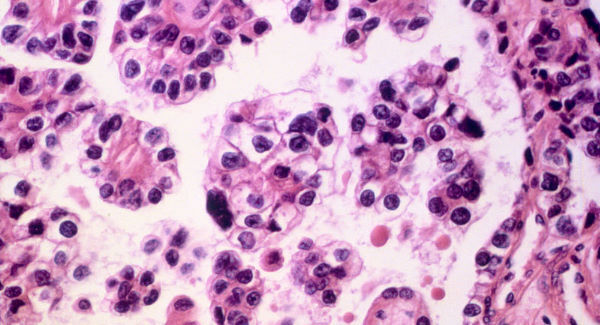
Techniques borrowed from Britain’s Met Office have been incorporated into an “artificial intelligence” database containing 1.7bn experimental results.
Just as weather forecasters make their predictions using powerful computers to crunch information from a myriad sources, scientists tapping into the CanSAR database will be guided to the most effective drugs and treatments.
CanSAR condenses more data than would be generated by operating the Hubble Space Telescope for 1m years.
Dr Bissan Al-Lazikani, a leading member of the CanSAR team from the Institute of Cancer Research in London, said: “The database is capable of extraordinarily complex virtual experiments drawing on information from patients, genetics, chemistry and other laboratory research.
“It can spot opportunities for future cancer treatments that no human eye could be expected to see.”
CanSAR is being made freely available to scientists around the world.
It contains more than 8m experimentally derived measurements, information on nearly 1m biologically active chemical compounds, and data from more than 1,000 cancer cell lines.
It also holds drug target information from the “book of life” containing our genetic code, and lab animals. Using the database, research that previously took months will now take minutes.
CanSAR was developed with funding from Cancer Research UK. Professor Paul Workman, its deputy CEO said: “This is an extraordinary time for cancer research, as advances in scientific techniques open up new possibilities and generate unprecedented amounts of data.”


CONNECT WITH US TODAY



Be the first to know the latest news and updates