French weekly fuels Mohammed row with cartoons
The French government, which had urged the magazine not to print the images, said it was temporarily shutting down premises including embassies and schools in 20 countries tomorrow, when protests sometimes break out after Muslim Friday prayers.
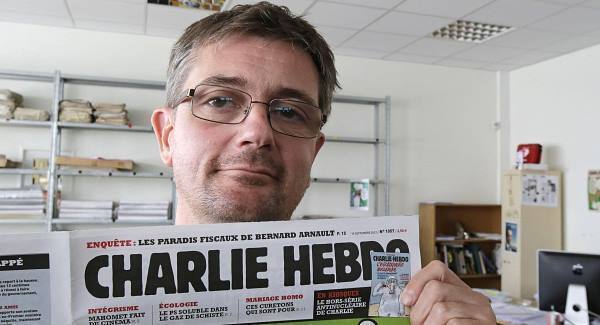
Riot police were deployed to protect the Paris offices of satirical weekly Charlie Hebdo after it hit the news stands with a cover showing an Orthodox Jew pushing the turbaned figure of Mohammed in a wheelchair.
On the inside pages, several caricatures of the Prophet showed him naked. One, entitled “Mohammed: a star is born”, depicted a bearded figure crouching over to display his buttocks and genitals.
Initial reaction from Muslim countries was critical.
“Of course it will anger people further. It will raise tensions that were already dangerously high,” said Sheikh Nabil Rahim, a leading Salafist cleric in Lebanon.
“We will try to keep things managed and peaceful, but these things easily get out of hand. I fear there could more targeting of foreigners, and this is why I wish they would not persist with these provocations.”
In Egypt, Essam Erian, acting head of the powerful Muslim Brotherhood’s Freedom and Justice Party, said: “We reject and condemn the French cartoons that dishonour the Prophet and we condemn any action that defames the sacred according to people’s beliefs.”
The posting of a short film on YouTube last week that mocked Mohammed as a lecherous fool has sparked protests in many countries, some of them deadly.
Violence linked to the amateurish movie, which portrays the prophet as a fraud, a womaniser, and a child molester, has killed at least 30 people in seven countries, including the American ambassador to Libya last week.
The furore has emerged as an issue in the US presidential election campaign and sparked a wider international debate over free speech, religion and the right to offend. Many Muslims consider any representation of Allah or the Prophet Mohammed blasphemous.
“We have the impression that it’s officially allowed for Charlie Hebdo to attack the Catholic far-right but we cannot poke fun at fundamental Islamists,” said editor Stephane Charbonnier, who drew the front-page cartoon.
“It shows the climate — everyone is driven by fear, and that is exactly what this small handful of extremists who do not represent anyone want — to make everyone afraid, to shut us all in a cave,” he said.
“Muhammad isn’t sacred to me,” he said. “I don’t blame Muslims for not laughing at our drawings. I live under French law; I don’t live under Koranic law.”
One cartoon, in reference to the scandal over a French magazine’s decision to publish topless photos of the wife of Britain’s Prince William, showed a topless, bearded character with the caption: “Riots in Arab countries after photos of Mrs Mohammed are published.”
Charbonnier said he expected to double the usual 35,000-copy print run to meet demand.
French foreign minister Laurent Fabius criticised the magazine’s move as a provocation. “We saw what happened last week in Libya and in other countries such as Afghanistan,” Fabius said. “We have to call on all to behave responsibly.”
A Foreign Ministry spokesman said France was closing its embassies, consulates, cultural centres and schools in 20 countries tomorrow as a “precautionary measure”.
Charlie Hebdo has a long reputation for being provocative. Its Paris offices were firebombed last November after it published a mocking caricature of Mohammed, and Charbonnier has been under police guard ever since.
Speaking outside his offices in an eastern neighbourhood with many residents of North African origin, Charbonnier said he had not received any threats over the latest cartoons. In a message on its Twitter account, Charlie Hebdo said its website had been hacked, but referred readers to a blog it also uses.
The French Muslim Council, the main body representing Muslims in France, accused Charlie Hebdo of firing up anti-Muslim sentiment at a sensitive time.
“The CFCM is profoundly worried by this irresponsible act, which in such a fraught climate risks further exacerbating tensions and sparking damaging reactions,” it said.
Richard Prasquier, head of the body representing France’s Jewish community — Europe’s largest — said religious censorship was wrong but added: “Publishing Mohammed cartoons at this time, in the name of freedom, is irresponsible.”
In 2005, Danish cartoons of the Prophet sparked a wave of protests across the Muslim world that killed at least 50 people.