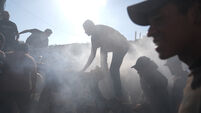
Pilgrims take plunge into icy Ganges
Naked sadhus or holy men, blowing conch shells and whose bodies were smeared with ash and sandalwood paste, mingled with other devotees at the confluence of the Ganges and Yamuna rivers and raced into the water for the cleansing ritual.
Between 50 and 70 million people are expected to bathe in the waters during the 45-day religious festival, which takes place every six years in the city of Allahabad and is billed as one of the largest gatherings of humanity on earth.
Braving the winter chill, worshippers chanting their prayers waded into the water, cupped it in their hands and threw it over their heads and chests. Others dunked their heads in the water.
“Around 2.5 million devotees have already arrived and we’re ready to face a larger deluge of humanity during the Mela,” said C Bajpai, chief secretary of Uttar Pradesh state.
“About 1.5 million people have already taken a dip.”
Flags of Hindu sects fluttered above the pilgrims’ camp of 62,000 tents as the hordes of worshippers took the plunge, ignoring the cold snap gripping northern India, where early morning temperatures are hovering just above freezing.
The festival commemorates a mythical battle between gods and demons over a pitcher of the nectar of immortality.
The festival is taking place amid tight security after intelligence warnings of possible terrorist attacks.
“More than 50,000 policemen are being deployed,” said state Home Secretary RM Srivastava.
“We are in touch with the army and federal intelligence agencies.”
A special team of “terrorist spotters” drawn from insurgency-hit states in India had been formed, said senior police superintendent Rajeev Sabharwal.
About two million devotees are staying in the giant tented city covering some 4,000 hectares of land set aside for the event.
A major religious festival is held every 12 years at Allahabad and at other sites on the Ganges. In the interim there are other festivals such as the current one at Allahabad.
CONNECT WITH US TODAY



Be the first to know the latest news and updates