Campaigners demand justice as Hillsborough Report reveals truth
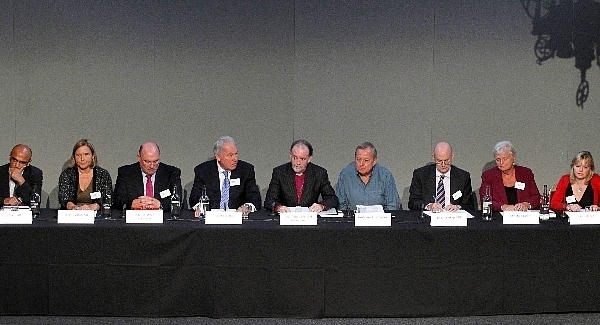
British Prime Minister David Cameron’s apology and the findings of the Hillsborough Independent Panel have been welcomed by campaigners who have now called for the parties responsible for the disaster to be made accountable.
The report, available here, confirmed South Yorkshire Police had sought to blame fans by instructing officers to change or amend their statements relating to the events of April 15, 1989.
Hillsborough families had suffered a “double injustice”, both in the “failure of the state to protect their loved ones and the indefensible wait to get to the truth”, and in the efforts to denigrate the deceased and suggest that they were “somehow at fault for their own deaths”, Cameron told the House of Commons.
Sheila Coleman, spokesman for the Hillsborough Justice Campaign, believes there is still some way to go however.
“Words are easy but of course the Hillsborough Justice Campaign welcomes the apologies. But we have had the truth, now it is time for justice,” she said.
“Clearly people indulged in criminal activities by changing and altering statements and telling lies.
“If you or I did that we would be prosecuted – people cannot be above the law.
“Certainly the law-makers and those who are supposed to uphold the law shouldn’t be above the law.
“How can you have faith in a police force which ordered its younger officers to alter their statements?
“This was not just one or two, it was the majority and the coroner’s court was used by South Yorkshire Police to try to revert the Taylor Report.
“The Attorney General has to quash the inquest verdicts and has to investigate as to what criminal procedures should be brought.”
Coleman welcomed the publication of the report, which allowed the full extent of what happened at Hillsborough to be viewed by the wider public.
“Obviously the report is truly shocking but a lot of it was information we already knew because it was information we had had for a number of years,” she added.
“But I defy anyone not to be shocked by the fact that lives could have been saved, that blood alcohol levels were taken and those found to be negative then had their names checked against the police national computer for criminal records to see if their reputation could be smeared.
“The fans have been totally vindicated. They played no part in the disaster.”
The families of 96 people killed in the Hillsborough tragedy have seen thousands of official documents relating to the disaster for the first time today.
On April 15, 1989, 96 Liverpool fans lost their lives having gone to watch their side contest an FA Cup semi-final against Nottingham Forest.
Here, we look at how that dreadful day unfolded.
- For the second successive year, Liverpool were drawn to play Nottingham Forest in the FA Cup semi-final. For the second successive year, Hillsborough was chosen as the neutral venue. For the second successive year, Liverpool were allocated the Leppings Lane end of the ground.
- On a bright sunny day, fans began arriving at the ground early. By 2pm the numbers had increased substantially.
- With many coaches arriving later than planned due to road works, the sheer scale of supporters still outside the stadium at 2.30pm was more than normal. Police continued with their routine searches of all spectators despite the growing numbers.
- It is estimated 10,000 supporters are required to pass through one of seven turnstiles at the Leppings Lane end.
- The bottleneck is starting to cause major problems outside the stadium with the fear rising that the safety of supporters caught in the middle is at risk.
- The peculiar nature of the Leppings Lane end means a substantial percentage of supporters are already being channelled into the middle section, which in itself is causing a problem.
- A request to delay the kick-off to ease the growing congestion is rejected.
- A first request to open the exit gates is also rejected on the grounds of safety.
- More fans arrive outside the Leppings Lane entry as the situation starts to escalate out of control.
- A second request to open the exit gates is made, this time from Superintendent Marshall, commander outside the stadium, to Chief Superintendent Duckenfield, who is in overall control.
- In his own words, Duckenfield ’freezes’ before ordering the gates to be opened.
- Supporters pour through the exit gates. With no direction from either police or stadium officials, most head straight towards a tunnel which gives access to pens 3 and 4, which are already seriously overcrowded as the match itself
begins, players of both teams oblivious to the escalating problems.
- Unaware of the gravity of the situation and believing a pitch invasion was taking place, some police officers attempted to prevent supporters climbing out of the pens.
- However, other officers could see the disaster that was beginning to unfold and tried to help supporters escape the crush. At 3.06pm, the game is halted and the teams are taken off the field.
- Slowly, bodies of dead supporters began to be carried onto the pitch. Advertising hoardings were ripped up and used as makeshift stretchers.
- All but one of the 44 ambulances around the stadium were denied entry to the pitch. The one that did make it turned back when confronted with the sheer scale of the disaster.
- In total 96 supporters died, the vast majority crushed at the front of pen 3. In addition, 730 were injured inside the ground and a further 36 outside.