Rise and fall of dominant clubs inevitable
So, Souness unleashed, going on a rant about how “the older players” had let the team down.
Ronnie Whelan took exception, to the point the ‘discussion’ devolved into player and manager simply shouting “fuck off” in each other’s faces. It is an account from Whelan’s autobiography that feels somewhat relevant given the situation of a core of Manchester United’s current senior players, not to mention so much of the talk about their reactions and role in the new regime. It is also remarkable just how many of Whelan’s descriptions of that period at Liverpool relate to David Moyes right now. Occasionally, it is as if he is genuinely talking about the modern day:
•“The first thing that should be said is that [he] got some things right, even though people thought they were wrong at the time.”
•“We had our moments, times when we clicked and looked pretty impressive. But the reality was we were a team that wasn’t hard to beat.”
•“I played in a team that had so much flair it could go and win a game out of nowhere. [This] team was neither one thing nor the other.”
•“It seems to me the more the pressure on him increased, the more his judgement deteriorated.”
•“There was a lot more going wrong than just the older players supposedly not helping the younger players... we finished sixth in the league.”
The last point is pertinent because there is obviously a lot more going wrong at United than just a group of champions under-performing or a manager out of his depth. While this is not to say Moyes was ever the right man for the specific job of replacing Alex Ferguson, the very appointment was arguably a consequence of where a stagnating football empire was at that point.
That is really what this is all about: the inevitable rise and fall of clubs as dominant teams, regardless of how they try to insulate themselves. It is something tomorrow’s fixture between United and Liverpool puts further focus on, especially in the context of the contrasting seasons they’re going through.
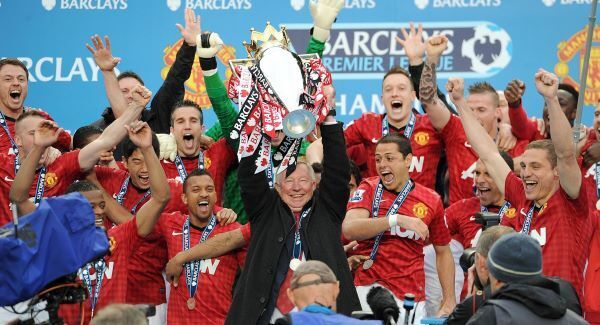
As England’s two most successful clubs and greatest rivals, their histories have also interlinked and perfectly mirrored each other in striking fashion. Most notably, they have won league titles in identical sequences, as the panel indicates. They have also lost them in identical ways, with the parallels between the 1986-91 period at Anfield and 2009-14 at Old Trafford unavoidable.
Both teams squandered a lead at the top (1987 and 2010), then came back to claim the title in commanding fashion, only to then see the next one astonishingly slip away in the final seconds of a season. While both instantly recovered for one final league win, the signs of decline were there; of just about maintaining standards rather than stridently seeking to lift them.
It was all about what they did next, but there is an argument neither were ever going to be fully prepared to comprehend the magnitude of that task. This is the thing with those truly dominant teams. They become so sure of their own position that they don’t quite have that deep need to see what’s changing elsewhere in the game. As such, they just try and consolidate.
Liverpool went for a former player in Souness; United last year opted for a manager they felt best resembled Ferguson’s personality, but one who was not necessarily the best man for the job. All the while, fresher teams better set to maximise more modern ideas began to see gains. Ferguson famously — and ravenously — streaked away. Now, Brendan Rodgers is benefiting from thoroughly sophisticated coaching, while Moyes struggles with a more rigid approach. It points to another peculiarity of this rivalry.
Despite the 38 leagues they’ve won, United and Liverpool have only very rarely directly competed for them. There have only been five occasions in 114 full seasons of English football then they have both finished top two, and only two of those were true title races. Because, throughout all that time, they’ve been at very different stages of development. Whether that is another old trend set to continue remains to be seen.

CONNECT WITH US TODAY



Be the first to know the latest news and updates