O’Neill would be right man at wrong time
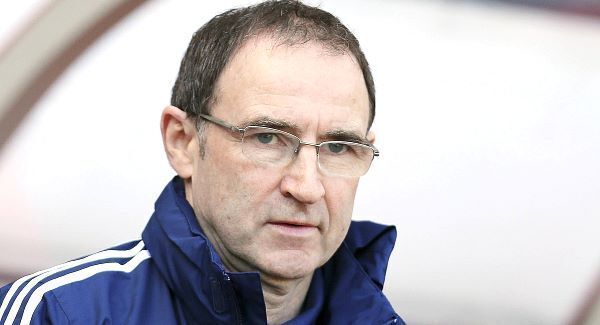
Around five or six years ago, most pointedly, it would have been difficult to think of a manager better suited to the Ireland job than Martin O’Neill.
Aside from his nationality, the Derry native had proven himself absolutely adept at getting limited teams — from Wycombe to Celtic — to play at much higher levels. He was something of an alchemist. Even emotionally, a few of those rousing big European performances would have ideally suited Irish notions about the ‘Lansdowne roar’.
Except, at that point, O’Neill’s status was too high; his ambitions still too lofty. Far from Ireland or even the English FA, O’Neill was said to have designs on Old Trafford. Now, things have changed. That, however, could be the key issue. Everything seems perfectly set up for O’Neill to finally take the job — except, ironically, the timing. At least in terms of his own career.
O’Neill has been out of work for months, the FAI suddenly have the position free. His asking price has sufficiently lowered to be affordable, while he is known to be friendly with some of benefactor Denis O’Brien’s circle. Similarly, just as O’Neill is understood to be open to the idea, John Delaney has already mentioned him as being “in the pot”.
In the modern game, however, that pot may now need new ingredients. To a certain degree, O’Neill has the feel of Trapattoni 2.0, if not quite to the same extremes. Not only is he a manager past his best, there is an argument the game has passed him by.
For all his initial vigour at Aston Villa, his reign ended with a bloated squad no longer able to defy economics. It said much that it effectively took the club two years to even begin recovering, and only after significant budgeting from Paul Lambert.
At Sunderland, there was a similar inefficiency, but the manner in which it extended to the pitch was the most alarming element of all. Using somewhat outdated tactics that didn’t really go beyond functional football down the wings, O’Neill struggled to arrest a slide as a number of more modern coaches outwitted him. It sounds familiar.
This is not to say that he wouldn’t find a new energy with Ireland. It is eminently possible that the different surroundings and rhythm of international football could revitalise both the man and the team. On one level, there remain elements of his approach that seem especially suited to the circumstances.
On another though, there is the lingering feeling that something else is now required. Since the 2002 World Cup watershed, there have been more surprises per major tournament than ever before due to the effect Champions League demands have on elite players.
Many of the countries that achieved those upsets, however, have done so by more than just sitting back. Even Greece, who effectively set the template in Euro 2004, added an impressive variety of interchanging and attacking to their bullish back line. With every match, Otto Rehhagel altered the approach, rendering them much less predictable.
The trends of Euro 2012 have furthered this process, with Giovanni Trapattoni gradually struggling to tackle the greater nuances of the modern game. Ireland were repeatedly outmanoeuvred by three-men midfields as well as coaches prepared to work on greater spark in attack. While the FAI may ultimately require a revolution in their coaching infrastructure, imagination and innovation is still possible.
Beyond O’Neill, of course, the list of names being mentioned isn’t exactly fresh — a further point as regards the timing. For all Trapattoni’s faults and flaws, he was an innovative choice in terms of profile that made the notorious three-month wait over 2007-08 worth it. His status and savvy restored Ireland’s respectability, even if it ultimately had a sell-by date.
Now, a similar delay would be worth it if it meant an upgrade in innovation.
There are a number of highly technical coaches who may not necessarily fit the emotional characteristics of the job, but certainly do in terms of modern approach and affordability. Someone like Rene Meulensteen would undeniably represent a risk, but could also offer sufficient variety to add a new verve. It could also give a notionally limited group of players a few extra levels to their game.
Much of that depends on sufficient pause for thought. This time, the FAI working to their own schedule could prove crucial.

CONNECT WITH US TODAY



Be the first to know the latest news and updates