Colin Sheridan: Voters grow weary of feeling left behind by politicians
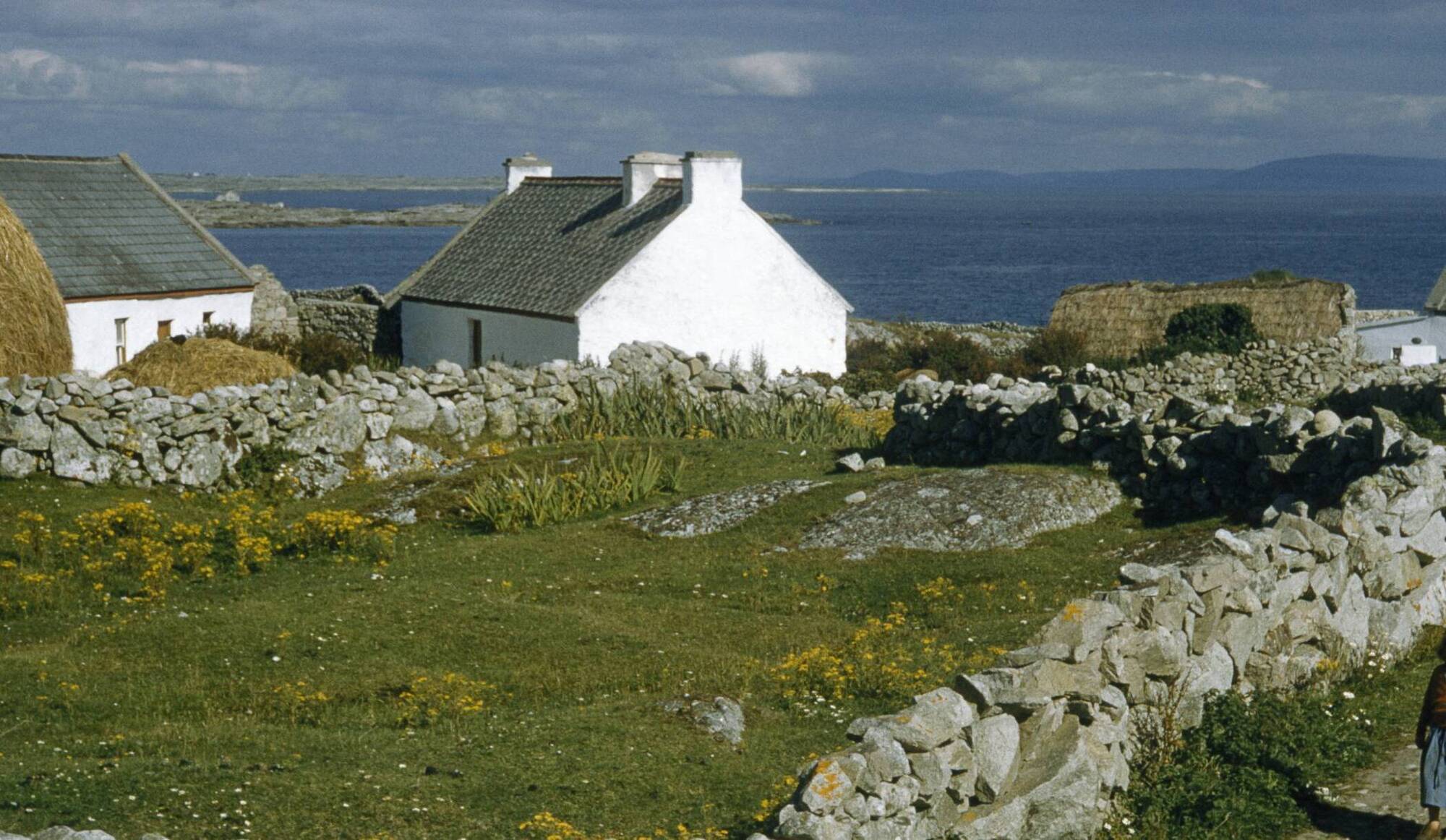
Spend a morning walking around An Cheathrú Rua and a pattern quickly emerges. The same frustrations surface repeatedly, regardless of age or background. Young people spoke about housing and planning frustrations. Older residents spoke about decline, neglect and mistrust. File picture
The road into An Cheathrú Rua bends westward through rock and bog before opening out into the village itself - a place suspended between endurance and uncertainty.
Outside the cafés and shops, people moved at an unhurried pace, stopping to talk in doorways or leaning into conversations over takeaway coffees. Eight days before the Galway West by-election, there was little obvious sign that an election was imminent.
No canvassers working the street. No clusters of party volunteers. No candidates shaking hands. Save for the posters on the poles, politics, at least on the surface, appeared oddly absent from the place it is now asking to vote.
And yet politics was ubiquitous in the conversations.
Spend a morning walking around An Cheathrú Rua and a pattern quickly emerges. The same frustrations surface repeatedly, regardless of age or background. Young people spoke about housing and planning frustrations. Older residents spoke about decline, neglect and mistrust.
Business owners spoke about tourism and the changing shape of the community. Newer arrivals and returning emigrants alike described a place caught between wanting growth and feeling abandoned by the very systems that promise it.
The consistency was striking. For younger people especially, the central issue was not ideology but practicality: how exactly are they supposed to build a life here? The aspiration to return to Connemara still exists strongly among those who left for Galway city, Dublin or abroad, but many described that aspiration colliding headlong with planning restrictions, spiralling costs and limited housing supply.
In theory, politicians want to see Irish-speaking regions like this preserved and repopulated. In practice, several people argued, the state has made it extraordinarily difficult for young families to remain. The priority for teenagers is to get your drivers license as soon as possible. Not to guarantee a way out, but a means of going anywhere at all.
The frustration was not abstract. It was personal and immediate. Conversations repeatedly circled back to planning permission, inheritance sites, mortgage approval and the cost of building. For many, the contradiction feels glaring: politicians invoke rural Ireland constantly, but people living in rural Ireland feel they are fighting bureaucracy at every turn simply to stay there.
That disconnect fed into a broader sense of cynicism which hung quietly over many of the conversations throughout the morning. People were not animated in a partisan sense. There was little or no tribal loyalty to parties, and even less enthusiasm.
Instead, there was a noticeable retreat from traditional political identities altogether. Voters who might once have reliably aligned themselves with Fianna Fáil or Fine Gael spoke instead about personalities, competence and trust - or the lack of it.
Sinn Féin, despite years presenting itself as the alternative to establishment politics, was not immune from this scepticism either. If there was one consistent sentiment, it was exhaustion with political promises generally. Voters appeared less interested in party banners than in whether anybody seemed credible, visible or sincere. Or, even bothered to go west and canvas there.
That visibility, or absence of it, became another recurring theme.
Despite the election being little more than a week away, not one of the people spoken to during the morning had encountered a candidate in person. Almost everyone had received leaflets through their doors. But the distinction mattered to them. Leaflets were regarded as perfunctory; showing up mattered more.
Several interviewees pointed out that they worked on the village’s main street every day and still had not seen canvassers call in.
The absence has not gone unnoticed in Connemara, where people are acutely sensitive to the perception that the region is politically peripheral - acknowledged during campaigns and forgotten afterwards. There was a feeling among some that parties were focusing their energy elsewhere, treating the Connemara vote as either safely banked or electorally insignificant.
That sense of neglect was sharpened further by local reaction to the timing of an upcoming ministerial visit to the area.
Residents pointed out that local committees and school representatives had spent years attempting to secure official attention for projects but with little success. Yet now, in the final stretch of a by-election campaign, a government minister is due to arrive to officially open part of a local school development.
For some locals, the timing felt impossible to separate from the politics of the moment. The reaction was less anger than weary recognition - another example, in their eyes, of politicians appearing only when votes are required.
And still, despite the cynicism, people talked.
That perhaps was the most revealing thing about spending time in An Cheathrú Rua. Beneath the disillusionment was not apathy but an intense engagement with the realities of daily life here. People wanted to discuss what was happening around them. They wanted to explain the pressures the area faces and the changes reshaping it.
One issue raised repeatedly was the transformation brought about by the housing of refugees and asylum seekers in the local hotel. Residents were careful and often nuanced in how they spoke about it.
Many acknowledged the value of diversity and expressed sympathy for people fleeing war or hardship.
But they also described a village struggling to absorb rapid demographic change without the infrastructure or resources needed to support integration properly.
The hotel itself emerged as a symbol of that tension. Once a social and economic hub for tourism in the area, its loss to long-term accommodation has altered the rhythm of local life. People spoke about the disappearance of visitors who would once have stayed there during the summer months. Others spoke about the absence of communal spaces where locals and newcomers might naturally mix.
The result, according to several residents, is a growing sense of separation rather than integration - communities existing beside one another rather than together. It is a sensitive subject, and one people approached cautiously, lowering their voices slightly before discussing it. But it was impossible to ignore how frequently it surfaced.
By late morning, as people drifted in and out of shops and cafés, one final detail became increasingly significant: almost nobody had decided how they were going to vote.
Eight days from polling day, there was no dominant candidate, no prevailing enthusiasm, no clear direction. Some people mentioned independent candidates with tentative interest. Others shrugged entirely. A few - and only a few- admitted they might not vote at all.
In another era, uncertainty this close to an election might have suggested disengagement.
In An Cheathrú Rua, it felt more like hesitation - voters withholding judgement from a political system they no longer instinctively trust.
And perhaps that is the real story emerging from places like this ahead of the Galway West by-election. Not ideological upheaval, nor political momentum, but something quieter and harder to quantify: a lingering sense among many voters that politics happens around them rather than with them.
In this quiet corner of Connemara, people are still waiting to be convinced otherwise.
CONNECT WITH US TODAY



Be the first to know the latest news and updates