Bargaining Power: The man driving the IRFU’s finances forward
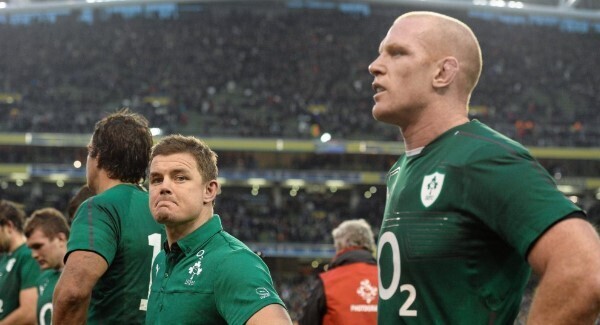
After all, Irish rugby’s governing body has had a good build up to the 2014 championship. Its marquee players have all resisted the lure of mega euro deals on offer with French Top14 clubs, the three home games for this campaign against Scotland, Wales and Italy have long been sold out and this week saw it sign a six-year national teams kit deal with Canterbury, understood to be worth in excess of €20 million.
That would be enough to make the IRFU’s director of commercial and marketing relax a small bit, but that is not the way Power sees it as he contemplates the first Test match of the year.
“No, no, no. I don’t enjoy watching Ireland play any more!” Power exclaimed in an interview this week with the Irish Examiner. “I say that tongue in cheek, but I watch rugby from a different point of view. I watch it to make sure the [advertising hoarding] LEDs are working, that everybody is getting the branding they are supposed to be getting, that corporate hospitality is working the way it’s supposed to work and programme sales are going as they are.
“It’s a big, big working day for me but it’s a great place to be and there really is nothing as exciting as five or 10 minutes before kick-off and the sense of occasion and what might happen. I’m 13 years doing the job and I have to say my enjoyment and enthusiasm for it hasn’t waned a bit.”
The work may never stop and for the IRFU there are still commercial challenges aplenty on the road ahead as the Irish economy bids to find its own feet once again post-bailout.
The stadium may be sold out but ticket prices have necessarily come down in order to reach capacity as the lessons of the 2010 November ticket debacle continue to be implemented and new deals for players to stave off competition from French suitors place added pressure on the man who has to bring the money in to pay for it all.
Yet Power will allow himself a little satisfaction at the recent commercial successes.
“It’s very gratifying. We all know it’s a very challenging economy and first and foremost we are delighted with the sell-outs. We’re delighted that people are making the effort, it just shows you how strong the brand is and how popular the team has become.
“Anybody who was at the Aviva for the New Zealand game [in November], for me it was the first time that the stadium really came alive as a venue. The atmosphere was electric and hopefully the team can give the crowd something to shout about because it really was a great day, that day, apart from the heartbreaking end, but it’s really gratifying.
“It’s great that the players have re-signed, we’re really thrilled. It’s good for the Irish game and for us the Irish team is the financial engine of the organisation. You know, 85% of the €70m that we turnover each year comes from ticket sales, TV, merchandising, corporate hospitality and sponsorship around the team, so it really is where everything stems from. The business model is fairly straightforward: the national team and professional rugby creates a dividend and it covers the cost of the professional game which creates the dividend which we put into the development side of the game, into the grassroots, to bring through to the next level the next Brian O’Driscolls and Paul O’Connells.
“So we need to take these opportunities, five or six of them a year depending on which way the fixtures fall in the Six Nations, and really maximise those days. So I’m pretty happy that we’re in a good place to do it.
“We’re delighted we signed Canterbury this week, it’s a really positive step and there’s a couple more sponsorships being announced later that we are pulling together. So we’re in a good spot. Irish rugby is certainly punching above its weight with the three provinces getting to the last eight [of the Heineken Cup], which is absolutely great and it really shows the power of centrally contracting and being able to mind players and it’s really paying great dividends for the good of the national team.”
Keeping the heroes of the Ireland team on home soil also makes sound business sense for the IRFU, not just to provide the biggest names in Joe Schmidt’s squad to the organisation’s family of sponsors, including O2, Volkswagen, Guinness and now Canterbury, for commercial engagements but also in a less tangible way, as Power explained.
“Kids walking around Limerick get to see the likes of Keith Earls, Paul O’Connell, in Cork, Peter O’Mahony; Belfast, Chris Henry, and in Dublin the Brian O’Driscolls, Sean O’Briens and Jamie Heaslips and that’s absolutely wonderful because they’re kind of advertising billboards for the sport.
“All of our players are really hard working, humble guys and as such we’re chasing the hearts of the mums and dads of the country and to be able to use them in billboard advertising or in TV ads alongside our sponsors in a family way, it’s really good for us.”
Selling out the Aviva Stadium is also really good, Power argued, for the country at large and he cited rugby’s impact on the €800m that sports tourism generates for the economy each year. That will be felt over the next two weekends by the thousands of Scots and Welsh who will descend on Dublin and is underlined by an economic impact study carried out on England’s Six Nations visit of 12 months ago which generated around €70m to the Irish economy and an average spend by every English visitor of €984, not including match ticket or spend inside the stadium.
“Bars, hotels, retail, restaurants, everybody benefits greatly from what rugby is doing and the national team is central to all that,” Power said.
Yet these are still challenging times for the majority of customers attending Ireland games, the Irish fans and selling tickets has to be done right.
“It’s a very competitive market and we have to be creative and innovative in our pricing and it was great in November to be able to sell out the Australia and New Zealand games and put so many bums on seats. We sold over 140,000 tickets for November and for these three games we’ll do over 152,000. When there are so many different things calling on people’s imaginations and spending power it’s really good to do that.”
It is fair to say the IRFU has put firmly behind it the ticketing debacle of November 2010, when Ireland took up residency at the Aviva and played South Africa, Samoa, New Zealand and Argentina to a backdrop of swathes of empty seats, the team’s support disenfranchised by high and bundled ticket prices as well as a budget-busting fourth game, all in the midst of an extraordinarily grim economic climate.
“What happened in 2010 was kind of the perfect storm in terms of the economy, and the IMF coming in and the troika and the bottom falling out of the economy. From our point of view we had priced the tickets the previous March because that was traditionally how the system worked.
“The big lesson we learned was we cannot price tickets that far in advance because we leave ourselves open to the vagaries of the economy. We’ve come down in our ticket prices, we’ve categorised the stadium, we’ve offered great value in terms of parent and child [tickets] and the fact that we’re sold out shows we’ve hit it right for these Six Nations, albeit we’re probably somewhere between 14 and 21% down on where ticket prices were pre-2010.”
The bottom line for the IRFU is that it needs to keep selling out its home games for the good of the Irish game as a whole because Schmidt’s team continues to drive everything the governing body does.
“It’s wonderful the provinces are doing so well and are bringing that level of confidence and success and promotion to the game,” Power said, “but the green team needs to win and the green team needs to be the one that’s best supported. It’s the one where we have the least matches at home each season and it’s the one where all the money comes from. It’s really what we’re all about.”
Filling the Aviva for this year’s Six Nation home games has gone some way to offset disappointing sales of the IRFU’s five- and 10-year ticket sales in 2013, the first time since the scheme began in 1976 that it was not completely sold out.
“Yes, we were disappointed with how the 10-year ticket sales went in 2013 but we have a plan B which is we release tickets to our clubs and all of that and we’ll gear ourselves up for our next sale which is going to be in 2015. It’s just become very difficult for people and we completely understand that.
“We are an organisation that plans well. We have a lot of good business brains like our president, Pat Fitzgerald, and our honorary treasurer Tom Grace and a lot of experience in the business world in terms of being there to put strategies in place.
“We’re in a good place. Financially we’re able to make good, solid long-term decisions.”


CONNECT WITH US TODAY



Be the first to know the latest news and updates