Will Shinnecock test provoke another protest like Mickelson's?
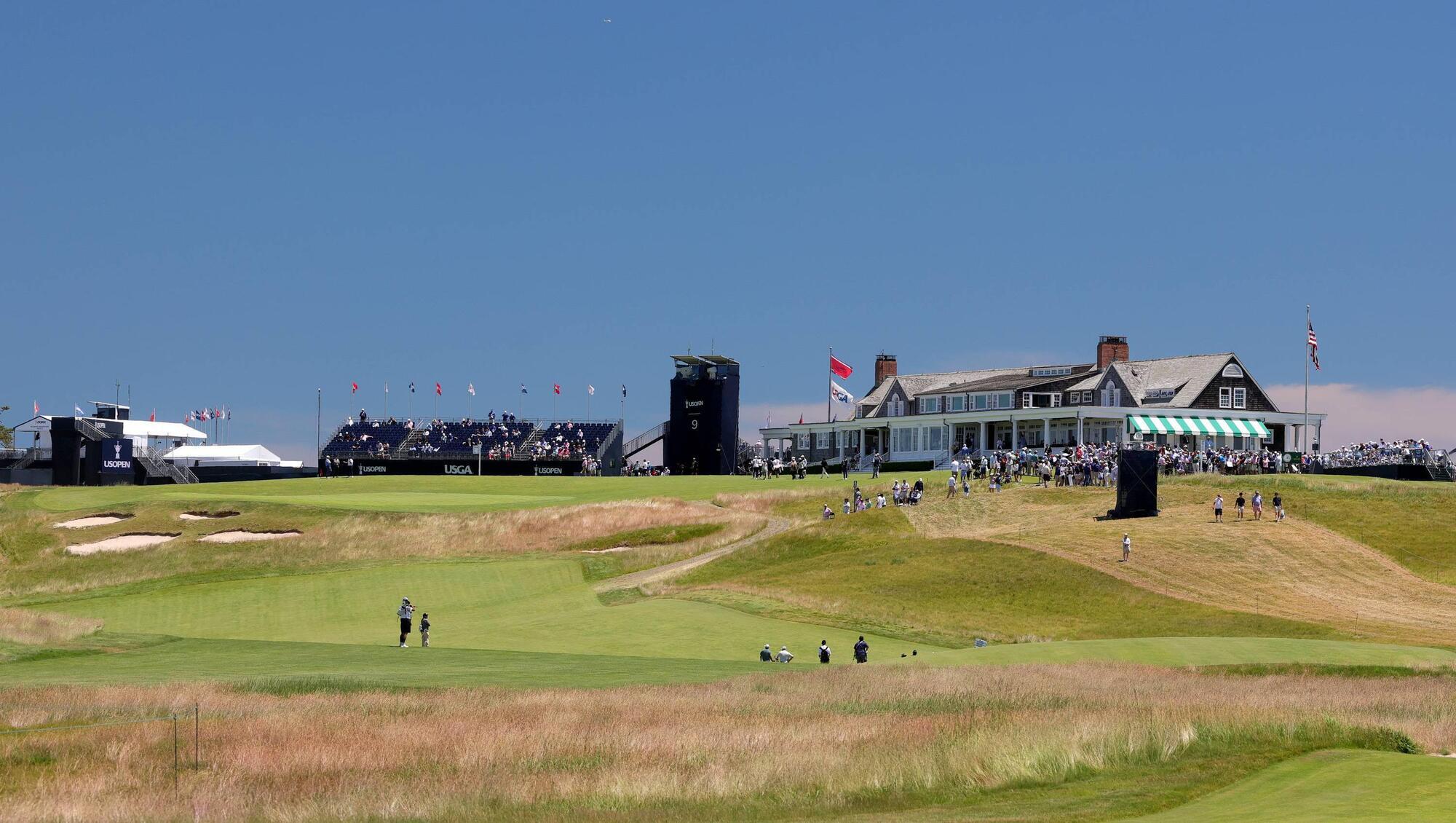
NINE LIVES:Looking up the ninth hole on the eve of the US Open at Shinnecock Hills Golf Club on Long Island, New York. Pic: Warren Little/Getty Images
The clips are all over the place in the lead-up to the US Open — Phil Mickelson had numerous great moments in his career, but this was not one of them.
He was wrong to do what he did, wrong to make a mockery of the rules when he ran after his rolling golf ball on the 13th green during the third round of the 2018 US Open. Wrong to make the point he controversially wanted to get across in that manner.
Mickelson’s message might have had considerable merit but his delivery overshadowed what occurred at Shinnecock Hills that day. In the end, perhaps like numerous examples with Mickelson over the years, he was right even if his methods were not.
The six-time major winner is not here this week as the US Open returns to Shinnecock, but the memories remain.
From a frustrating Saturday round that quite possibly led to an overreaction the final day by United States Golf Association officials to the memories of 14 years earlier, when the historic course got out of hand during the final round.
Will some sort of issue occur again? Or will the USGA be cautious with course set up?
“I would say so. That would be a best guess,” said Brooks Koepka.
"I think this golf course is challenging enough with the wind, and I think it's supposed to blow all week, or at least the first two days. So I think that will make up for, I guess, the soft greens.”
Ah, the wind. Shinnecock is the closest thing to a links that exists in the United States. It is two miles from the Atlantic Ocean and exposed to the elements. The weather forecasts – never foolproof, of course – have been predicting high winds for Thursday’s opening round and a steady breeze the rest of the tournament.
That is why Koepka said he believed that course was actually playing a bit soft. That some water applied combined with humidity has it not quite as firm. That the USGA, which announced Wednesday that green speeds would be reduced to below 11 on the Stimpmeter, is being careful.
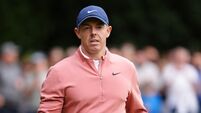
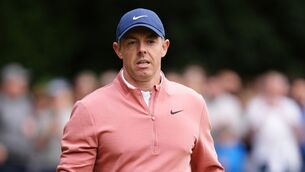
“I think as the week goes on, you have the ability for the course to get firmer and faster,” said Rory McIlroy. “I think with this golf course, only up until a certain point. We've seen what's happened here the last two U.S. Opens. It doesn't need to get that fast to play incredibly difficult and challenging.
“I'd say the greens (in practice) probably averaged about 11 1/2. They certainly don't need to be any faster than that. I think with the wind they're expecting on Thursday, I'd say it seems they'd want to get the greens back to the 10s, 10.5, something like that, just because of how heavy the wind is going to be, gusts of 35 to 40 miles an hour.
“There were gusts of 25 to 30 (in practice), and balls wouldn't stand on the 11th green. That's where you just have to use a little bit of caution.”
The USGA’s desire to test the best players in the world to the extreme has always been met with scrutiny as it tries to balance presenting a fair test with setting up an extremely difficult course. The storyline, at times, has overshadowed the players.
Even last year at Oakmont, where J.J. Spaun saved the day with a remarkable birdie putt on the final green, there was considerable conjecture about the course conditions after a lengthy rain delay on Sunday led to some difficult conditions over the final nine.
That last time at Shinnecock, Zach Johnson didn’t do anything silly on the course that day eight years ago, but he did offer a blunt assessment afterward when asked if the course was on the edge.
“No, we’re not on the edge,” Johnson said. “I thought we could be on the edge, but we’ve surpassed it. Unfortunately, they’ve lost the golf course.” Similar comments followed.
Mickelson’s antics, while widely panned, were also an indication of how the course became a problem.
When he saw his bogey putt slide low of the hole and begin to trick away, he ran after it and hit it again before its stopped, stroking the ball past the hole.
From there, he two-putted, and was assessed a two-stroke penalty for hitting a moving ball, leading to a score of 10 on the par-4 hole and a round of 81.
“I don’t mean it disrespectful; if you’re taking it that way, that’s not on me,’’ Mickelson told reporters after the round. “I’m sorry that you’re taking it that way, it’s certainly not meant that way. Sometimes in these situations, it’s just easier to take the two shots and move on.’’
Truth is, it was disrespectful. But it delivered a strong message. The USGA had let the greens get out of hand and the players weren’t having it.
“I feel like the USGA is doing a good job of trying to strike a balance between having things be the most difficult they possibly can be while also still rewarding the shots hit that are really good,” said No. 1-ranked Scottie Scheffler.
“I think with the way the game of golf is going, guys are getting so good, it's getting increasingly harder and harder in order to have winning scores be over par, or whatever somebody would want them to be. It's getting increasingly harder I think for that to happen.”
Last time, Koepka won at 280, even par. In 2004, Retief Goosen and Mickelson were the only players under par.
What’s in store at Shinnecock this time? We are soon to find out.

CONNECT WITH US TODAY



Be the first to know the latest news and updates