Cormac Flannery hits back in festering Killarney Golf Club conflict
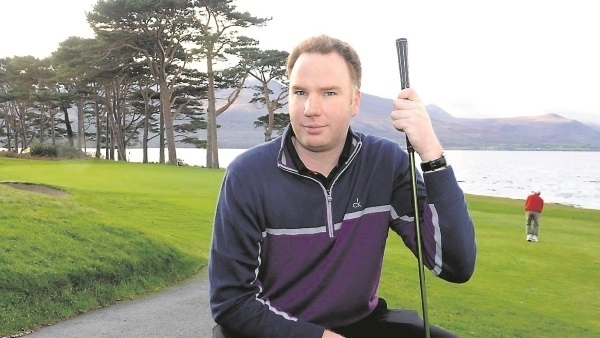
The general manager of Killarney Golf and Fishing Club, Cormac Flannery, has launched a robust defence of his tenure and accused the club’s Management Council of waging a campaign of misinformation against him.
It is the latest twist in a festering conflict between Flannery and the club’s seven-person management council. The general manager at Killarney has written to members in response to an action plan launched last week by the council after a Deloitte consultants’ report highlighted management issues at the club.
Evidence of strained relations spilled into the public domain last week, but in his first comments to members on the row Mr Flannery has described parts of the management council document as inaccurate and said they “give a good example of the kind of misinformation which has been officially and unofficially shared around our club over the past year or so”.
In a detailed note to members, he adds: “I have no doubt regarding the motives behind the distribution of this kind of misinformation and given the grave nature and seriousness of the content sent from the Council, I have had no choice but forward this to the membership for (their) information.”
Mr Flannery addresses several of the management council’s points which relate to his tenure as GM.
On claims that he “refuses to carry out the instructions of the Management Council” if he disagrees with the course of action, Mr Flannery refutes the suggestion “in the strongest possible terms.
“I have absolutely no idea what the Council are referring to. I have always followed up on any instruction from Council to the best of my ability and if there is any instruction that was not carried out, it was due to other extenuating circumstances — e.g. to carry out the task as instructed would be a breach of employment law.”
He confirms to members that he has initiated legal correspondence on some matters, explaining: “I have had to seek advice on how to address some ongoing concerns and did correspond with the club through a solicitor. This was an absolute last resort and it is regrettable that it came to this. With that stated I assure you (club members) my loyalty is to the club first and foremost and I only want to be able to carry out my role to the best of my ability for the benefit of the club and all its stakeholders.”
Mr Flannery says it is not good for Killarney to be the subject of this type of media coverage. He also rejects criticisms over a club remuneration committee for staff which, he insists, was set up in 2013 “in line with industry best practice”.
Mr Flannery claims the first time the management council sent him an agenda for their meetings was last February — by which time there had been five such meetings since the formation of the new council.
Mr Flannery also reveals that he has previously raised concerns, via email, on “how much things have changed at the club since the Council came into effect on November 10, 2017”.
He said: “I highlighted several issues which significantly deviated from the way things were done under the previous four management Councils. These issues included; the GM not being invited to Council meetings, the lack of interaction between the GM and council members, and how the GM has had no meaningful input into decisions of any kind. I also highlighted the new practice of Council members liaising with staff and contractors without any GM involvement or awareness.
The Deloitte report directly referenced this email and strongly recommended the Council engage with the GM on the concerns raised within. Despite this recommendation, six months have now passed since receiving that report and still there has been no follow up of any kind from the Council.
The management council document said green fees were down “substantially”, claiming this area was one of the main functions of the GM. Not so, says Mr Flannery, “another example of misinformation which has become so prevalent in our club”.
He added: “The fact is our green fee income is down due to ongoing internal disruption all year and the appalling weather in the first seven and half months of our financial year. Every comparable facility is well down on the prior year and our performance actually compares well to the average trends around the country.”
He added: “The ‘action plans from Deloitte report’ document outlines a number of observations/recommendations and gives the Management Council status update on each. In all, there are 22 recommendations and progress updates. The actual Deloitte report received by the Council in April contained 67 recommendations. This at the very least begs the question — ‘what about the other 45 recommendations?’”