The club that lost Christy Ring — and could never quite talk about it
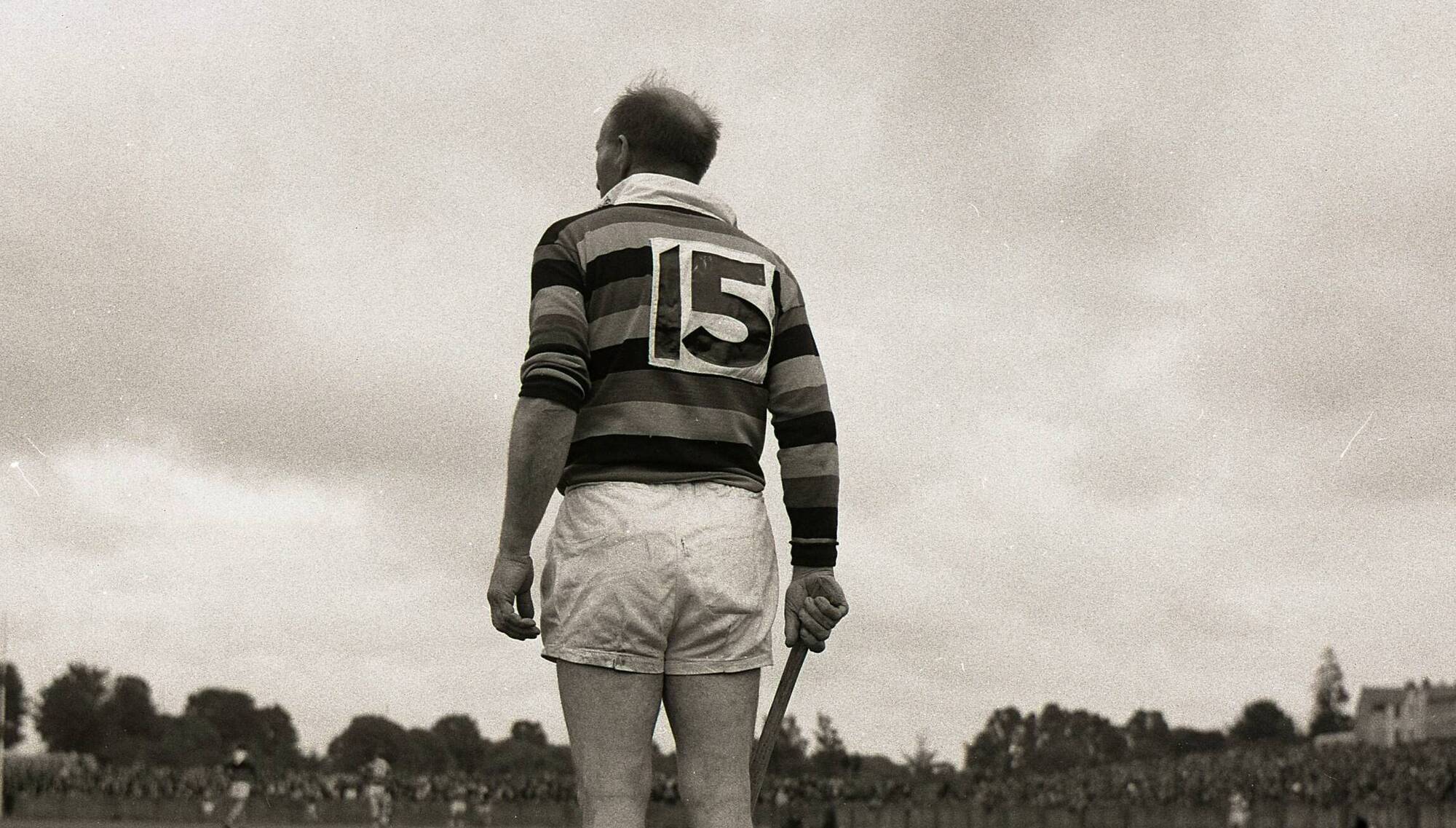
GLEN MAN: Christy Ring stands to attention for the national anthem prior to the Glen Rovers V UCC quarter-final game at the Athletic Grounds. This was Christy’s 27th season in the Glen Rovers jersey – and was to be his last game of hurling! Even though Glen Rovers won the match, Christy retired from the game he had graced for so long. Picture: Kevin Cummins
In Tim Horgan’s detailed biography of Christy Ring, the major events of its subject’s life are broken down chronologically into sub-sections.
Ring’s first appearance in Croke Park with the Cork minor team is afforded a little over two pages, while those Munster final clashes with Limerick are given three or so. Meanwhile, the culmination of this period – his Cloyne departure – is limited to half a page.
No reflection of Horgan’s appreciation of this moment’s importance, it more so reveals how reluctant people have been to discuss the event, and how much uncertainty surrounds it to this day as a result.
Cloyne GAA club had just won the Cork Junior Hurling Championship, and though there is no way of knowing what this small club’s ceiling might have been with Ring in tow, they were a team on the rise.
The nature of what happened next was summed up by Horgan in a single sentence: ‘Word went round the village that Christy was leaving the club and, even though there was no truth in the rumour, the matter was raised at an acrimonious meeting where it was sarcastically suggested that his brothers should go too.’
In that particular reading of events, the disrespect shown to the Ring family proved too great an insult to ignore.
Willie John started hurling for Ballinacurra, while Paddy Joe moved to Russell Rovers. Interestingly, Christy’s departure led to a brief period in the wilderness. Before deciding to join Glen Rovers, he simply stopped playing club hurling altogether.
Read More
The alleged rumour that led to such an astonishing fall-out has no specific source, but it was grounded in a potentially misguided perception of reality.
As referenced earlier, Ring did leave Cloyne during this period to find work in Cork city, a reflection in part of the limited opportunities available for a young person seeking employment.
Ring’s need had likely been exacerbated by the untimely death of his father, Nicholas, in 1937.
Whether or not his physical displacement from Cloyne cultivated a wandering eye in terms of the bigger city clubs he undoubtedly came into contact with is a reasonable suggestion – though there is no evidence to suggest that this is what occurred.
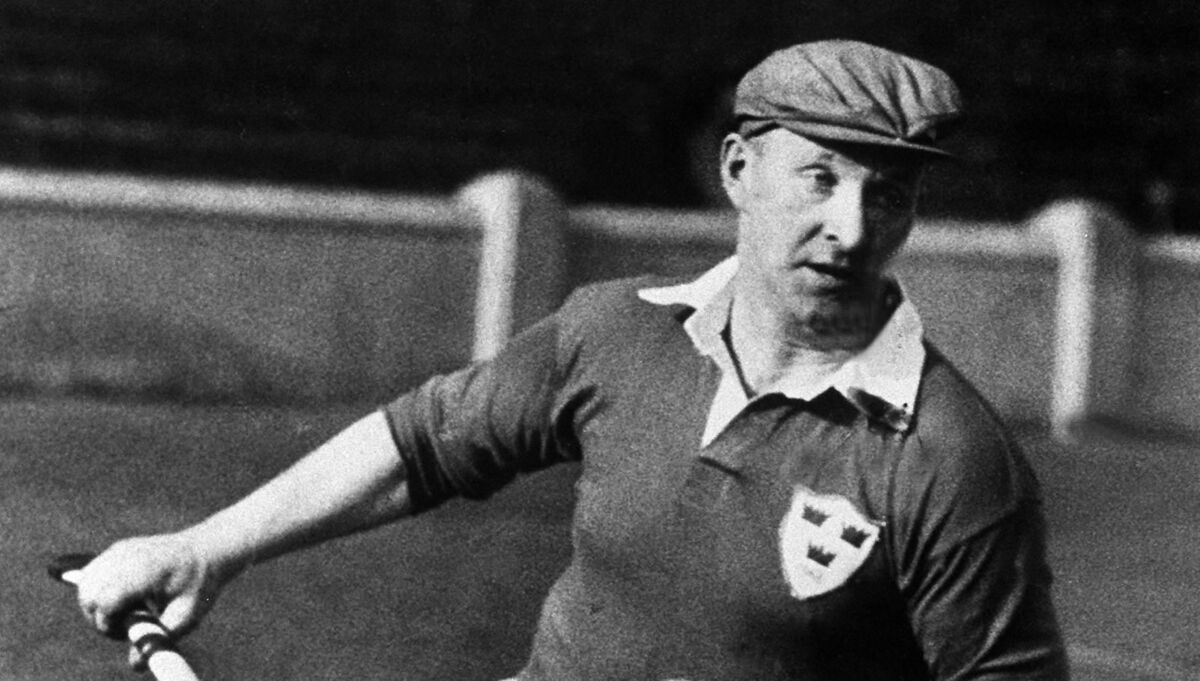
What has been claimed, however, was how keenly aware some of these same clubs were in Ring’s sudden presence.
‘He was offered jobs by Sarsfield and St Finbarrs,’ wrote Val Dorgan, an allegation that this Glen Rovers man insisted his own club did not extend to Ring by way of getting him onside.
Although even the timeline of these events is hazy, and Dorgan’s assertion does not specify whether such offers were made before or after Ring had stopped playing for Cloyne, it is fair to assume that perhaps things were not all that much clearer then.
This would have been equally unhelpful in the cultivation of rumours.
Any hint of doubt or confusion in Ring’s future with the club always had the potential to spiral out of control – especially among club officials.
As Breandán Ó hEithir wrote of GAA committees in this period, ‘the higher up the hierarchical ladder I went the more this reserve resembled suspicion, if not antagonism.’
In the same way Ring would later inspire frustration in those who believed his reputation granted him favourable treatment on the field, there may have been a similar thought brewing then that led to the crucially destructive question: who does he think he is?
The wilful silence which hangs over this episode is unquestionably tied to the extent of Ring’s later success.
To briefly indulge an imperfect (but appropriately seismic) baseball comparison, Cloyne resembled the hapless Boston Red Sox who traded Babe Ruth to the New York Yankees.
Though the reasons which led to the respective departures of Ring and Ruth differed, both Cloyne and the Red Sox shared the sensation of being left to witness each man’s marvellous ascent from a short distance away.
The pain must have been all the more acute in Cloyne, however, given how definitively Ring had been a product of their hurling- mad community. ‘I never felt it rested easy on the people who were talking about it,’ recalled Donal Óg Cusack, ‘and it wasn’t a conversation I very often heard anything about.’
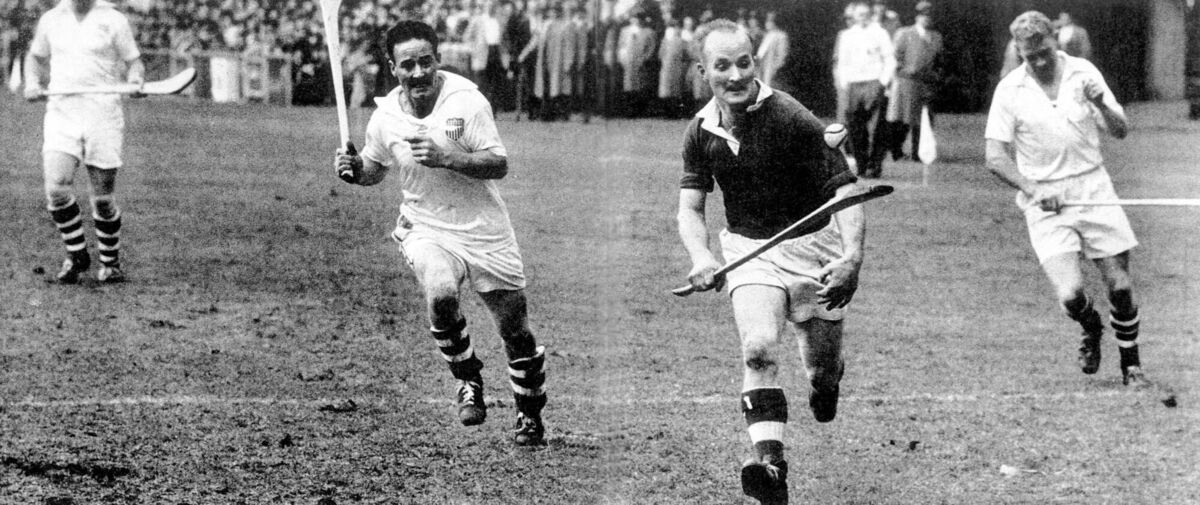
Indeed, though there is no record of Ring publicly discussing his exit, it must have had a fundamental impact on his approach to public attention.
Though his shyness may have precluded him from fully inhabiting his celebrity in later years, it is probable that this experience helped reinforce that same reluctance.
There is nothing like being the helpless subject of idle chat and speculation to ensure that you never again say or do anything that might get you noticed for the wrong reasons.
Similarly, for a man who so rigidly valued the importance of loyalty, this sense of betrayal must surely have contributed to Ring’s subsequent wariness of people unknown to him.
If his own club could leave him with no option but to depart, there was nobody who could be considered fully trustworthy.
It is at this point that further scrutiny of what occurred is perhaps worth making.
There is no smoking gun, or fresh revelations from protagonists who have now all passed away. The story simply seems jarringly incomplete.
With familial links to Cloyne that could be traced back through centuries, did Willie John, Paddy Joe and Christy Ring leave their local GAA club principally because of a misjudged comment about their loyalty to it?
Despite what Cusack described as the almost cross-generational trauma that this schism caused, was there no attempt made in the period when Christy ceased to represent any club to bring him back into the fold?
It was clear from Ring’s subsequent weekly returns that Cloyne remained intensely important to him, but this only makes the situation more confusing still.
Dorgan’s portrayal of Ring does not shy away from its subject’s tendency to view the world in somewhat simplistic terms of right and wrong.
Though Dorgan regarded him as a deeply intelligent man who hesitated to share opinions on issues of which he was uncertain, there were things in life that Ring seemed to consider unalterable.
The singular obsession that drove his hurling development could often seem equally applicable to issues of a moral or ethical nature. Overwhelmingly, Ring was presented as a man who lived by a code.
‘A redoubtable Republican, [he] attended a play I wrote, although it virtually accused the GAA of creating little Provos,’ recalled Dorgan. ‘He told a mutual friend afterwards he would have walked out if I had not been a Glenman.’
So perhaps the mere suggestion of his disloyalty to Cloyne was all it took to drive Ring into the bosom of Glen Rovers.
Maybe there was more to the story that simply never entered the public domain. Or was there any chance Ring ultimately knew that to truly reach his potential as a hurler he would be better served playing for a club that could feasibly match his ambition?
It would be unfounded to argue that any such impulse initiated Ring’s Cloyne departure, but it seems plausible to assume that this thinking may have influenced his next decision.
‘The year 1941 was a memorable one in my life,’ wrote Ring. ‘I won my first All-Ireland and Railway Cup medals but in particular it was the year I joined Glen Rovers Hurling Club.’
In every relevant sense, it was a perfect pairing.
It has been told that the initial movement in making it a reality started with a conversation between Ring and his Cork teammate and Glen man, Jack Lynch: "We soon got talking about hurling and he told me about the dispute with the Cloyne club which he said couldn’t be resolved. I said being unattached was no advantage to his hurling progress, that he should be playing club hurling. ‘I know that,’ he said, ‘but what can I do?’ ‘Why not join the Glen?’ I suggested. ‘Yes,’ he said, ‘I might do that.’ So he went away, thought about it and the rest, as they say, is history."
An undeniably neat rendering of Ring’s decision to permanently leave his club for another, what he found in Glen Rovers seemed almost created to satisfy his intentions in life.
Glen Rovers had been Cork county champions in the seven successive seasons up to his arrival (they would win their eighth in ’41), so Ring was joining a club that had made a habit not only of winning, but of winning in a way that he related to.
"Those outside our club cannot understand the secret of Glen Rovers’ success. Complacency was never part of our make- up. As a matter of fact the opposite has always been the case. We have gone out as underdogs so many times and come out victorious that there must have been some incentive and purpose to spur us on. This is a combination of many things; good hurlers playing as a team, dedication and pride, toughness and luck."
Albeit an unabashedly biased Glen man himself, Dorgan’s summation of the move is still prescient: ‘No one seemed prepared to say why Ring left Cloyne, but it was logical that he should.’ In Glen Rovers, as that comment suggests, he found a home worthy of his talents.
It stood to reason, then, that when Dorgan and a friend travelled to Cloyne in April 1980, seeking the Ring family’s approval for his book, he had a slightly different perception of what the recently deceased Christy represented. Making his pitch in Willie John’s living room, Dorgan argued that Ring did not belong ‘to Cloyne, Glen Rovers or Cork, but to Irish people everywhere’.
However compelling a case he made, the family did not consent.
Too many stories had been told about Ring to count, and it was their intention that the first extended study of his life and career should be definitive – and on the family’s say-so. One can assume that this is what Christy himself would have wanted.
However great an impact he went on to have in the world thereafter, it was in Cloyne that Ring began and where it was felt by those closest to him that the final word should be written. ‘He always seemed capable of coping comfortably with his divided loyalties to Cloyne and Blackpool,’ wrote Dorgan after leaving Willie John’s house, but it was ultimately an arrangement that went both ways.
For all that the reasons behind Ring’s departure remain unclear, it can be fairly assumed that in joining Glen Rovers he came closer to realising his hurling potential than might otherwise have been the case.
Throughout a period in Irish history when emigration was unfortunately commonplace, people were accustomed to their loved ones leaving and to leaving their loved ones. Although Ring never went too far, the glory of what his going enabled always shone back on where he had come from.
To the extent that he forever remained of Cloyne, so too did Cloyne never allow itself to forget Ring. As Dorgan proceeded to wander around the area where his hero had hurled as a boy, he took advantage of a chance encounter with some local children to canvas their opinions on Cloyne’s most famous son.
‘I asked them if they had heard about Ring,’ he wrote. ‘They were tongue-tied with shyness, but one, obviously suspicious of a stranger, piped up from the back. “Hear what about him?”’
***
It wasn’t just Ring’s longevity that made him so difficult to characterise, however. Set against a more expansive media landscape than ever before, his stardom and celebrity reached uncharted heights.
While always a source of interest for sports journalists, the significance of anything he did in the public eye had come to be considered newsworthy. When Ring accepted an invitation to play a private round of golf in July 1961, for example, it became a front-page story on the Limerick Leader.
‘The famed Cork hurler caused quite a stir at Limerick Golf Club on Wednesday evening,’ read the article. ‘It was the Glen Rovers [man’s] first attempt at golf, and according to [Limerick Senior Cup player Kevin] Hayes he played extremely well.’
A few weeks later, when Ring’s job with Irish Shell caused him to spend a few weeks working in Waterford, the local newspaper ran an article under the headline: ‘Christy Ring in town’; as if his being there was a kind of endorsement.
When Ring was appointed a trainee sales superintendent for the company that summer, Irish Shell’s public relations officer, Arthur Rae, was called on to clarify what Ring’s new role would mean for his training time.
‘Every facility will be given to Christy Ring,’ it was assured. ‘His new duties should not interfere with his training programme any more than they did over his past fourteen years’ service with Irish Shell.’
And it wasn’t just the newspapers that were interested in him. Days before he had golfed in Limerick, Ring’s voice was broadcast to the nation via Radio Éireann. At the request of a former Cork teammate and rector of St Joseph’s School for Blind Boys in Drumcondra, Fr Con Cottrell, Ring delivered an appeal for donations on the school’s behalf.
Alluded to in the national press days beforehand, his efforts were well received. ‘He is a remarkable man,’ asserted one local columnist. ‘He has never made any money out of his own great story and he has never sought to publicise himself.’
On the international stage, Ring was regarded as something akin to an ambassador for Irish sport and culture. Although in the United States of America particularly, mention of Ring could often inspire a twee response about his sincere importance to Irish audiences at home and abroad, he was still a reliable source of serious interest there.
In his wonderful memoir of a life spent playing with and observing Ring, Val Dorgan captured the magnitude of his appeal during a trip they both made to New York City in the mid-1960s:
'We walked down Broadway and on three separate occasions were stopped by men who recognised him … [At] one particular reception, he was besieged non-stop for about two hours by a stream of admirers, as well as some cranks.
'He endured the most inane overtures in a sober patience … During the 22 days I roomed with Ring in the US he was in frantic demand. Eventually I became his secretary, monitoring his calls and shielding him from the admiring curiosity of Americans … As a list topping guest, Ring vied with the Pope and John F. Kennedy, before he cut Ireland’s emigration quota to the US.'
Ring had been properly introduced to the nation’s sports fans when profiled by the weekly magazine Sports Illustrated during a visit in late 1954.
On the same trip, in Sports Illustrated’s far wider-reaching sister publication, Life, Ring was the central focus of a photographic essay on the game of hurling. Since Life sold copies by the tens of millions, it is difficult to estimate how many American readers would have been introduced to him.

A collection of the latest sports news, reports and analysis from Cork.
CONNECT WITH US TODAY



Be the first to know the latest news and updates