New design of hurling faceguard in final stages of testing
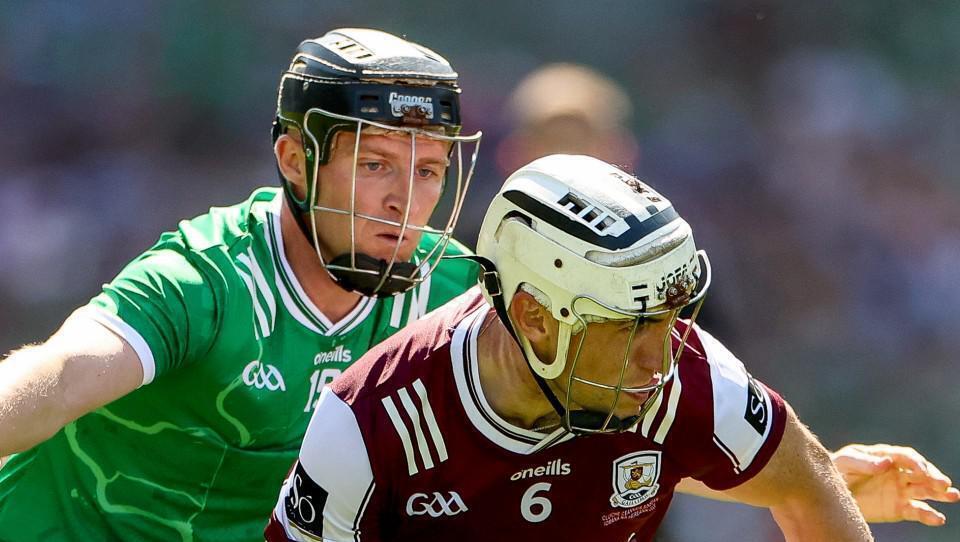
Inter-county hurlers will then be consulted on the faceguard, which each player will have to wear if they are to participate at the elite level. Pic: James Crombie/Inpho
A new design of hurling faceguard is in the final stages of testing by manufacturers.
Companies such as Mycro and O’Neills, who are official GAA helmet licensees, are conducting their own examinations. Samples have been sent to Sweden to test the performance of the protective masks they have modelled on the specifications issued by the GAA.
To combat illegal and tampered faceguards that don’t pass the IS 355 safety standard, the GAA has created its own version that will eventually have to be worn across the board in hurling.
It features two adjoined bars instead of one bar in the middle of the visor as well as at the top. It will also include a tamper-proof seal. There are no sharp edges as the perimeter is looped. It will be lighter than current guards, approximately 150 grams and comes in a grid of 12, six at the front and three on each side.
Following the tests in Sweden, the National Safety Standards of Ireland will conduct their own work on the samples to ensure they pass the requirements as outlined in IS:355 2006 specifications.
Inter-county hurlers will then be consulted on the faceguard, which each player will have to wear if they are to participate at the elite level. Eventually, it is envisaged the quality of helmets will be policed by match officials and if a seal has been interfered with, the player will be booked. If they then refuse to change the helmet, they will be shown a straight red card.
The Ned Quinn-chaired sliotar, hurley and helmet workgroup have been overseeing the work. Their recommendations for the dimensions of the hurley and sliotar specifications have come into operation in recent years.
Earlier this year, the GAA reminded players that in the event of a head injury occurring they are not covered by the association’s player injury fund if the helmet does not meet the IS 355 standard or has been modified or altered from its original state.
Spurious helmets have been known to sell for several hundred euros on market websites. Gola helmets continue to be worn by inter-county hurlers despite the Competition and Consumer Protection Commission warning that they are “dangerous products”. The company itself do not manufacture helmets.
The modification of faceguards has led to some nasty accidents with players’ hands and arms impaled by sharp edges. Faceguarded helmets have been compulsory across all levels of hurling since January 2010.
Check out the entire podcast series HERE as, and when, they are published.
CONNECT WITH US TODAY



Be the first to know the latest news and updates