Christy O'Connor: Of the last 50 All-Ireland hurling finals, only four have not featured brothers
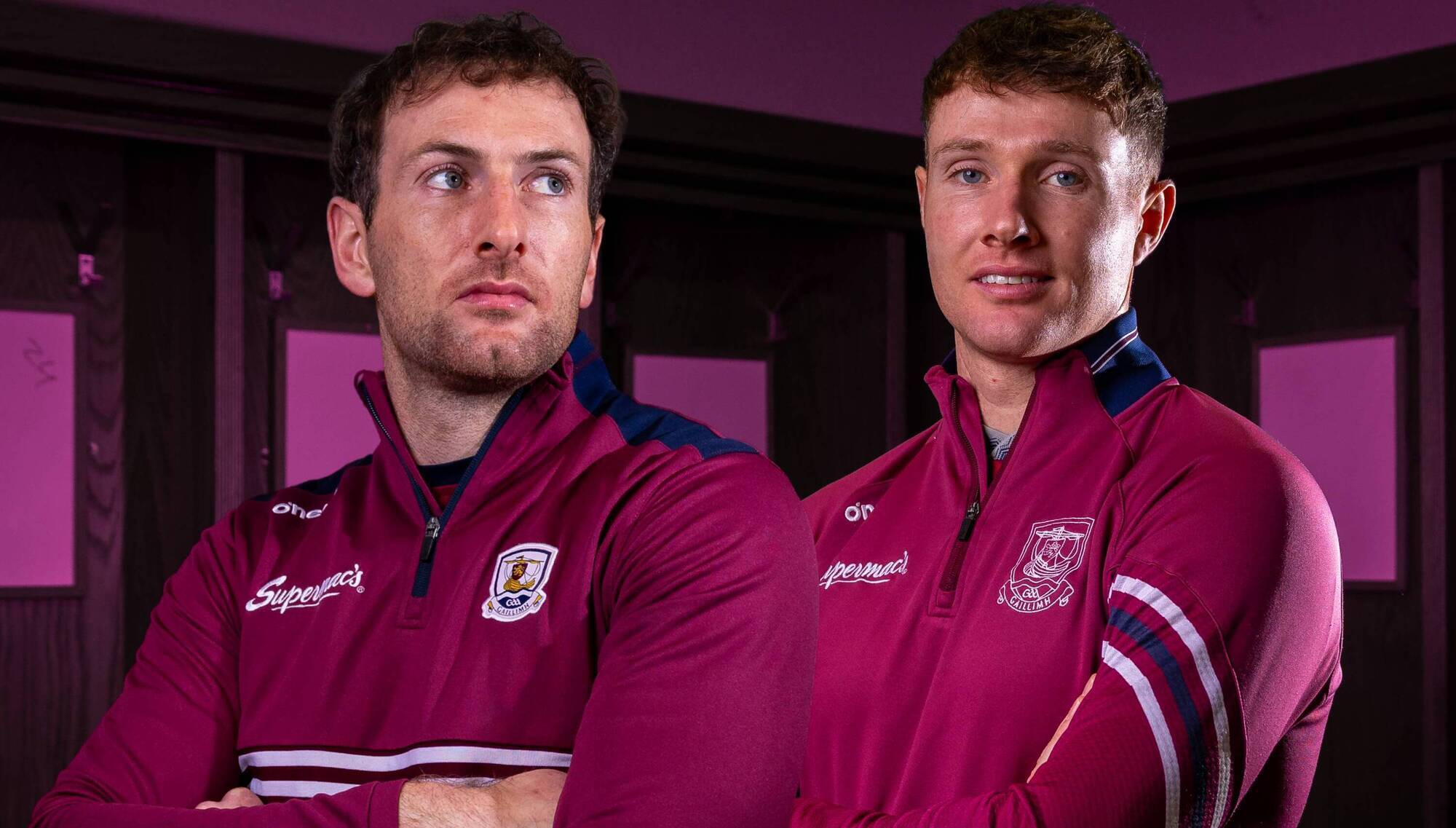
Whatever happens, it’s going to be another incredible All-Ireland final day for a set of brothers.
The Mannion brothers, with Padraic left and Cathal right, from the Galway final press night. Pic: Tom O'Hanlon/Inpho

The Mannion brothers, with Padraic left and Cathal right, from the Galway final press night. Pic: Tom O'Hanlon/Inpho

Charting a different route in the pursuit of ultimate glory

To mark the 30-year anniversary of Clare’s historic All-Ireland final breakthrough in 1995, Eoin Sheahan from Newstalk’s Off the Ball sat down with Ger Loughnane last September for interview.

That journey has been well documented, but any time Loughnane speaks about it he has always neatly encapsulated how a group of unyielding personalities transformed an eternity of disappointment into an era of success for a county that never expected to reach those heights.

Before Loughnane took over in the autumn of 1994, the ambitions of Clare teams existed in a state of anxiety, often being tranquilised by a fear and trepidation that almost always turned into a self-fulfilling prophesy.

Clare didn’t win big games, especially Munster finals, but Loughnane completely changed that mentality, routing the crippling lack of faith and self-doubt and replacing it with a steely conviction.

Loughnane had a clear vision of what he wanted to do; speeding up Clare’s hurling; getting the team fitter and stronger than any other team had been before; and finding enough players with the right character to complete the puzzle.

After the 1994 Munster final loss to Limerick, Loughnane drafted in six young players from the team which lost the 1994 Munster U21 final to Waterford; Seánie McMahon, Ollie Baker, Frank Lohan, Stephen McNamara, Fergal Hegarty, and Eamonn Taaffe played in the All-Ireland senior final 14 months after losing that U21 final.

Only McMahon had been on the senior panel in 1994, but Loughnane identified young players with the required character and mental toughness that ultimately made the difference to that Clare team.

Only five of the starting 15 which was hammered by Tipperary in 1993 Munster final, and eight of the starting team walloped by Limerick in the provincial decider 12 months later, started the 1995 Munster final.

In a different form, Micheál Donoghue has done something similar this season. The mood wasn’t as bleak in Galway after last year’s championship as it was in Clare after losing the 1994 Munster final. But it wasn’t that far off it either.

“Galway hurling is currently in the midst of a full-blown crisis after a disastrous summer at all levels of the inter-county arena,” wrote John McIntyre in the Connacht Tribune after defeat to Tipperary in the 2025 All-Ireland quarter-final. “It’s difficult to disagree with the assessment that it was a wasted year for Galway hurling.”

At face-value, it was. In deeper terms, it wasn’t. Throughout last year’s championship, Galway carried a squad of roughly 45 players. Seventeen of those players never made the championship 26. They weren’t ready last season. But they were in 2026.

The players Donoghue handed debuts to this spring were far more equipped to nail down a starting place, four of whom have; Jason Rabbitte, Aaron Niland, Darragh Neary, and Cian Daniels. So have Cillian Trayers, Joshua Ryan, and Rory Burke, who briefly appeared in the 2025 championship.

This season reaffirmed the extent of Donoghue’s search for a new way with a new and emerging group. Twelve players from the minor teams between 2021-‘23 got game-time this spring, seven of whom have played in this championship; Burke, Niland, Rabbitte, Trayers, Ryan, Darragh Neary and Oisin Lohan.

After such a reliance on Cathal Mannion for scores last year, an influx of so many new players also demanded a re-evaluation of Galway’s style and gameplan. There was a complete tactical reboot, which was centred around a more defensive/counter-attacking style. And Donoghue fitted out the squad with the pace and athleticism to play that game.

It takes huge bravery and strength of character from a manager to invest such faith in youth and a new system after such a disappointing season — and for that side to go on and win an All-Ireland a year later.

A year after Clare made that breakthrough, Liam Griffin did something similar with Wexford; of the team which bombed against Offaly in the 1995 Leinster championship, only nine of that team started in the following year’s All-Ireland final. Jimmy Barry-Murphy completely redrafted the Cork side with young players in 1999, but at least Cork had won the 1998 league title. Still, losing to Clare by 0-8 in that year’s Munster semi-final was a huge setback.

Tipperary’s success last year was framed around Liam Cahill’s bravery in tearing up the script after being annihilated by Cork in the 2024 championship. Only seven of the starting team from that embarrassing defeat started the 2025 All-Ireland final. Three of the players which featured that afternoon — Sam O’Farrell, Darragh McCarthy, and Oisin O’Donoghue — were still U20.

Donoghue did begin the transition with Galway last year but he has still overhauled the team this year; there were 10 changes to the starting team for the Leinster final in June from the side that was well beaten by Kilkenny in last year’s provincial decider.

After Galway were subsequently hammered by Tipp two weeks later (their fourth 12-point defeat of the season), nobody could see Galway reaching an All-Ireland final within 12 months.

Just moments after Clare’s 1995 All-Ireland final win, Tony O’Donoghue collared Loughnane for an interview for RTÉ. “This time last year we were in the depths of despair,” said Loughnane. “But we weren’t going to surrender.”

Galway looked in hell too last June but having followed a similar path to Loughnane and Clare, Griffin and Wexford, Barry-Murphy and Cork, and Cahill and Tipp, Donoghue and Galway have charted a similar journey to what they hope will be ultimate glory.

Brothers in arms

Although birth rates have dropped and families are no longer as big as they were, Galway have been a modern anomaly with the volume of brothers featuring in All-Ireland finals across the last decade.

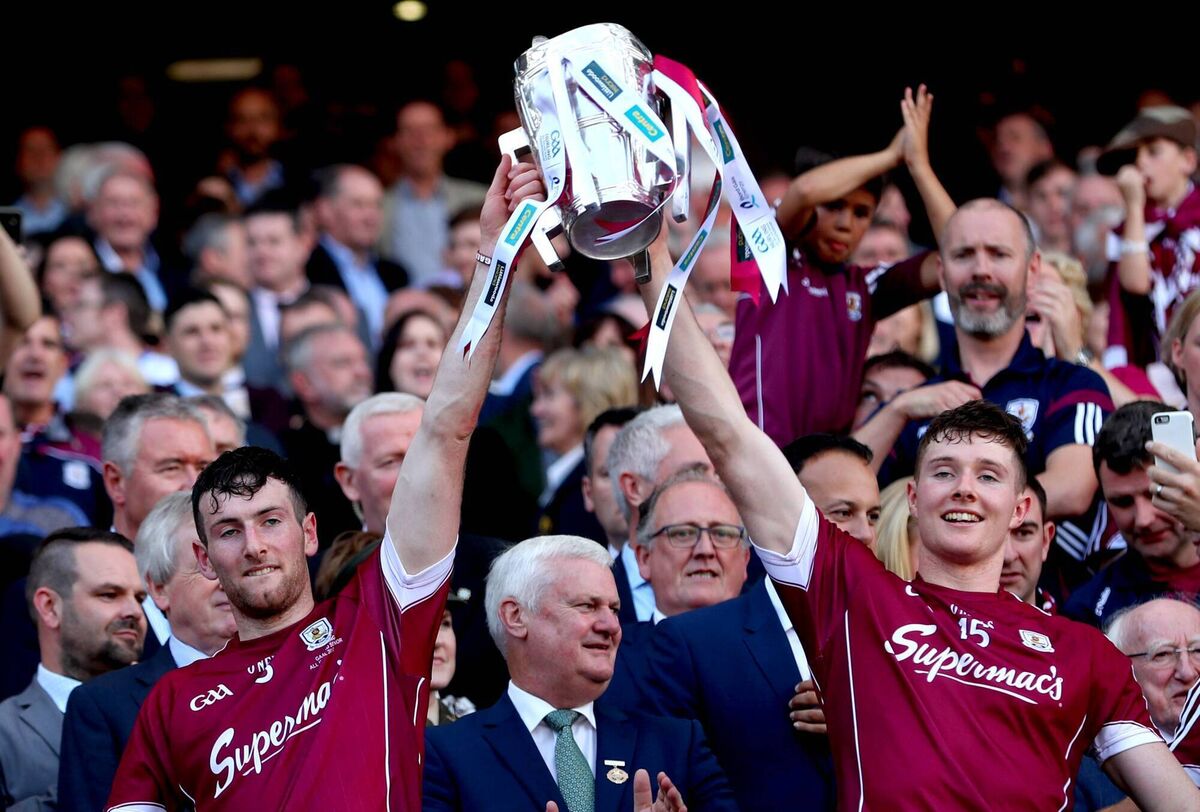
There were five sets of brothers on the extended Galway panel that won the 2017 All-Ireland; David and Eanna Burke, Daithí and Ronan Burke, Cathal and Pádraic Mannion, Greg and Gavin Lally, and Brian and Paul Flaherty.

There are four sets of brothers on this Galway extended panel; Cathal and Pádraic Mannion, Darach and Cianan Fahy, Aaron and Evan Niland, and Tiernan and Cullen Killeen. Moreover, Ronan Glennon, John Cooney, Daniel Loftus, and Colm Molloy are trying to emulate what their brothers — Davy Glennon, Joseph Cooney, Seán Loftus and Brian Molloy — achieved in 2017 when winning an All-Ireland medal.

Galway's Padraic Mannion and Cathal Mannion lift the Liam McCarthy Cup. Pic: James Crombie/Inpho

Limerick though, have equally had huge sibling connections on hurling’s biggest day, with three sets of brothers on this panel; Dan and Tom Morrissey, Mike and Peter Casey, Joseph and Matthew Fitzgerald. The Caseys and Morrisseys are seeking to bring a colossal haul of 24 All-Ireland senior medals to just two households in Limerick.

In the last 50 All-Ireland hurling finals, only four have not featured brothers; 1990, 2009, 2010, and 2013. However, some of those panels contained brothers; Kilkenny’s Canice and Noel Hickey (2009 and 2010), TJ and Eoin Reid (2009), Tipperary’s Eoin and Paul Kelly (2009) were part of those squads for the 2009 and 2010 finals, while Podge and Seán Collins, and Nicky and Cathal O’Connell were members of the victorious Clare squad in 2013.

When John and Noel McGrath won an All-Ireland with Tipp last year (another brother Brian was also on the panel), it had been six years since Noel and John had previously won an All-Ireland medal, which was the longest hiatus of brothers winning an All-Ireland on the field of play together.

The Mackey brothers, Mick and John, went six years between their first and third medals in 1934 and 1940, while the McGrath’s went nine years between their first and third medals on the field together (Noel won his first medal in 2010).

However, the Mannions, Cathal and Pádraic, would be achieving history on Sunday if they could win their second Celtic Cross nine years after their first.

Whatever happens, it’s going to be another incredible All-Ireland final day for a set of brothers.

Shoot — and keep shooting

In the aftermath of Limerick’s win against Clare two weeks ago, John Kiely understandably made reference to Limerick’s shooting numbers, especially in the first half when it was only 52 per cent. It was better in the second half but Limerick still only got off 19 shots. Their overall shot-count was 39. But it was still four more than Clare.

Kiely and Limerick have always believed in the inherent statistical value of being the team that takes the most shots. Because in the vast majority of games the team that shoots most, wins.

That doesn’t give Limerick a licence for crazy shooting but there has always been a certain tolerance for wides built into their thinking. And Limerick always expect to have more than 40 shots at the target on any given day. On a good day though, that number creeps higher towards 50.

Having only averaged 1-21 (identical scores) in their last two games against Cork and Clare, Limerick’s average shot count in those matches was 40. They won by narrow margins but they’d still have wanted their average conversion rate in those games to be far higher than just 55%.

In their last two matches, Galway have averaged 48 shots, with an average conversion rate of 64%. That accuracy will be more important than ever tomorrow as Galway have more or less adopted the same attitude that has always been one of Limerick’s governing principles; the team that shoots the most wins.

x

More in this section

Cookie Policy Privacy Policy Brand Safety FAQ Help Contact Us Terms and Conditions

© Examiner Echo Group Limited