Jack Anderson: GAA can learn lessons from VAR controversies at World Cup
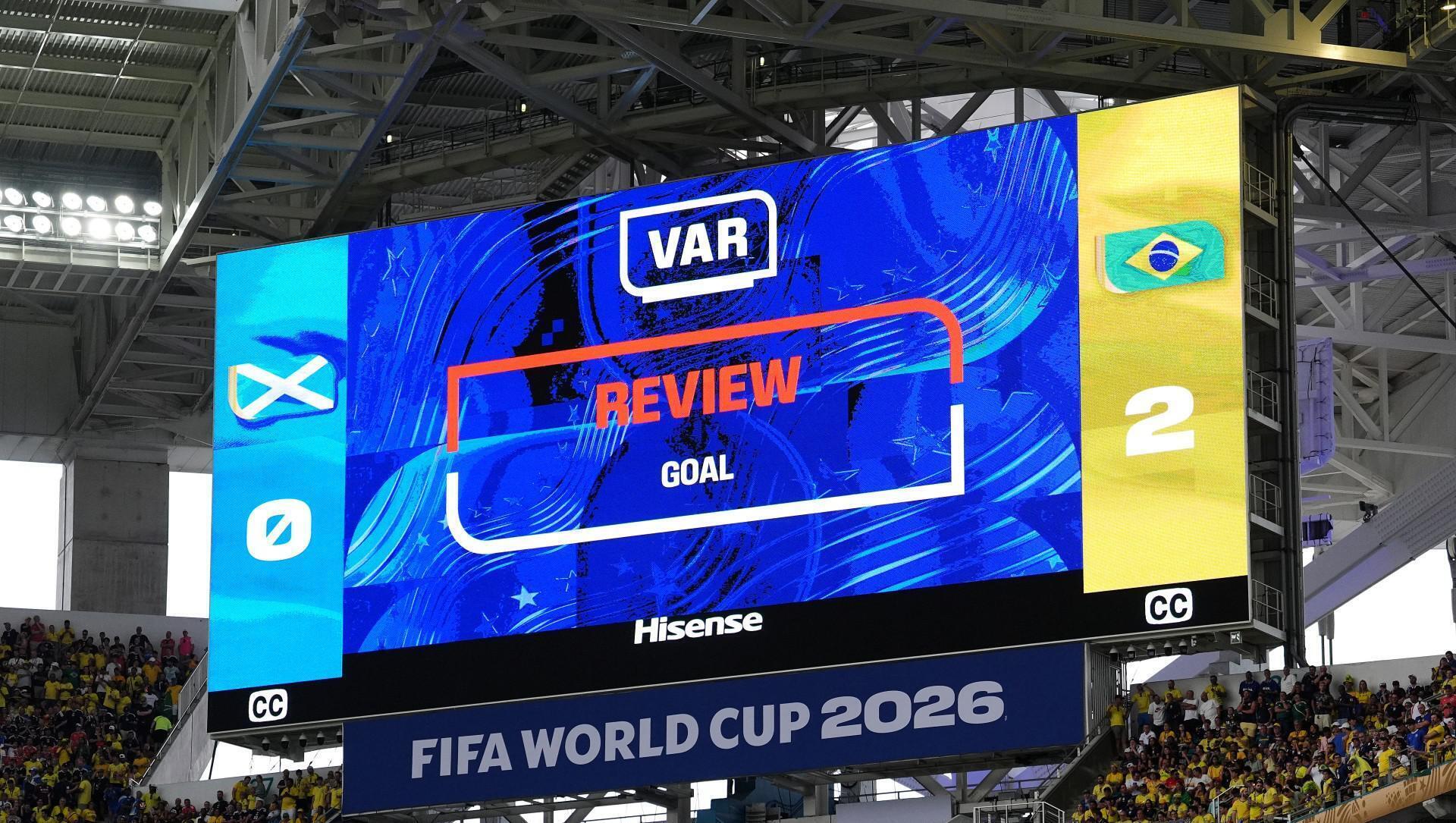
VAR has proven controversial yet again at this World Cup. Pic: Martin Rickett/PA

US Senator Lindsey Graham, who died suddenly this week, was a staunch political ally of President Trump.
They were golfing partners. Giving evidence to a grand jury during one of Trump’s election interference cases in 2022, Graham said this about him: “Some people say you may outdrive him, but you’re not going to outdrive his caddie. It is what it is.”
Trump’s view that sporting rules are for others was seen during this World Cup when he called his pal Gianni (Infantino, President of FIFA) to see if anything could be done about the red card given to US player Folarin Balogun against Bosnia.
Think of it, the former casino owner asking football’s equivalent of Frank Underwood to demand that the house reshuffle its cards – less stick or twist and more if you stick, you’ll be twisted. The red card was suspended but a distracted and strangely deflated US lost to Belgium anyway.
The incident prompted the usual anti-FIFA pile on. The problem for FIFA is that the public’s expectations of it are so low that even in the absence of any evidence, the assumption is that they bent to Trump’s will. It’s a bit like defamation. To prove libel, you generally have to show that the false statement has caused serious harm to your reputation but if your reputation is already in tatters, you can go no lower. And for many, that’s where FIFA is at.
Looking back at the Balogun affair there are a number of questions. Suspending the effect of a red card is very unusual. It’s usually done when a player is set to serve a multi-game ban, but exceptional circumstances justify taking the edge off its length. Ronaldo was given a three-match ban for violent conduct against Dara O’Shea in our last home World Cup qualifier. Two of the three games in his sanction were suspended on the exceptional ground that he had played 225 internationals without a red.
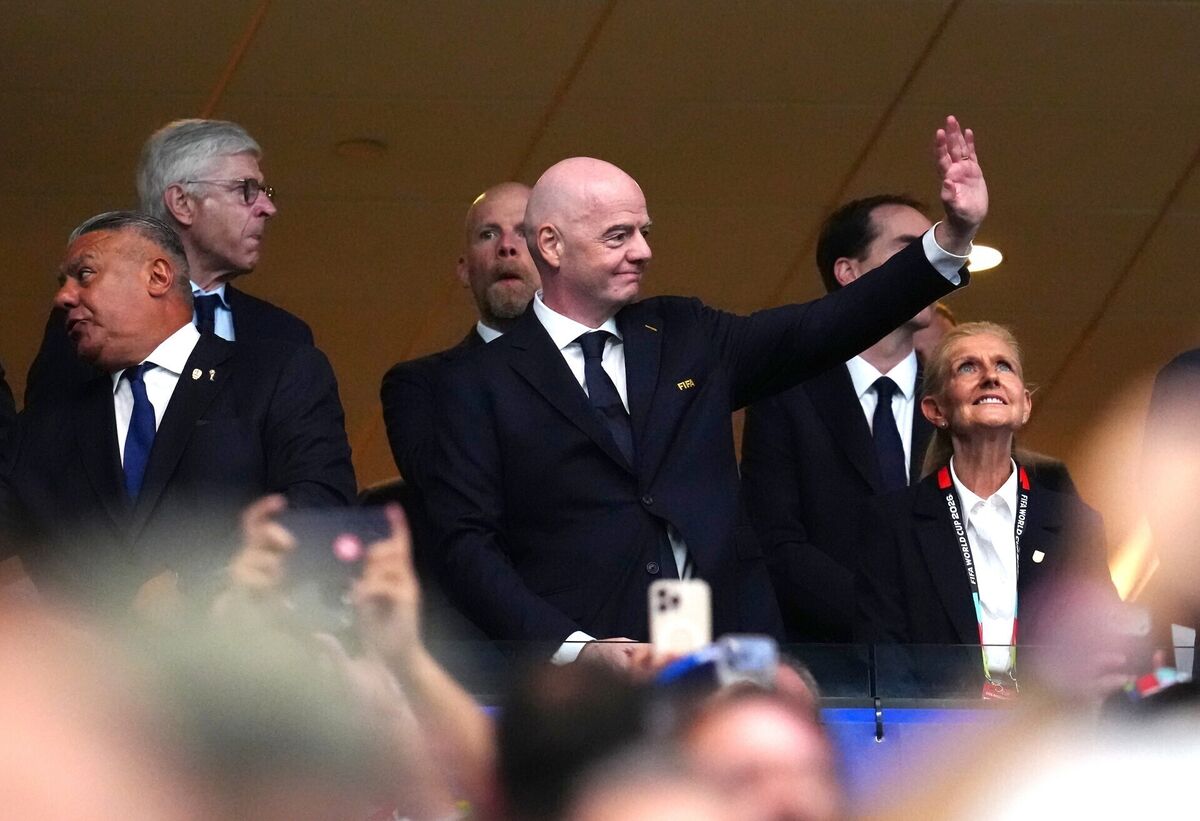
You can still query that but in Balogun’s case suspending a red that only attracted a one match ban was highly unusual, and more so when the specific tournament regulations restricted it. But FIFA did it anyway and worse, left an informational vacuum by not giving any written reasons (apart from a press release) to explain their decision amid reports that the FIFA Disciplinary Chair alone heard the matter.
Again, there is no evidence that, prompted by Trump’s call, Infantino then contacted the head of discipline at FIFA who then suspended the red card. The problem that Infantino has, however, is that of plausible deniability i.e., is his grip on FIFA such that he would not have had to tell his minions what he wanted because, intuitively, they would have known?
In an insight into the ethics of the current White House, the Vice President JD Vance said recently that if the Watergate scandal happened today, it would be just a “12-hour news story”. FIFA has treated the Balogun story similarly. But Infantino is facing other ethics-related troubles with complaints going to the IOC and ongoing within FIFA itself claiming that his relations with Trump breach rules on political neutrality.
Infantino is a canny politician. He will remember that his predecessor, Sepp Blatter, was at the height of his powers just after the 2014 World Cup in Brazil but within a year was gone. And there are hints that Infantino is already taking steps to mitigate the fallout from these ethics-related complaints. His announcement that the World Cup should expand to 64 teams should be seen in this light. Infantino knows that the more opportunities he gives countries from outside Europe to qualify for a World Cup, the stronger his grip on their vote.
Red cards (and VAR) are an important strand in the story of this World Cup thus far. Given the England, Argentina semi final it’s interesting to note that the reason football introduced them can be traced back to the 1966 quarter final between the countries. The captain of Argentina refused to leave the pitch after being dismissed, saying he did not understand the instructions of the German referee, who did not speak Spanish.
On his way off, the player crumpled an England corner flag, protested on a red carpet reserved for Queen Elizabeth II and ate bars of chocolate that were thrown at him (beer was also thrown but he didn’t drink it, presumably because it was too warm, even in extreme circumstances, you got to have standards).
To avoid language difficulties, FIFA introduce yellow and red cards for the 1970 World Cup.
The Argentinian captain in ‘66, Antonio Rattin, only died last week. Argentina remembered him by wearing black armbands in their quarter final against Switzerland.
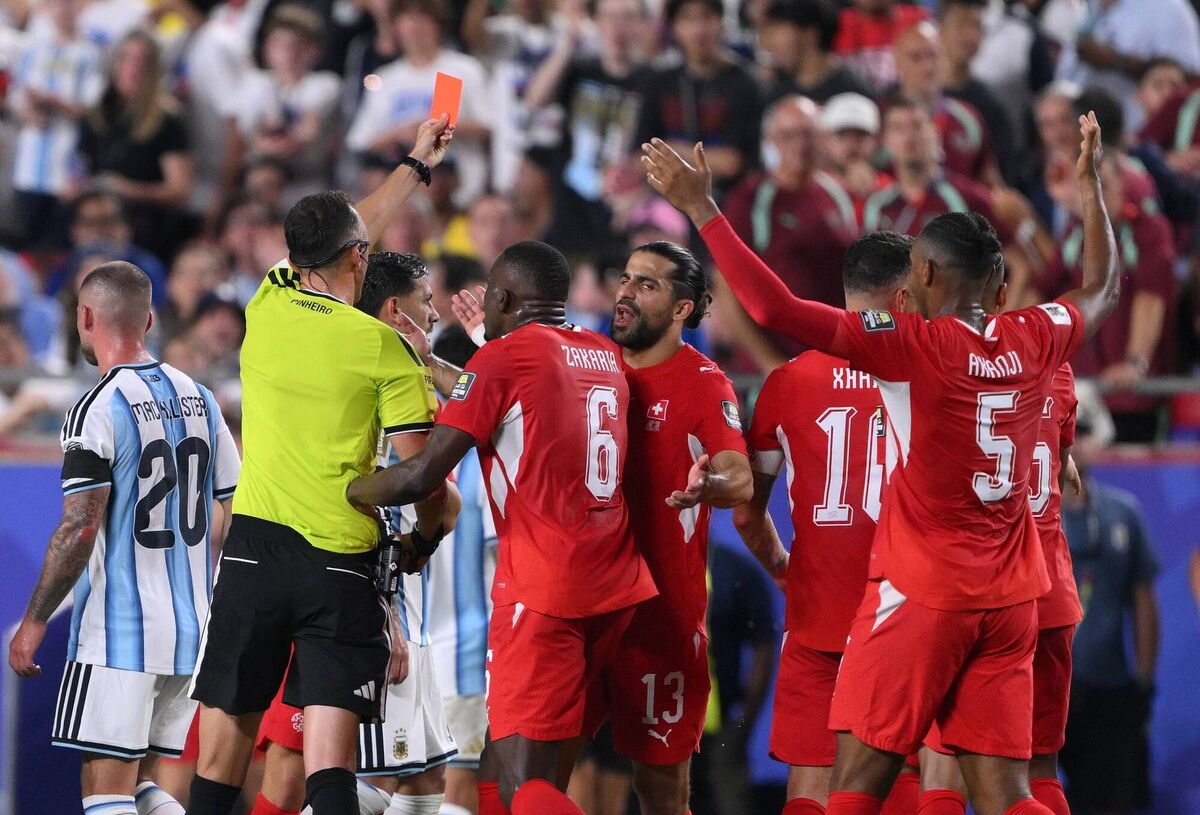
That game turned on a VAR intervention when, with the game level, Argentina’s Leandro Paredes tangled with Embolo of Switzerland. Initially, the referee issued Paredes a yellow, but VAR intervened; the decision was reversed and Embolo, already on a yellow, had to go. The Swiss were incensed not so much about VAR but the rules on when and for what it can be used.
That last point is an issue with video technology in sport generally as we saw last weekend in the Dublin-Kerry All-Ireland SFC semi-final. For certain discrete issues – crossing the goal line or even a square ball – there is a strong case for more VAR-like review in the GAA. Umpires (volunteers doing their utmost) are a Tofiq Bahramov moment away (the Russian linesman from the 1966 World Cup final) from being pilloried for life. They need assistance.
However, the GAA should tread carefully on the wider rollout of VAR. Where do you draw the line with its use? Rugby union is a case in point. If a tsunami hit Hawaii, a rugby TMO would want to replay images of every butterfly flapping its wings in Tahiti. Imagine the hoopla in the GAA if, as in the Egypt-Argentina game at the World Cup, a brilliant passage of play leading to a score at one end was brought back for an innocuous foul at the other.
If VAR is to be used in the GAA, the idea that Limerick had a few years back that you, as in tennis and cricket, place the onus on the teams (and not the referees) to call it, is probably the way to go.
Ambiguity on how to interpret sporting rules (as with VAR) only leads to controversy. The black card in hurling is an example. The objective of the rule is fine, but its interpretation subjective because its definition of cynical play is overwritten. Maybe you are as well off getting rid of it; copy soccer – denying an obvious goal scoring opportunity with no attempt to play the ball within the [restricted area] is a red and a penalty; attempting to play the ball but nevertheless fouling another to deny an obvious goal scoring is a yellow and a penalty.
For Sunday's All-Ireland final the hope is that referee Colm Lyons can keep his cards in his pocket. If there is cynical play, he’ll just have to deal with it as best he can and Limerick and Galway will just have to accept the outcome. Or, to quote the late Lindsey Graham, sometimes in sport as in life, it is what it is.
Check out the entire podcast series HERE as, and when, they are published.