Tommy Martin: James McClean and the dangers of really going 'all in'
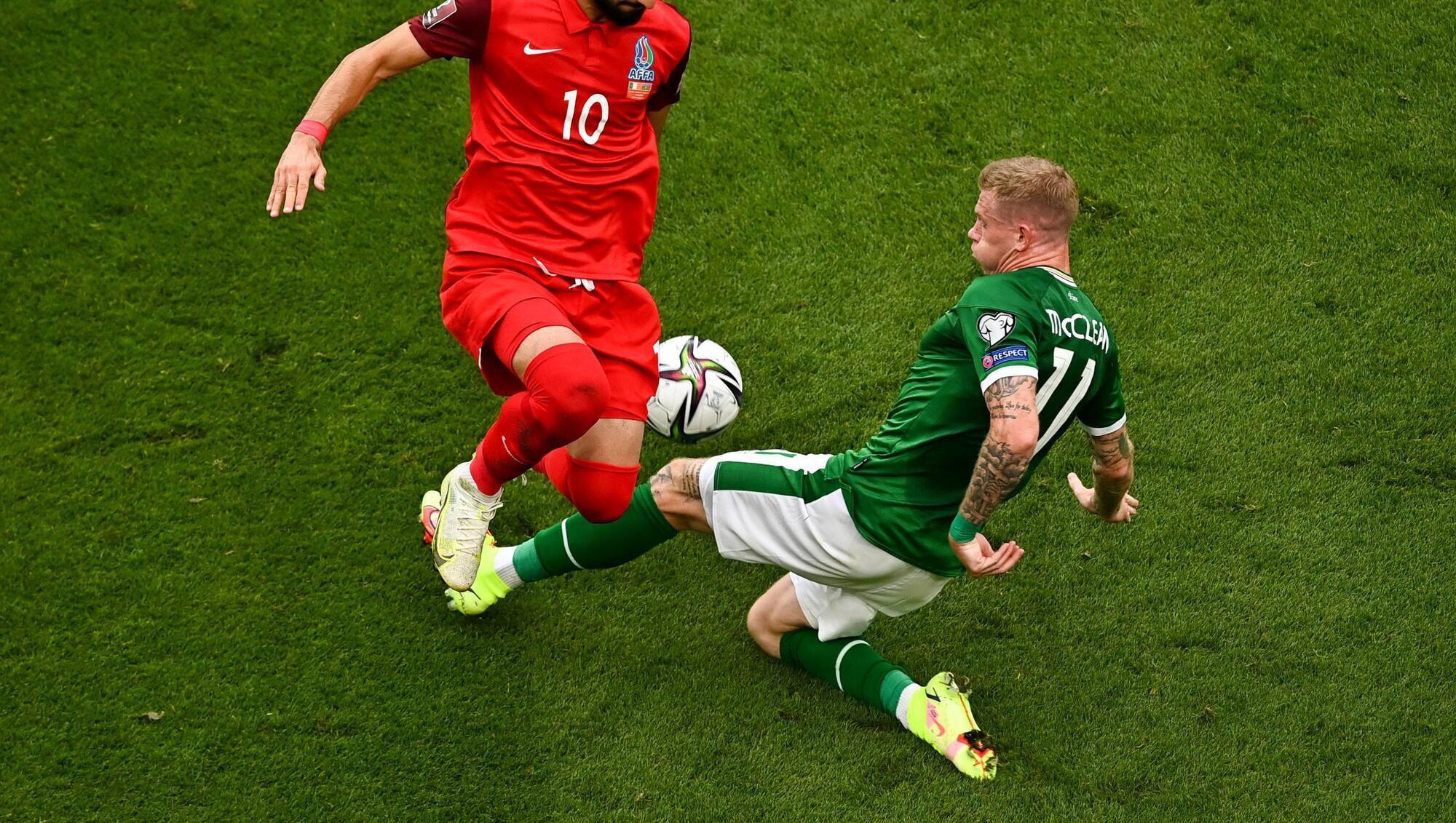
ALL IN: James McClean with one of his trademark strong tackles while playing for Ireland. Pic: Eóin Noonan/Sportsfile.

There’s a page on Instagram called Puddin Boyz which does little sketches about bad Irish radio. It’s basically a guy sitting in a car rolling his eyes wearily at whatever drivel is coming out of the stereo, usually banter about chicken fillet rolls and a Dermot Kennedy song.
There was a recent one captioned ‘When a former GAA player promotes his book on Irish radio.’
“So, tell us about the new book,” the presenter burbles.
“Ah it’s just about me inter-county career and me struggles, y’know,” the GAA star says.
“And what struggles were they?”
“Yeah, look I had to get a job, I had to go in two days a week, y’know it wasn’t easy jugglin’ that with training and gym and women, y’know.”
“And you got arrested a number of times, is that right?”
“Yeah, I got in a lot of trouble over the years.”
“And you got away with it?”
“Yeah, cos I’m good at hurlin’.”
Read More
You can’t have a sports book out these days without talking about “me struggles”. Even if the struggles refer the time you got dropped off the county minors, or your dangerous addiction to Twixes, or the time one of the lads shat in your gear bag.
This is was what Paul Kimmage was getting at when he opened last Sunday’s 8,000-word James McClean interview in the with a drive-by on poor old Peter O’Mahony. Kimmage suggested that O’Mahony had dodged going into the gory details of some of the more potentially controversial parts of his career in his recent autobiography, entitled, ironically, All In.
In contrast, McClean really had gone all in, to the point where, thanks to Sunday’s interview, a week’s worth of headlines have been generated before it has even been released. If Kimmage’s interview is anything to go by, the book is set to go down as a classic of the genre.
Of course, Kimmage has history in this area, having been retained for the highly prized gig of ghosting Brian O’Driscoll’s autobiography upon the player’s retirement in 2014. In retrospect, this was the worst pairing since Tayto cheese and onion chocolate. Kimmage’s searing determination to expose the dark side of sport and O’Driscoll’s image as rugby’s clean-cut Prince Charming made them uncomfortable bookfellows and the pair soon parted ways.
In his naivety, Kimmage had failed to understand the purpose of rugby books, or most of them anyway, which is to smooth the path to the post-career Elysian fields of punditry, corporate speaking and brand ambassadorship.
Indeed, the advent of audiobooks, coupled with the vast glut of Irish rugby autobiographies, has been a great advance for those suffering from chronic insomnia. In these stressful, over-stimulated times, the ability to stick on the headphones and listen to one man’s incredible rise from private school to pro rugby to future plans in the world of business is a surefire way to find contented rest.
Alas, for McClean the smooth narrative Ovaltine of the rugby genre was never going to be the way. Not when you have lived a life like his. Growing up in Derry in the shadow of the Troubles; learning as a youth that the man he thought was his father was not his real father and being told never to speak of it; the sudden rise to Premier League riches; Poppygate and the angry lash of Brexit Britain; countless social media rows and public fallouts; diagnosis as an adult of autism which makes some sense of an aversion to crowds and enduring instinct to lash out when threatened.
And that’s not even touching this year’s sad collapse of what seemed like a fairytale return to his hometown club, Derry City.
Reading about all that in Kimmage’s interview – and the notorious passage about McClean’s aversion to seeking help for mental health – you were left with the sense of a complicated, difficult life laid open. If you read the entire piece, the passage in question made sense as a shard of an image of a self-destructive, admirable, annoying, driven, damaged, deeply loved human being. McClean’s willingness to put all this down makes us understand him, properly, for the first time.
But given the reaction this week, you’d wonder whether McClean reckons he might have been better off taking the route favoured by the rugby lads. Out of context, the quote is shocking: “As a man I see that as weakness. I don’t need to open up. I see it as a weakness that I’d have to speak to someone about my feelings; my emotions…”
In the context of his story, it’s tragic. The reader sees a man who needs help and won’t take it, rather than a champion of old school male virtues. “Whatever happened to Gary Cooper? The strong, silent type,” Tony Soprano proclaims on his psychiatrist’s couch, as we see him crushed by his panic attacks.
Instead, the quote was pulled out and fed into the online outrage bonfire. Most of those piling on McClean hadn’t read the piece and some were commenting on an AI generated summary. You can see why mental health advocates like Derry-based Men’s Action Network felt the need to challenge the view, especially given the context of high rates of male suicide in the area.
But the irony of the resulting opprobrium from those championing good mental health towards a neurodivergent man clearly (if you’d take the trouble to read the whole interview) struggling with his own problems was completely lost.
The wider sense is of a cartoon public landscape where the room for human complexity is crushed. People must be painted with broad strokes and not scribble over the lines. Take a look at the LinkedIn profile or Instagram account of someone you know well and think about whether that is what they are really like. Yet how much of modern life is conducted through these inauthentic avatars?
For some reason, the row this week brought to mind the days after his Irish Open win when many took Shane Lowry to task for effing and jeffing towards a few marshals on the course in Doonbeg who nearly got in the way of one of his drives
Mainly people were annoyed that Lowry had overstepped the confines of his brand: cuddly Irish everyman, likes a pint and the craic, good at golf. But people aren’t brands. Lowry might be some of those things but he can also be grumpy and short-tempered and a bit of a bollix, like, if we are honest, the rest of us some of the time.
This week has been a reminder that McClean has always been a big ball of messy humanity, difficult and principled, daft and determined and frankly, totally unbrandable. The book will be a big hit and encourage more sporting scribes to throw in a bit about “me struggles”. But how many will be truly all in?