Colin Sheridan: RTÉ was the star of this World Cup
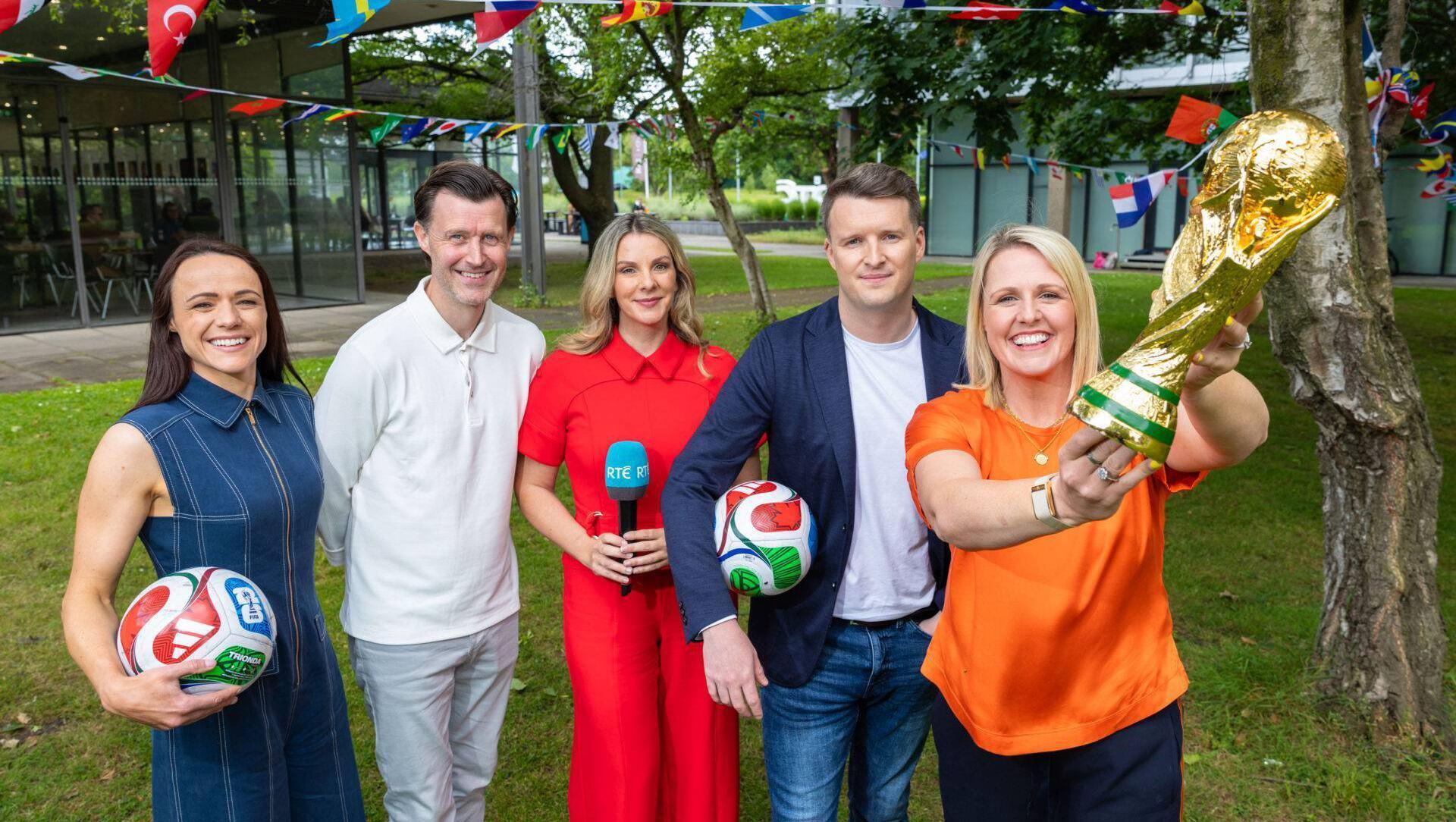
Jacqui Hurley, pictured, and Tony O'Donoghue steered discussions without feeling the need to dominate them

RTÉ get it right for once.
There are few easier targets in Irish sport than RTÉ. I've been as guilty as anyone of taking aim, particularly with regard to the station's GAA coverage, its broadcasting strategy, its habit of rushing viewers from one championship match to the next before anyone has had a chance to digest what they've just watched. Too often, the analysis has felt like an afterthought rather than part of the event itself. Too often, the rush from pitcheside to the Man with the Golden Gun felt like a frustratingly obvious missed opportunity.
Which is precisely why it is worth saying this plainly - RTÉ's coverage of this summer's FIFA World Cup has been exceptional. Not because it reinvented sports broadcasting - quite the opposite - it succeeded because it remembered what good sports broadcasting has always looked like.
The biggest sporting event on the planet deserved to feel like an occasion, and from the opening night RTÉ treated it exactly that way.
Its commitment was obvious before a ball had even been kicked. Every one of the tournament's 104 matches was made available free to Irish audiences across RTÉ television and RTÉ Player. Commentary teams were dispatched to the United States, while others stayed at home. Studio presentation was refreshed. A broad and varied panel of analysts was assembled. In an age when more and more elite sport disappears behind subscription services, there was something quietly reassuring about Ireland's public broadcaster deciding that this tournament should belong to everyone.
The investment showed. There is still no substitute for commentators actually being inside the stadium. The atmosphere sounds different because it is different. Crowd reactions are felt rather than guessed at. Tiny moments that television cameras miss are picked up instinctively. Those broadcasts carried the sense that RTÉ wasn't merely showing the World Cup from afar. It was there.
That confidence extended into the studio.
Too much modern sports television mistakes noise for insight. Every discussion becomes a debate, and every debate becomes an argument. Every argument becomes another clip for social media before the final whistle has even blown.
By accident or design, RTÉ resisted that temptation. Instead, it trusted conversation.
Jacqui Hurley and Tony O'Donoghue steered discussions without feeling the need to dominate them. Richie Sadlier continued to demonstrate why he has become one of the country's finest analysts, capable of explaining complex tactical ideas in language that never patronises the viewer. Shay Given brought the perspective of somebody who has lived tournament football, while James McClean offered the refreshing honesty and immediacy that only a recently retired player can provide. Carla Ward brought intellectual insight, without ever feeling like a diversity hire.
And then there was Didi Hamann.
If there was one selection that raised eyebrows before the tournament, it was probably the former Germany international. A staple on Irish television for quite some time now, his presence has frequently prompted a one-word question - Why? He has never lacked opinions, but some of them sounded, at first, almost perversely contrarian. There were moments during the opening week when he threatened to become football's answer to George Hook.
Yet as the tournament unfolded, something rather amusing happened.
He kept being right.
Teams he questioned faltered. Players he warned about failed to deliver. Tactical observations that initially appeared overly cautious proved remarkably prescient as the knockout stages progressed. Whether discussing midfield balance, tournament mentality or the dangers of overhyping favourites, Hamann repeatedly demonstrated the value of genuine expertise over manufactured certainty.
Good punditry is not about agreeing with everybody else. It is about having the courage to hold an opinion and allowing the football to judge whether you were right.
Hamann earned his place.
So too did RTÉ's willingness to freshen its coverage as the competition evolved. The addition of Cape Verde international and Dublin native Roberto "Pico" Lopes to the panel after his country's remarkable tournament was an inspired piece of broadcasting. Rather than relying exclusively on familiar faces, viewers heard from someone who had only just stepped off the biggest stage in world football. His observations carried the freshness and authenticity that cannot be rehearsed.
Perhaps the greatest compliment I can pay RTÉ is that it never appeared to be in a hurry.
Football tournaments have their own rhythm. They breathe. They ebb and flow. Some matches demand instant excitement. Others require reflection. The broadcaster understood the difference.
It allowed post-match analysis to breathe instead of racing towards the next programme. It trusted viewers to remain interested in tactical conversations. It recognised that football itself is compelling enough without every discussion descending into theatrical disagreement.
In short, it trusted its audience.
Ironically, that may be the biggest lesson of all.
Because the broadcaster that covered this World Cup is the same broadcaster that too often frustrates supporters during the hurling and football championships. The talent has always been there. The presenters. The analysts. The commentators. What has often been missing is the confidence to slow down and let the sport speak for itself.
This World Cup proved that RTÉ already knows how to do exactly that.
Public service broadcasting cannot compete with global networks by simply spending more money. It never will. It competes by making different choices: by investing in journalists who understand the game, by selecting pundits with something meaningful to say, by treating analysis as an essential part of the spectacle rather than dead air between matches, and by remembering that trust is still television's most valuable currency.
For a month, RTÉ looked like a broadcaster completely comfortable in its own skin. It didn't try to imitate Sky Sports. It didn't chase viral moments. It didn't confuse volume with quality.
It simply produced thoughtful, intelligent and consistently enjoyable coverage of the world's biggest sporting event.
I've criticised RTÉ often enough over the years.
Only fair, then, to give them their flowers when they deserve them.
This summer, they most certainly did.
There are only two possible reactions left to Tadej Pogačar. Awe, or suspicion. The Slovenian's latest demolition job in the Tour de France, exploding away from Jonas Vingegaard and the rest of the field on the steepest slopes of the Col du Haag, was so emphatic that it almost ceased to resemble a sporting contest. It looked more like a training ride in which one cyclist had accidentally wandered into the wrong category. His fourth stage victory of this year's race has tightened his grip on yet another Tour, with rivals once again left racing for second place.
Professional cycling has always struggled with extraordinary dominance. Its history is too scarred by scandal for fans to view sustained superiority without asking awkward questions. Fairly or unfairly, every breathtaking performance is now measured against ghosts from the sport's past. There remains no evidence whatsoever that Pogačar has broken any rules. He has passed the tests required of him and deserves to be judged on facts rather than whispers.
Yet that is precisely the burden of cycling's history. The cleaner the sport insists it has become, the more impossible performances invite scrutiny. Ironically, if Pogačar wanted to silence the doubters, Saturday probably wasn't the day to launch one of the most devastating mountain attacks of his career. He made the world's hardest race appear absurdly manageable. Grand Tours are supposed to leave champions hollow-eyed and broken. Pogačar often crosses the line looking as though he could happily ride another mountain.
Some of the scepticism undoubtedly stems from jealousy. Some comes from a generation conditioned never to trust cycling's miracles. And some, perhaps, is simply boredom. Dominance is thrilling until it becomes routine. That may be Pogačar's greatest problem. He is so much better than everyone else that he is forcing people to question not what they are seeing, but whether what they are seeing can possibly be real. In a sport built on suffering, he has somehow made suffering look optional.
Josh Kerr did something on Saturday night that athletes are almost never supposed to do. He predicted greatness, then delivered it. Months ago, the Scot declared he would break Hicham El Guerrouj's seemingly untouchable mile world record. On Saturday, he ran 3:42.66 in London to do exactly that, ending a 27-year reign. It was the sporting equivalent of a snooker player announcing a 147 before potting the opening red. Audacious, risky and utterly magnificent. Kerr is no longer simply a champion middle-distance runner; he is athletics' rock star. In an era crying out for personalities prepared to dream out loud, Kerr deserves to be celebrated as loudly as he runs.
Sean Fitzgerald's Love Island journey ended with the Galway footballer leaving exactly as he arrived: likeable, grounded and with his reputation firmly intact. In the age of reality television, that's no small achievement. He may, however, look back and wonder if he was just a little too sensible. The biggest moments tend to belong to those prepared to take a chance. Funny enough, the same could be said of Galway's footballers. Their championship fizzled out through caution as much as anything else. Nobody wins Love Island by sitting on the beanbags. Nobody wins Sam Maguire by handpassing sideways. Will Mayo take note?