Here's why football fans are indulging in Fifa conspiracy theories
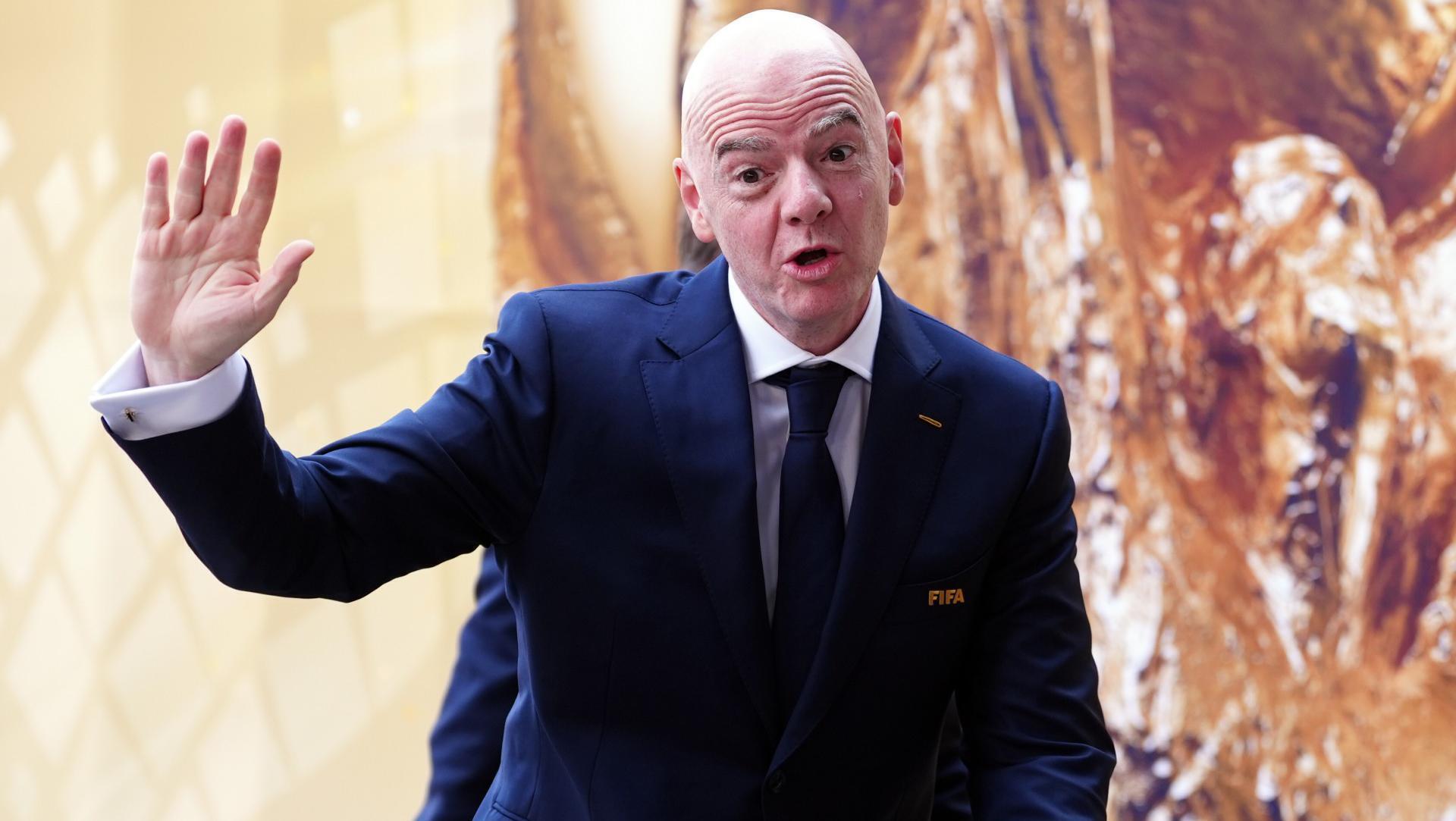
Gianni Infantino has run FIFA less like a reformed institution than a vehicle for self-promotion. File photo : Bradley Collyer/PA
It was one week after the World Cup ended and Fifa president Gianni Infantino was in a celebratory mood. On his Instagram, the curated window into his world, there was a showcase of meetings with celebrities and politicians.
Across numerous posts, he commended the leaders of co-hosts Mexico, Canada and the US; he praised referees, law enforcement and volunteers; he even thanked seismologists for detecting ground vibrations across Spain when they scored the winning goal in the final.
Amid his celebrations, Infantino also took aim at his critics. In a 15-slide post, he excoriated those “consumed by hate and criticism”, insisting that while his detractors sit “behind their pens and papers, behind their screens spreading hate and false rumours”, Fifa is “on the front lines organising, working hard and delivering the best show in the world”.
He could’ve saved himself a few slides and gone with a retort more in the house style of social media: “To all my haters: Cry harder!”
Read More
Weeks later, after launching an abortive attempt to sell commercial stakes in the World Cup to private investors, Infantino and Fifa have amassed a few more haters.
His tenure has invited criticism, contempt and, increasingly, conspiracy theories.
Since becoming president in 2016, Infantino has run Fifa less like a reformed institution than a vehicle for self-promotion.
In that sense, he didn’t break with tradition, emulating his predecessors in brokering a system of patronage that keeps pliable member associations supportive of his presidency.
For much of his decade in charge, to most of the "football family", this was fine, actually!
A few member associations grumbled, a handful of journalists tried to hold him to account, but his power only grew alongside his appetite to reshape the sport in his image.
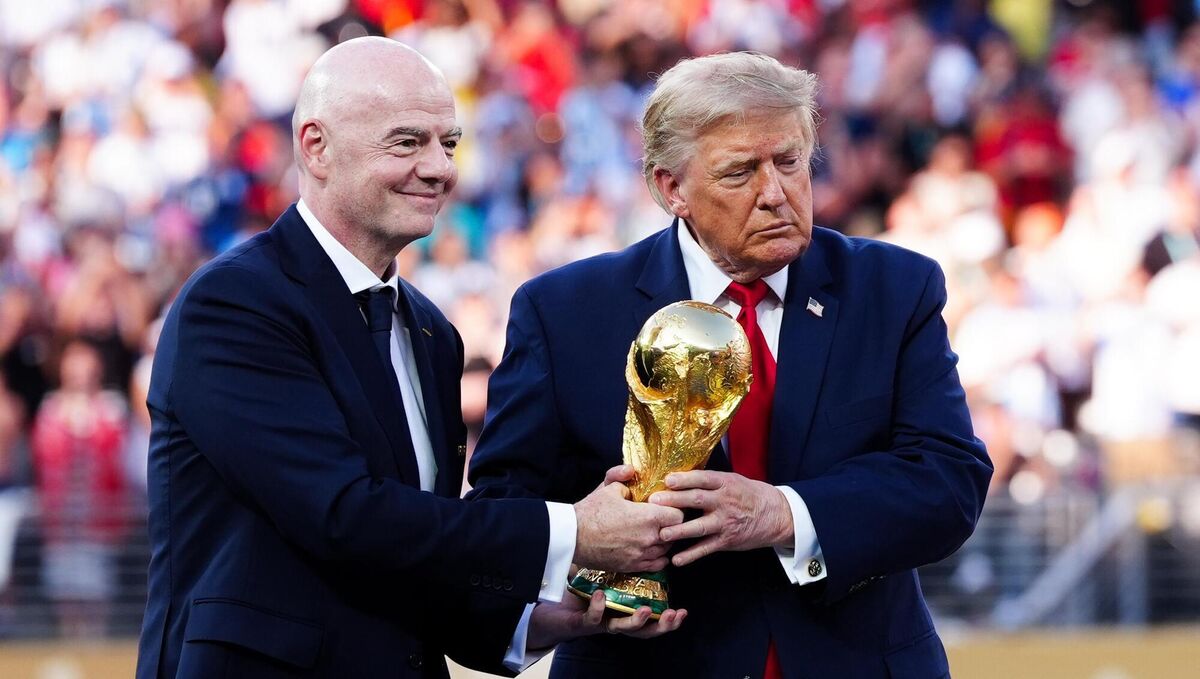
However, unlike his predecessors, Infantino has sought to break up the very structure of the game and cast aside rules that stymie its commercial attraction as an entertainment product: Mid-game advertising thinly disguised as hydration breaks were introduced for the World Cup.
It has also become normal for Fifa to intervene when inconvenient red card suspensions occur.
During the World Cup, US player Folarin Balogun’s one-match ban vanished after Donald Trump and his acolytes leaned on their friend ‘Johnny’ to rescind the suspension.
Months earlier, Cristiano Ronaldo’s red card against Ireland was squashed too, clearing him to play in all of Portugal’s group games in North America.
Those actions have consequences.
A day after Fifa suspended Balogun’s suspension, Argentina beat Egypt in a knockout tie dogged by claims of favourable refereeing. “Life is unfair,” Egypt’s coach told reporters, alleging that Fifa had orchestrated the result: “Perhaps they wanted Messi to stay in the running?”
He isn’t alone in this suspicion. Louis van Gaal, the former Netherlands manager, still maintains his team’s defeat to Argentina at the 2022 World Cup was “premeditated”.
After the Egypt game, fans piled in online, accusing Infantino and Fifa of employing a hidden hand to guarantee Argentina’s passage to the final to ensure Messi’s box office would be maximised. Other theories about Fifa followed, drawing in additional countries with allegations involving pre-destined results, red cards and VAR decisions.
As these conspiratorial claims surged, Google searches asking whether Infantino or Fifa were “corrupt” hit their highest point worldwide in July. The Balogun affair primed the public into questioning, at an unprecedented scale, the ethics of Fifa and its president.
Weeks later, when Infantino incurred pushback over his failed sell-off plan, one of the most significant football associations to back his “clear, stable, and transparent governance” of Fifa was Argentina.
How convenient, no! Unsurprisingly, this added more conspiracy fuel to the fire.
It’s ironic that Fifa and Infantino have themselves reached for the language of conspiracy in defending the beleaguered president, dismissing scrutiny as “false rumours” and a “concerted campaign” to remove Infantino months before a once-certain re-election.
We live in an age defined by conspiracy theories, where more and more people are accustomed to having their fantastical claims validated instantly in the online world.
Life, for some, has become a choose-your-own-adventure book: pick a narrative, find your echo chamber, ignore the haters until belief hardens into certainty.
Rigged World Cup? This tweet proves it.
Stolen election? It says so on TikTok!
The eclipse was staged because the Earth is flat? Saw it on YouTube!

The dynamics are the same, whatever the topic. Football was never going to be immune.
Add to that mix an organisation that has become known for operating with little transparency and a leader doing little to enhance this reputation.
Infantino has a growing list of receipts documenting opaque decisions that appear to owe more to self-interest and self-enrichment than to regulations and fair play.
That is a perfect cocktail for conspiracy theories about the organisation and sporting integrity to prosper.
Practically all Fifa conspiracy theories have no evidence basis. But that fails to explain why they’re so attractive and far-reaching.
One reason why seems to be that the behaviour of Infantino and Fifa has become so brazen that the most obvious recourse for so many has become a rush to fill in the blanks with their own theories.
For many football fans, Messi and Argentina surely benefitted from Fifa’s behind-the-scenes plotting. “Why not?” they say.
Never mind that Argentina ultimately lost to Spain, that does not matter to footballing conspiracy theorists, who instead can now point to what happened when the US had a man sent off.
Can you really blame so many within the footballing world for indulging in conspiracy theories?
It’s more comforting than the reality of an organisation, with the responsibility for governing the world’s most popular sport, being so completely beholden to a craven leader, obsessed with power and celebrity to such a degree that he simply no longer cares who notices his indulgence to these vices.
But, cracks are beginning to appear. Infantino now faces serious pressure in his bid for re-election, with even the FAI finally withdrawing its support for him last week.
Is the Fifa president worried? Back on Instagram, everything is still rosy.
“Football unites the world,” Infantino captions each post. He may soon learn just how well football unites the world against him.
- Ciarán O’Connor is a researcher and journalist who focuses on technology, conspiracy theories and extremism


CONNECT WITH US TODAY



Be the first to know the latest news and updates