Colin Sheridan: We demand full access to stars’ lives then marvel when they fail
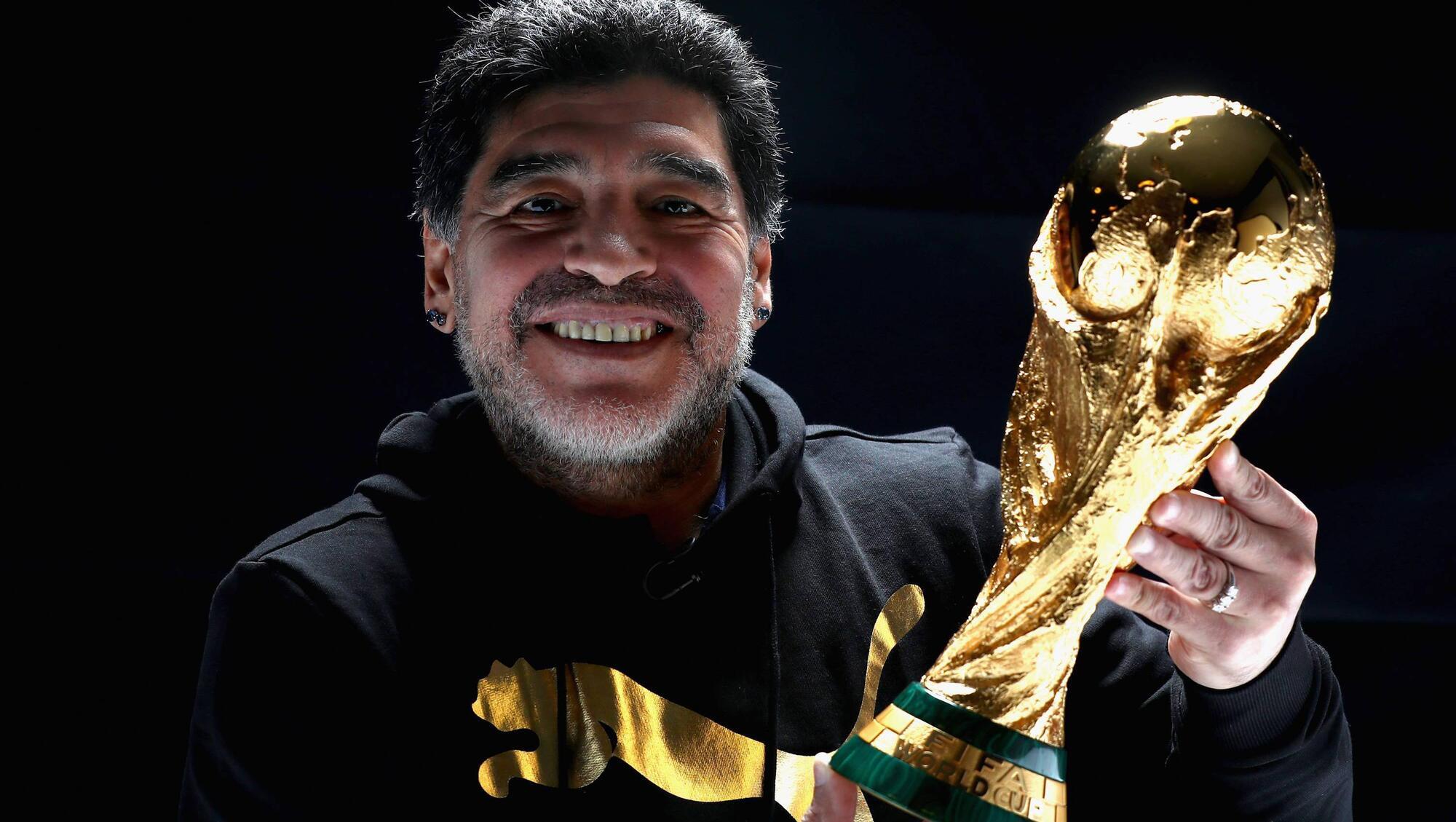
Diego Maradona of Argentina poses with the FIFA World Cup trophy. Pic: Alexander Hassenstein - FIFA/FIFA via Getty Images

Tomorrow, it will be 50 years since a 15-year-old boy came off the bench for Argentinos Juniors and began a relationship with the world from which neither party would ever recover. Diego Armando Maradona was ten days short of his 16th birthday. The opposition were Talleres. There would be grander stages, better goals and occasions when the fate of entire countries appeared to depend on what happened between his left boot and the ball. But first there was this: a boy, a football, a chance.
Before revisiting everything that followed, we might ask a question. Half a century after discovering Diego Maradona, have we become any better at looking after the boy who can do things nobody else can? Lamine Yamal is 19. On Saturday, after Barcelona beat Real Betis, Hansi Flick described him as the best player in the world. In the same assessment, his manager acknowledged his age, the pressure and how much football he was playing. Admiration and concern, delivered together.
We know the routine. First comes the astonishment. Then the comparisons, the commercial possibilities, the expectation. Eventually, a teenager’s ordinary mistakes become evidence in a public inquiry into whether he deserves the extraordinary gifts he possesses. Yamal deserves to have his own life, including his own mistakes. Invoking Maradona should place an obligation on the adults around him, rather than a prophecy over his head.
The ability to embarrass an international defender does not confer emotional adulthood. A boy can understand space on a football pitch better than anyone watching him and still need help understanding the world outside it.
Wayne Rooney was 16 when he scored against Arsenal, 24 years ago today. We watched that goal and immediately began imagining everything he might become. It is worth wondering how much room those imaginings left for the person he already was.
With Maradona, our expectations eventually acquired religious dimensions. People saw themselves in him: their poverty, their defiance, their capacity to humiliate somebody richer and more powerful. In Naples and Argentina, his football gave collective pride a physical form.
Watch him play and the affection makes sense. The balance. The impudence. The strange impression that everyone else was negotiating with the ball while Diego had already reached an understanding.
His football remains joyful. We owe him the courtesy of remembering that, too. David Arrowsmith’s book, Killing Maradona, published earlier this year, returns to the addiction, criminal influence and exploitation surrounding his life. Even its title captures how difficult it remains to discuss him without searching for responsibility.
That search is now unfolding in a courtroom. Almost six years after his death in November 2020, proceedings concerning his medical care have reached closing arguments. Seven medical professionals are on trial; they deny the charges. Their individual responsibility is for the court to determine.
The juxtaposition is extraordinary. Fifty years after his debut, we are still arguing about what happened to Diego Maradona. His beginning belongs to football’s mythology. His ending remains a matter of contested evidence.
His family deserve answers. The continuing proceedings are a reminder that behind every image of the immortal Diego was a body that could fail, and a man who needed care. The attention surrounding that courtroom also tells us something about the scale of his presence. “Iconic” has become a word applied to a kit launch, a haircut, a moderately successful advertising campaign. Maradona’s significance was earned in the lives and memories of people who recognised something of themselves in him.
No marketing department could manufacture that identification. Others could monetise it, and did. They could never fully control it.
Nor should authenticity become an alibi. His suffering does not absolve him of responsibility for the suffering he caused. Affection becomes dishonest when it requires us to look away. He was capable of greatness and of doing harm. Both belong in the account.
But there is something grotesque about a culture that demands access to every part of a gifted person’s life, then marvels when the person struggles to keep it together.
Today’s young stars have advisers, carefully managed accounts and commercial strategies. Those arrangements may protect careers. Whether they protect people is a question worth asking.
For Yamal, the answer should be measured in the freedom to grow, to disappoint occasionally, to have a life whose value survives a bad season. Tomorrow, we can return to the footage and marvel again at Diego. We can remember the pleasure before rehearsing the pain. Then we might resist our habitual search for the next Maradona long enough to consider what we actually want for him.
A wonderful career, certainly. And a life he gets to keep.
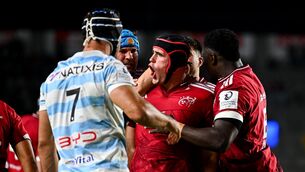
There was something quietly powerful about Brian Gleeson wearing number 24 against Racing 92 on Saturday night, leaving Munster’s number eight jersey unoccupied in memory of Anthony Foley. A young man playing his position, carrying his principles, while acknowledging the person who helped give that jersey its meaning. Ten years after Foley’s death, the connections remain everywhere. Through Shannon, through former teammates and the players he coached, through families whose relationship with Munster stretches across generations. These are living relationships. His presence endures because people continue to carry something he gave them. Foley embodied qualities Munster rightly cherish: belonging, honesty, stubbornness, responsibility to the person beside you. His understanding of the province was accumulated through a lifetime within it. He knew what the jersey meant because he had helped make it mean something. The challenge for this generation is to build a new identity from those same principles. That requires confidence in what they have inherited, and freedom to discover what they can contribute. Gleeson and his contemporaries deserve the opportunity to become a team recognisably their own, with ambitions and achievements that belong to them. Nobody gets to impose a timetable on grief. For Foley’s family, the absence remains personal and immeasurable. For the institution he served, remembrance carries an obligation to nurture the future with the same seriousness with which it honours the past. Tradition survives through renewal. The values endure because successive generations find their own ways to practise them: in training, in difficult matches, in how established players welcome somebody new. Saturday’s tribute offered an image of that continuity. Foley’s number was left aside. A young player stepped forward to do the work. There is room in Munster for both the enduring memory and the new beginning. Indeed, the most meaningful legacy would be one that makes both possible.
It says a lot about standards when an athlete is annoyed with a world championship silver medal. Lara Gillespie left Wednesday’s scratch race in Shanghai frustrated by how narrowly gold had escaped her. Yesterday, she won the points race and became world champion for the second time. That ambition deserves attention. Irish sport can sometimes congratulate itself so enthusiastically for competing that winning becomes an unexpected bonus. Gillespie arrived expecting to contend, then delivered. Her achievement should command space beyond cycling’s devoted audience. A world champion twice over deserves to be a household name. The least we can do is catch up with her.
For those of us who remember Chris Eubank and Steve Collins making boxing compulsory viewing, Ray Close’s name brings an immediate flicker of recognition. His death at 57 carries sadness beyond nostalgia. The Belfast-born European champion twice pushed Eubank to the limit, earning a draw before losing their rematch on a split decision. When a brain scan prevented their third meeting, Collins stepped in, and Millstreet entered Irish sporting folklore. Close deserves his own place in that story: a gifted fighter whose misfortune opened somebody else’s door. We remember those nights fondly. We should remember him with equal affection and respect.