Colin Sheridan: If love alone could keep a man alive, Paul Clancy would've lived forever
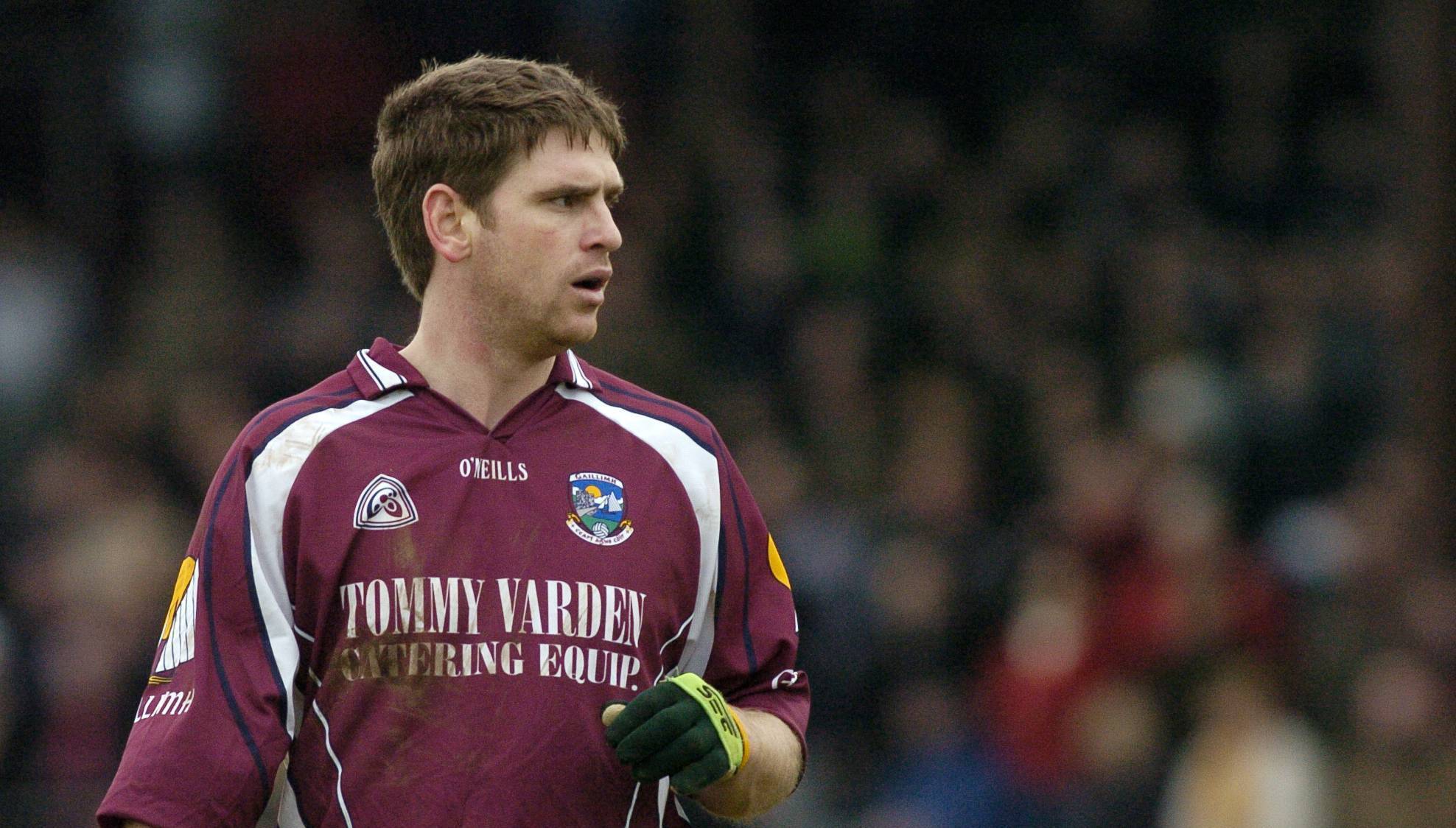
Paul Clancy won two All-Ireland football titles with Galway. Pic: Pat Murphy / SPORTSFILE

Last September, not long after he had been diagnosed with cancer, I bumped into Paul Clancy. Only a few weeks earlier, he had buried his brother-in-law, Don Connellan, one of his closest friends. Don's death had shaken all of us and, after the funeral, I wrote a tribute to him in these pages. Unwilling to dwell on the absurdity of the hand just dealt to him, Paul deflected all concern and, not for the first time, landed me on my arse.
"You used all your best lines on Don," he smiled. "What are you going to write about me?"
It was delivered as only Paul could deliver it. Gallows humour wrapped in a trademark one-liner, funny enough to catch your breath, sad enough to stay with you for a year. Except it wasn't even a year. Nine months. That's all he got.
The tendency when someone dies is to write about death. To list achievements and explain what made a person exceptional. The funny thing about Paul, though, is that long before he reached the end of his life, what made him famous - being unnaturally good at Gaelic football - had become the least interesting thing about him.
Read More
Sure, he won two All-Ireland medals with Galway, though he only seemed to mention them around Mayo people. He was one of the defining footballers of his generation, yet would sooner tell you about winning the Salthill 5s with Garth Gorman, Michael Donnellan and the Galway United lads than dwell on kicking points in Croke Park.
"Sure, what is it only a game of football," he'd say, charming you with his humility before winking that he'd show you the medals later if you wanted.
Once, he indulged me.
I was lucky enough to know Paul two ways: first as a youngster through my older brother Maurice, who lived, travelled and, in his words, "dug ditches" with Paul and their great friend Declan Meehan.
Years later, I came to know him a second way, as a fellow father and a friend, I finally broke my own rule and asked him about “the pass” - that outrageous, no-look, over-the-shoulder delivery that sent Meehan through for his unforgettable goal in the 2000 All-Ireland final replay.
How, in all the madness of the moment did he know the pass was on and have the balls to make it?
He shrugged.
"I just knew Deccie was there."
As if that explained everything.
Then came the punchline.
"I was lucky it landed. Otherwise Johnno would've hooked me for not slipping it to Ja."
For many men, those moments would define an entire life.
But not Paul's.
The longer you knew him, the less the football seemed to matter. Not because it mattered less to him, but because life gave him even greater things to become.
He belonged to Maigh Cuilinn in a way that's difficult to explain unless you've known somewhere like Maigh Cuilinn. He was a man of the mountain and the bog, happiest in the fields he grew up in, yet equally at home by the sea. Whether in Drumaveg, Salthill or the links of Connemara, he carried Galway with him. My brother always said, "Clance could sit with the prince and the pauper." He cared nothing for status but suffered no fools.
He took some knowing.
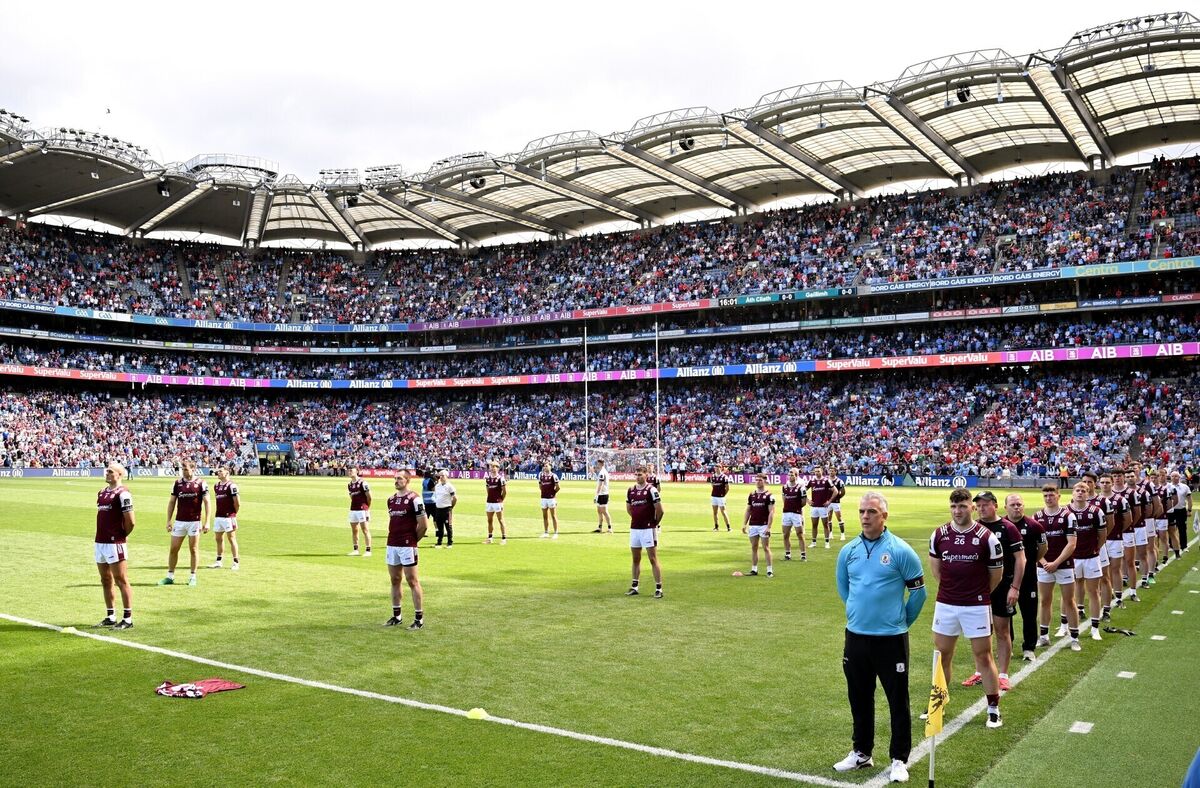
The last time I saw him, a few days before he died, I called in but got as far as the couch before realising not to sit down. He had eyes that could say "not today" quicker than words ever could. They served him well when he became sick.
That should make me sad.
It doesn't.
Because that's exactly who he always was.
We started going on golf trips together a few years ago. There were cooler trips he could’ve gone on, packed with better friends and older teammates. Princes, perhaps, to our misfit paupers. Yet he chose ours, and became its heartbeat. Three weeks ago we left Ballyconneely convinced we'd be doing it for decades. He played both days and that night the one-liners flowed like wine at a wedding.
There are very few people you would choose to have alongside you in the dirt, digging ditches. Fewer still you'd happily spend an entire weekend beside on a high stool. And fewer again whom you would trust, without a second thought, to disappear across an island with your children.
That is the memory I cannot shake. Last spring, before any of us knew Paul was ill, a group of us spent a weekend on Inishbofin. If there was a place made for Paul, it was Bofin.
Wind. Sea. Fields. Football. Fishing. Children running free.
While the rest of us were slow to rise on Sunday morning, Paul quietly gathered nine disgruntled kids and simply disappeared across the island. For a while, with no phone reception and little knowledge of the island, a flicker of worry spread.
Then, one by one, like baby gorillas in the mist, they emerged over stone walls and through rain-soaked fields, boots muddy, faces beaming, fishing rods in hand.
Not a fish in sight.
Clance, the quarterback behind them, looked as happy as the children themselves.
That afternoon my own son - admittedly prone to hyperbole - declared it one of the best mornings of his life.
Paul never imagined he'd done anything remarkable. He wasn't performing kindness. He wasn't trying to create memories. He was simply sharing something he loved with people he loved.
That was enough.
"What are you going to write about me?"
The truth is, Paul, I haven't written very much that hasn't already been said.
Except perhaps this.
Long before the end, football had become the least interesting thing about you.
There is a saying that the true measure of a life is whether we plant trees whose shade we know we may never sit beneath.
You spent your life doing exactly that.
For Maigh Cuilinn. For Galway. For your family. For your friends.
And if love alone could keep one man alive, then you, Paul, would've lived forever.
For decades, Phil Mickelson cultivated one of golf's most durable public personas: the smiling family man, the generous tipper, the player who seemed as comfortable signing autographs as he was lifting trophies. It was an image that survived gambling controversies, LIV Golf and countless professional feuds. The latest allegations threaten something more fundamental. An investigation by Skratch, featuring interviews with 19 sources, alleges a pattern of inappropriate behaviour towards women spanning years, while reports also claim Mickelson was forced out of multiple exclusive golf clubs over personal conduct.
Mickelson's lawyer has strongly disputed key allegations, describing the reporting as misleading and indicating legal action may follow. No criminal charges have been brought. Ultimately, the legal process will determine what is proven and what is not. But reputations rarely wait for verdicts. They are built over decades and can unravel in days.
If these claims are substantiated, the greatest casualty will not simply be Mickelson's standing as one of golf's finest players. It will be the carefully cultivated identity that made him one of its most marketable figures: the affable, generous family man whose image now appears more fragile than a one-shot lead on Sunday.
Ireland's 34-run victory over World T20 champions India at Stormont last week ranks among the greatest results in the history of Irish cricket. Recovering from 51-4 before bowling out India for 148, Ireland defeated the game's undisputed superpower for the first time in any format.
Cricket is not simply India's national sport; it is woven into the country's cultural spine, commanding the attention of more than a billion people and generating a depth of talent unmatched anywhere on earth. That is what makes this triumph so extraordinary: Ireland did not merely beat the world champions, they conquered - however briefly - the spiritual home of cricket itself.
If any team at this World Cup deserved a slice of good fortune, it was Iran. Forced to prepare amid the upheaval of conflict at home, herded between countries by visa restrictions and deprived of the routine every other nation took for granted, Team Melli still came within seconds of reaching the knockout stages. Twice in 24 hours, qualification beckoned before being snatched away by injury-time drama elsewhere, the cruellest blow arriving with Austria's 96th-minute equaliser against Algeria on Saturday night. Football can be wonderfully unfair, but few teams have endured a tournament where both politics and fate combined so relentlessly against them.