John Fogarty: Hurling's phoney war is almost over
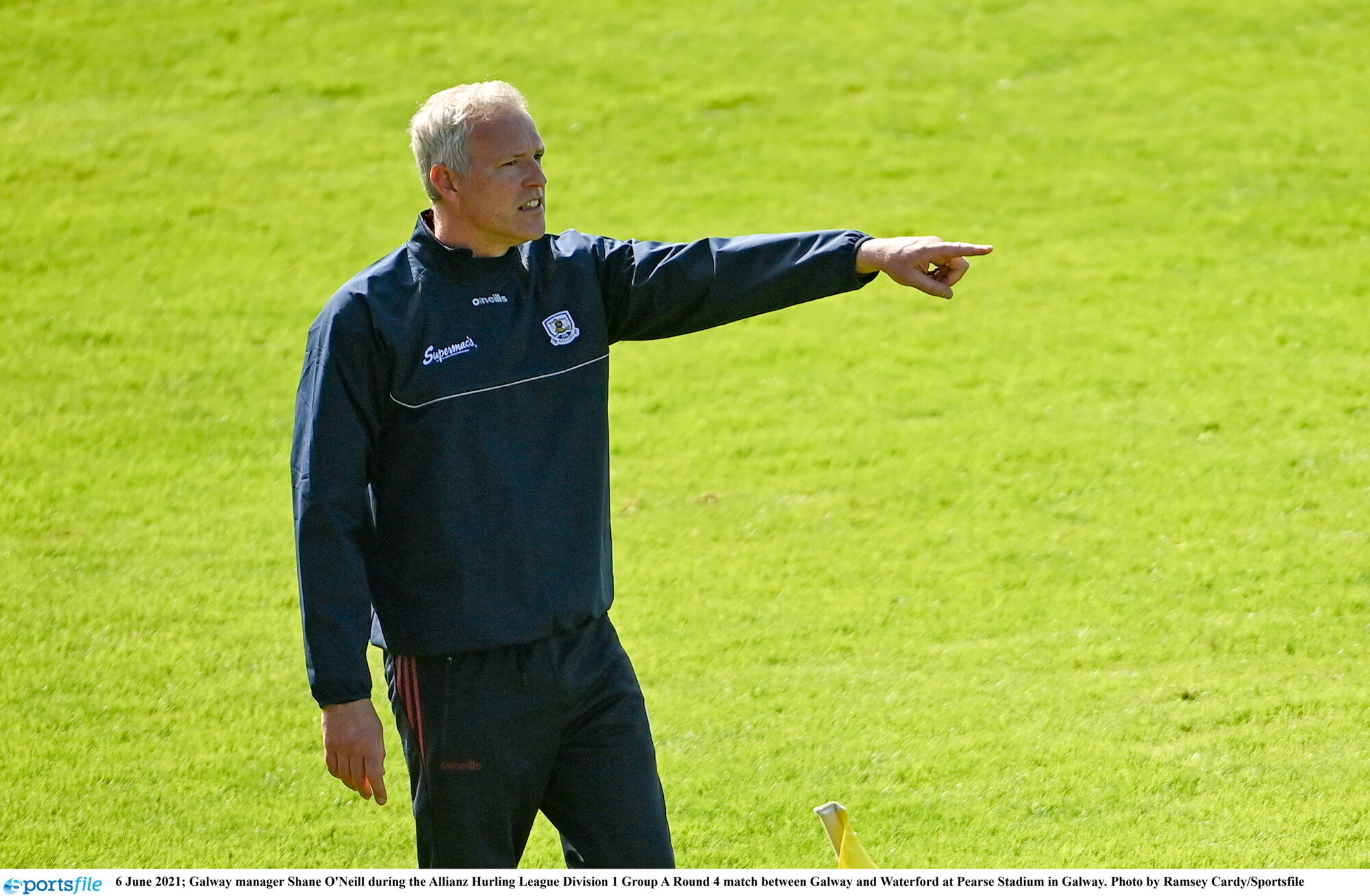
Galway manager Shane O'Neill during the Allianz HL Division 1 Group A game against Waterford at Pearse Stadium. Picture: Ramsey Cardy/Sportsfile

After a yawning 293 days, GAA matches in the 26 counties finally have in-person audiences. That they will initially comprise the nearest and dearest of those involved is only fair even if it only home teams who will benefit initially. It’s they who have suffered the most from not being able to attend.
Home advantage for promotion and relegation play-offs will count for more with supporters present particularly in Newry on Saturday where Down could have 500 in full voice as they bid to avoid the drop against Laois and Armagh on Sunday as the home team are also set to benefit from the crowd in their Division 1 relegation clash with Roscommon.
Choosing who can purchase the golden tickets will get trickier for the GAA and its sister associations when crowds increase later this month, especially as the central season ticket scheme is postponed this year, but the prospect of gate receipts is a good complaint. Without such income up to now, the GAA has been compelled to offer voluntary redundancies to staff.
For those players who have yet to play a senior inter-county game in front of crowds, their return must be awaited with relish too.
We’re thinking of players like Dublin midfielder Tom Lahiff, Kerry forward Ronan Buckley, and Cork’s Alan Connolly. They are all entitled to be admired, to “win the crowd” as Ollie Reed’s Proximo put it, to be willed “to make that killer blow. The silence before you strike and the noise afterwards. It rises. It rises up like a storm. As if you were the thunder god himself.” Fans, oh how they have been missed.
Elsewhere on this page you will read the considered thoughts of Galway great Pete Finnerty about the state of hurling and his opinion that marking, something for which he was noted, has gone out of the game.
To add more value to scores, the Mullagh man is more interested in adding weight to the sliotar than ensuring the bas of hurleys conforms to the regulation size of 13cm at its widest point but he remembers when the size of sticks was policed.
“Back then, the goalkeeper could only have the hurley a certain size and he was the only one that could have it,” he recalled.
“Then a few teams would have three of them in the goals in case of a penalty and Jesus it was like contraband bringing them into Croke Park. They were like half-doors.” Inspecting hurleys before each game is not likely to be on the GAA’s agenda, especially not when they have turned a blind eye to how players have illegally increased the sweet spot over the years.
To compensate for that, some of the leading players are now opting for shorter pieces of ash so that wielding the larger bas isn’t as cumbersome.
Nor would it appear the authorities are going to increase the weight of the sliotar any time soon.
While ensuring a uniform weight is a priority, there has also been speculation about doing away with the rims, which would likely make the ball travel even further.
Scores may never be as cheap but the GAA won’t be the bad workman blaming the tools.
- john.fogarty@examiner.ie