Scouting the next fairytale with Brian Carey
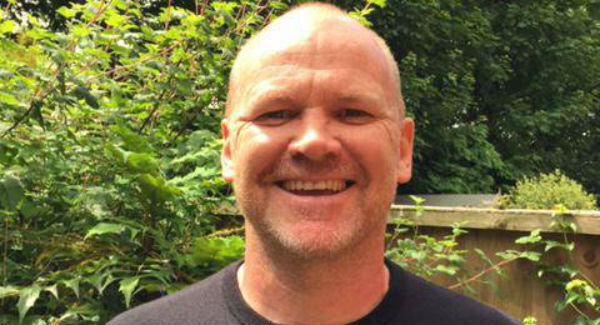
Spurs scout and former Cork City player Brian Carey dreams of unearthing the next Jamie Vardy, a player he admired at non-league level for his blistering pace, writes Liam Mackey.

Scouting the next fairytale with Brian Carey

BRIAN Carey didn’t get to see his old club Leicester City write another improbable chapter in their history by overcoming Seville in the Champions League at the King Power stadium on Tuesday night. Instead, the former Foxes centre-half was at Gigg Lane watching Bury beat Bristol Rovers 3-0 in a League 1 match. And with good reason: he was there to run a forensic eye over the players on show as Tottenham Hotspur’s senior scout in the north-west of England.

The 48-year-old brings a wealth of experience to the role from more than 25 years immersed in the professional game in England since he left his hometown club Cork City for Manchester United in 1989. From Old Trafford, his career has taken him to Leicester City, Wrexham, Doncaster Rovers, Wolves, Blackburn Rovers and Chesterfield as, variously, player, coach, assistant manager and manager.


And with the visit of Wales to Dublin for that World Cup qualifier looming large, it’s timely to note too that one of Carey’s three senior Ireland caps came in a 2-1 win against the Welsh in a friendly at Tolka Park in 1993. That was a night when, after concussion had forced David O’ Leary out of the action, Carey was joined in an improvised central defensive partnership by his fellow Corkman, Roy Keane.

“Him being the midfield player, he showed me how to do it,” he remembers with an appreciative chuckle.

Now a year into his scouting work for Spurs, Carey is required to assess potential candidates for the first team at White Hart Lane, a role which sees him covering games at Man Utd, Man City, Liverpool, Everton, Stoke and as far south as Leicester in the Premier League, as well as matches in the Championship and League 1.

Recently, Spurs have asked him to broaden his geographical horizons considerably, as a result of which this weekend finds him in Germany attending games in the Bundesliga. And in another extension of his remit, where previously the club would only have tasked him with tracking named players, he has now been given the responsibility of picking his own games and players to watch.

“Like any other big club, Tottenham have to have the intelligence and the information on everybody, from the new kid on the block to more established players,” he says of the scout’s job. “It’s not just about young talent, it’s players at the top level I’d be looking at, those who would be good enough to go into the first team straight away. That’s why I’d be going to the likes of Liverpool and Manchester United.

“If the club are serious about signing someone, I’ll do a report, then someone else down south will see him in a game the following week and do a report and, that way, over a period of months or even a year, the club will have a dossier on a player.

“The old stereotypical scout was probably somebody in his 60s, most likely with a limp because he was an ex-footballer. Actually, I fell into that category over Christmas because my right knee was hanging off and I was limping to games (laughs). Nowadays, you’ll see scouts typing away on their phones while they’re watching the game. I bring a pen and paper and take notes and then, when I get home, input the information which is collated onto one platform that a lot of the clubs would use.

“I do have certain boxes to tick — simple things like size and height and his number to identify the player — but after that it’s about writing a few paragraphs to describe what you saw on the day. It’s my opinion and it’s very subjective. But that’s the whole point because eventually they’ll have another 10 to 20 opinions on how the player did over a number of games. Then the guys in the club’s analysis depart can look at all that information and make informed decisions based on that.”

And what has his own scouting strike rate been to date?

“I’ve ruled more out than in but I’ve certainly seen players who stand out,” he says. “I can’t name them here obviously because that would be alerting other people. But there are not many out there — that’s why it’s tough and very competitive.”

Every once in a while, of course, a club will hit the jackpot by unearthing a diamond. On the same night that Brian Carey was at Bury, Jamie Vardy was decorating his rags to riches fairytale with another inspirational performance to help put Leicester through to the quarter-finals of the Champions League.

“Even as a non-league player Vardy scored goals, had that blistering pace and a temperament that nothing fazed him,” Carey observes, “and then, at Leicester, he landed in a counter-attacking team that played to his strengths. He’s a natural and probably wasn’t over-coached either but, still, fair play to the people who gave him a chance. Is there another Vardy out there? Why not? And it’s the one everyone in my job is trying to find.

“Harry Kane is a great story as well. When I was at Doncaster (as assistant manager to Dean Saunders) he was at loan at Millwall playing left side of midfield for Kenny Jackett and, yeah, he scored against us. But he didn’t stand out to the extent that I thought, ‘Oh he’s a world-beater’. I would be at games now and seeing lads at 17, 18 who wouldn’t be world-beaters but if they can survive the period up to 20, 21, then they have a chance.

“The very best players will always stand out, of course, they’re the easiest ones to spot, and people can always go out and spend millions for somebody. But it’s the likes of a Jamie Vardy, who’s not that obvious at a young age, but who can still break through if they can hang on in the game until they’re 20 or 21.”

Famously, as a 21-year-old himself, Brian Carey was roused from his bed at home in Togher early one morning by a phone call from Alex Ferguson, asking him if he wanted to join Manchester United. The business of recruitment in football can be a bit more complicated nowadays.

“Young players have agents and family pressures and everything is in the papers,” he points out. “It’s a burden, that whole circus. The brand, if you like. What about your goal ratio, your assists, your sprinting, your tackles? That’s more important than the brand.”

From his own experience of joining United from Cork City, and having since seen the likes of Seamus Coleman, Kevin Doyle and James McClean among others follow in his footsteps across the water, Carey is well aware of his homeland as a breeding ground for talent and, indeed, bargain buys. And on the back of a memorable 2016 for the domestic game, he has noticed a fresh growth in interest in the League of Ireland among football people in England.

“What Cork City did in the Europa League and Dundalk did in Europe has definitely heightened awareness,” he reports. “At games, people would be asking me about these clubs. The thing is that in the League of Ireland you have players playing men’s football at a younger age, which is very different to playing in academies. It’s a different pathway and, as Daryl Horgan has shown recently, one that can be very valuable for clubs in England.”

Although his Spurs job is nominally part-time, the near 24/7 nature of the modern game means Carey could be scouting three, four or five games a week. However, he has still found time over the past couple of years to launch and develop Sporting Referrals, a sports travel business which, among other specialist services, organises tours, training camps and tournaments in England and Europe for football, GAA and rugby teams, ranging from school-going level through to professional clubs.

At the top end, Cork City, Dundalk, Accrington Stanley, Forest Green and the Latvia national team are among the clients who have availed of Sporting Referrals’ pre-season training camps in either the Algarve, Spain or Austria. (For further information see sportingreferrals.com).

Carey mentions that, when he first began dipping his toe in the business, he received valuable advice and support from a fellow Irishman, Philip Behan, of international match agents Milenio Sports Management. In the interconnected way of sport, it was a personal contact which also brought the story of Carey’s own football career full circle, since Behan’s grandfather was Manchester United’s Irish scout Billy Behan — the very man who recommended Carey to the club.

“In fact, Philip reckons I was the last player his grandad scouted before he finished with United,” he says, before concluding with a laugh, “obviously Man United must have said to him, ‘If that’s the sort of shite you’re sending us from Ireland, that’s the end of it’.”

More in this section

Sport

Newsletter

Sign up to our daily sports bulletin, delivered straight to your inbox at 5pm. Subscribers also receive an exclusive email from our sports desk editors every Friday evening looking forward to the weekend's sporting action.

Cookie Policy Privacy Policy Brand Safety FAQ Help Contact Us Terms and Conditions

© Examiner Echo Group Limited