Four horsemen of New Camp

Susan Sontag would have really enjoyed these last couple of weeks.
The late American intellectual had the kind of eminence that gets you namechecked in Gremlins movies — see the chat-show scene for proof — as a result of a lifetime’s perceptive commentary, but her career really began with the famous ‘Notes On Camp’ essay.
That’s a good place to begin this morning’s column, because, frankly, only a latter-day movement to establish a new definition of ‘camp’ explains the last week or so.
In no particular order, we had Raymond Moore, of the Indian Wells tennis tournament, saying that women should be down on their knees thanking God for male players, and he added that there were some “attractive prospects” on their way through the ranks of women’s tennis.
Then, tennis star Novak Djokovic establishing a new . . . not nadir, exactly, but certainly a distinct zone of gender studies, with his carefully enunciated views on women’s struggles to play sport (“You know, the hormones and different stuff. We don’t need to go into details.”).
Along the way, we had some home-grown interventions. Last week, Pat Kenny shared some thoughts, via radio, on whether people like to watch some players more than others, because of the way they look, with Maria Sharapova mentioned in dispatches; and, finally, Ireland manager Martin O’Neill channelled Jerry Seinfeld with his zinger about Irish players’ wives and girlfriends being allowed to visit the players when they go to the European Championships (“If they’re really attractive, they’re very very welcome. The uglier ones, I’m afraid not.”)
All we were short was ‘I’m here all week,’ as a sign-off from that particular press conference.
But the attacks on these men, in the last few days, are, to this observer, evidence of a lack of understanding, an absence of sensitivity, to the post-post-post-feminism on view in all this. These seers and oracles are beyond mere sexism — some of them seem beyond mere words, after all — and appear to be trying to establish an entirely new aesthetic of male-female relations.
In her long-ago essay, Sontag discussed what camp was at its core: “ . . . the essence of camp is its love of the unnatural: of artifice and exaggeration.” What else are Messrs Moore and Djokovic, Kenny and O’Neill, trying to do? The entirely unsurprising reaction to their comments, the disappointment and disapproval, those knee-jerk responses, are all missing the point entirely. The subtlety with which these men are operating soars far above the heads of us mere mortals — by making statements as extreme as these, they are only furthering the cause of women in sport, and, almost incidentally, laying down a firm foundation for a new way of looking at gender relations.
Think of it as the Dean Swift approach. When the great man suggested Irish people should eat their own babies, do you think the chin-stroking PC brigade of the 17th century were up in arms about this affront to decency? No, they took it for what it was, satire with a cutting edge, a mirror forcing a society to confront its deepest biases.
Thus it is with the four men referred to above, a group I like to see sitting around a luxurious drawing-room, lighting up their cigars and toasting each other with their brandies, as they shake their heads sorrowfully at the literalists who can’t appreciate their skill in building this new dispensation.
Sontag said of the ultimate camp statement: “It’s good because it’s awful.” She then added: “Of course, we can’t always say that. Only under certain conditions.”
I’m comfortable that the conditions involved here, though, are as I explained earlier: the four horsemen are building a New Camp.
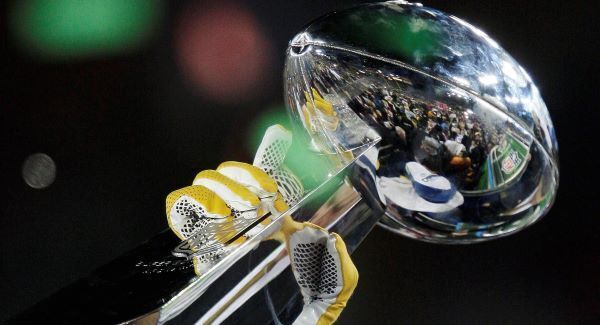
The ongoing concern over concussion and the damage it may be doing to sportspeople in both the short and long term went up a notch during the week when it emerged the NFL’s concussion research has been seriously flawed.
Kudos here to the New York Times for discovering the omission of 100 diagnosed concussions from the crucial studies which the NFL has consistently referred to when making policy in this area.
It’s not immediately clear whether this will have an impact on the $765 million settlement the NFL made with retired players who had accused league officials of covering up the risks of concussion, but you’d have to imagine it’s a development that the NFL itself could have done without.
Likewise, there’s a growing focus in the States on the strong links between the NFL and the tobacco industry in America — sharing lobbyists and lawyers, for example — which makes many observers very uncomfortable.
With all of that in mind, it was either staggering or completely unsurprising to also read last week that the NFL commissioner, Roger Goodell, was to be presented with an award for Leadership in Sports Health, Safety, and Research.
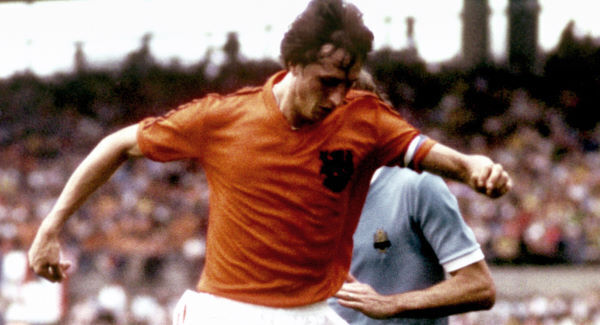
Others have written eloquently about Johan Cruyff, who passed away last week. Cruyff always means one thing to me, perversely enough — Johnny Rep, the first sportsperson I became vaguely aware of, back when Holland were dominating the 1974 World Cup.
Yours truly, with his unerring eye for the not-quite-as-good sidekick, felt Rep was the main man and couldn’t understand the buzz about Cruyff until much later (give me a break: I was six).
Interesting to see — cheers, Dave Hannigan — that the reason Cruyff didn’t go to Argentina in 1978 was a kidnap attempt his family endured the previous year, rather than unhappiness with the South American military junta.
His absence fired one of the great sports questions: would Holland have won with him present, perhaps converting the late chance in the final that fell to his replacement, Rensenbrink?

From the Department of Not Strictly Our Bailiwick, But You Know… I’m aware that not having the Luas for this Easter weekend, of all Easter weekends, is inconvenient, to say the least, but does anyone see the irony of complaining about a small group of people protesting for what they think is right, even if that’s unpopular, exactly 100 years after the Easter Rising?
Clearly, the might of the British empire and the might of the, ah, exasperated public opinion, are not one and the same, and, as noted, if one were left without public transport, one would be pretty cheesed-off. But, surely, that big bash in Dublin over the weekend was all about having the freedom to make those protests in the first place.