Why sorry remains the hardest word
Addressing the large gathering after a meal, Walker said the baseball star had to pull up his socks: because of his behaviour, which included fighting at games and abusing spectators, Ruth was letting down the “little, dirty-faced kids” who worshipped him.
Ruth wept openly at the rebuke and promised to reform, and he did.
I repeat the story here to invoke your laughter at such a scenario occurring in modern sport, never mind drawing a similar response.
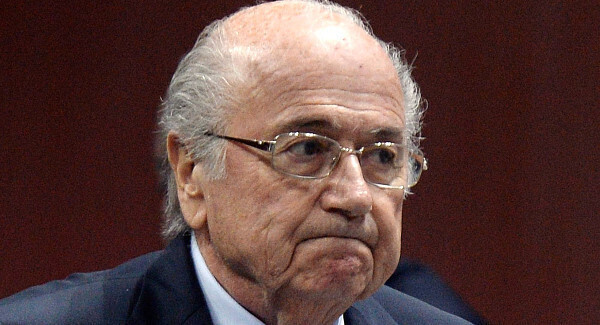
The recent performances by such mastodons of arrogance as Sebastian Coe, Sepp Blatter and so on give you all the information you need to imagine their responses if such circumstances were to ever materialise.
The fact that any such confrontation is so unlikely a prospect is tribute to the levels of insulation and separation which now separate such luminaries from the questioning of mere mortals, never mind the notions of shame and embarrassment which seem so remote from their cosmic highnesses.
That’s all part of the problem. No shortage of people to play the Babe Ruth role. No shortage of candidates to stand in for Jimmy Walker. No sign of a context in which both could operate. (Not that Walker, the man who drew blood with his wounding accusations of Ruth, was a paragon of virtues. He was the politician, after all, who once had his valet pack 43 suits for a brief visit to Europe.)
The mindset these sporting overlords use is one that is familiar to those of us in this country, of course.
Not so much in our home-grown administrators, though many of those are strangers to self-consciousness in their own right, but in the gruesome collection of attitudes which govern some people’s relationship to what used to be called the right thing to do.
Legal entitlements. Contractual obligations. Advice from the lawyers. Damage to the reputation. Liability.
HE gruesome cycle we see repeated in all walks of Irish life, usually reducible to one simple phrase — ‘I’m the real victim here’ — is now being paralleled in the most elevated zones of sporting bureaucracy (if you doubt me, consider Sepp Blatter’s latest braying about his persecution, or Coe’s magnificent solipsism at a recent British parliamentary hearing).
I suppose we should be proud of this after a fashion: probably the fashion Breandán Ó hEithir had in mind when citing the two winos on O’Connell Bridge watching a chauffeur-driven limousine roll past.
“Who’s that?” asks one.
“Murphy the bookie,” says the other.
“And isn’t he a credit to us,” says the first.
Paddy Heaney delivered his last column for these pages last week. Don’t worry — he is not shuffling off this mortal coil, quite the reverse: he’s focusing on his gym.
I met Paddy first in America, where we incarnated the (very recent) urban myth about the footballer from Cork and the footballer from Down who tried sledging each other in a championship game until they realised they couldn’t understand each other’s accents and concentrated on the ball thereafter. Once Paddy slowed down his rapid, guttural delivery we got along fine.
He even confessed that on a previous visit to the States he had made the cardinal error of trying to find Ross, the clothes shop, by asking people where “Ross Dress for Less is”; imagine yourself asking people where the nearest “Dunnes Stores Better Value Beats Them All is” and you’ll understand the faux pas.
I don’t doubt the man will reappear in print: quality like that can’t stay away forever. Those who’ve tapped me on the shoulder while I have coffee and ask about “your man from up the North there somewhere” can rest easy.
Bad news to wake up to on a Saturday morning: the passing of Robert Loggia, actor, at the age of 85.
You probably remember Loggia as a tough-talking presence 30 years or so ago in Jagged Edge, where he picked up an Oscar nomination for his performance as an investigator opposite Glenn Close.
His dismissal of the murderer, played by Jeff Bridges, is not one to be reprinted in a family newspaper, but if ever the delivery of a dismissive obscenity won an Oscar nod all on its own, it’s that one.
He also appeared with Tom Hanks in Big, and later popped up in The Sopranos as a shop owner.
My reason for including Loggia here? His first appearance in a movie was a bit part, uncredited, in Somebody Up There Likes Me, the film on boxer Rocky Graziano’s. Paul Newman played Graziano; at a stretch, I think Loggia was a dark-suited hoodlum, but if anyone’s memory is sharper, feel free to correct me.
My king of participatory journalism remains the late George Plimpton, but even when he was taking a few plays for the Detroit Lions back in the 1960s he had plenty of predecessors to follow.
One of them — Paul Gallico? — got in the ring with a heavyweight boxer in the ’30s and was surprised by the actualities. The journalist found that what seemed from outside the ropes to be gentle pushes the boxer was offering his sparring partner were, when landing on the arms of a journalist rather than a professional fighter, savagely punishing blows.
I was reminded of this in a nugget I stumbled across recently on askmen.com, a website which featured ordinary people (I nearly included ‘like you and me’ there) trying to catch an American football which had been thrown by Warren Moon.
If you can remember the first flush of American football’s popularity here, a couple of decades ago, then Moon — huge, moustachioed — will be a familiar face. If not, suffice to say he put down many years as a pro quarterback.
The results were varied: one participant caught a Moon delivery on the torso and thought his lung had collapsed; another reported that the tight spiral Moon put on the ball actually made the recipient’s hands twist involuntarily when it landed in his palms. That’s the kind of detail that brings home to you what top sportspeople can do.